
World
US Launches Phase Two of Gaza Peace Plan with New Authority

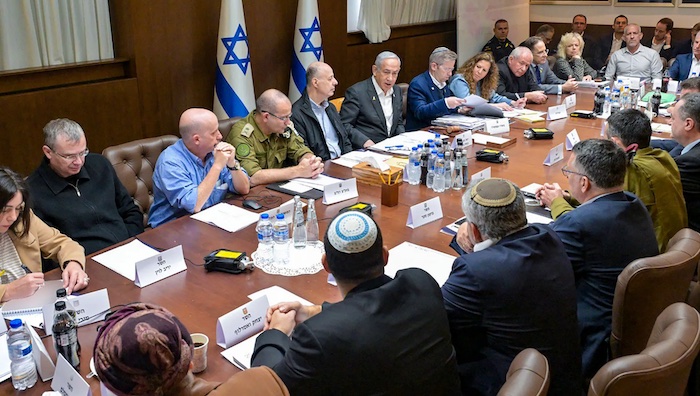
The United States has initiated phase two of its Gaza peace plan, establishing a technocratic Palestinian government aimed at guiding the region from conflict towards reconstruction. On Wednesday, US envoy Steve Witkoff announced the plan, which focuses on transitioning Gaza from a fragile ceasefire to a state of full demilitarisation, technocratic governance, and extensive rebuilding efforts. This new phase builds on a ceasefire agreement reached in October, which involved a hostage-prisoner exchange and a partial Israeli withdrawal.
Central to this initiative is the disarmament of Hamas and other armed Palestinian factions, along with repairing the extensive damage to Gaza’s infrastructure. Witkoff emphasized that Hamas must comply with its obligations, including the return of the remains of the last deceased Israeli hostage, whose situation is a priority for Israel. He warned that failure to meet these requirements could lead to “serious consequences.”
Challenges Ahead in the Peace Process
Despite the optimism surrounding the peace plan, significant challenges remain. Hamas has consistently stated it will not relinquish its weapons without the establishment of an independent Palestinian state. Moreover, Israel has yet to commit to a complete withdrawal from Gaza, leaving the ceasefire precarious. Since its inception, both sides have accused each other of violations, with reports indicating that hundreds of Palestinians have been killed in Israeli strikes since the ceasefire began.
The new governance structure will be led by a 15-member National Committee for the Administration of Gaza, chaired by Ali Shaath, a former deputy planning minister of the Palestinian Authority. This committee will operate under the supervision of a “Board of Peace,” chaired by Donald Trump, with former UN Middle East envoy Nickolay Mladenov expected to represent the board in Gaza.
Regional partners such as Egypt, Qatar, and Turkey have welcomed the formation of this technocratic administration, highlighting its potential to stabilize Gaza and enhance humanitarian conditions. Both Hamas and Palestinian Islamic Jihad have expressed support for the new government’s formation, while the Palestinian Authority has also indicated its backing, underscoring the necessity for unified governance across both Gaza and the West Bank.
The broader plan includes the deployment of an International Stabilisation Force to train and support vetted Palestinian police units. This force is expected to assist the Palestinian Authority as it works towards full control of Gaza, contingent on the completion of necessary reforms and the establishment of secure governance.
As tensions persist over the return of Ran Gvili, the last deceased Israeli hostage still in Gaza, Israel has linked further steps under the ceasefire to the handover of his remains. The violence began following a Hamas-led attack on Israel on October 7, 2023, which resulted in approximately 1,200 fatalities. In retaliation, an Israeli military campaign has reportedly claimed over 71,000 lives in Gaza, according to the territory’s health ministry.
The future of this peace initiative remains uncertain, with both the risks of conflict and the hope for stability hanging in the balance.









Belfast Gears Up for Vibrant St Patrick’s Day Parade on March 17

Cuba Faces Nationwide Blackout Amid Deepening Energy Crisis

Wirral Council to Restructure Leadership, Cutting Two Top Roles

Rethinking Resistance Training: Key Insights from US Experts

EU Membership on the Horizon: What It Means for Citizens

Ukrainian Drone Swarms Strike Moscow Region for Second Day

Henley Launches Innovative Initiative to Boost Local Economy

Court Ruling Allows Pandemic Tax Refund Claims Until 2026

Sean Penn’s Absence at 2026 Oscars Sparks Discussion

Coronation Street’s Shocking Murder Twist Reveals Family Secrets

Andrew Pierce Confirms Departure from ITV’s Good Morning Britain

Katie Price Faces New Health Concerns After Cancer Symptoms Resurface

Sue Radford Reveals Weight Loss Journey, Shedding 12–13 kg

Kate Garraway Sells £2 Million Home Amid Financial Struggles

Jordan Brook Faces Health Crisis in Hospital as Sophie Kasaei Stays Away

EastEnders’ Nicola Mitchell Faces Unexpected Pregnancy Crisis

Bailey Announces Heartbreaking Split from Rebecca After Reunion

Ann Ming Reflects on ITV’s ‘I Fought the Law’ Drama
-
 World4 months ago
Coronation Street’s Shocking Murder Twist Reveals Family Secrets
-
 Entertainment4 months ago
Andrew Pierce Confirms Departure from ITV’s Good Morning Britain
-
 Health7 months ago
Katie Price Faces New Health Concerns After Cancer Symptoms Resurface
-
 Health3 months ago
Sue Radford Reveals Weight Loss Journey, Shedding 12–13 kg
-
 Entertainment8 months ago
Kate Garraway Sells £2 Million Home Amid Financial Struggles
-
 Entertainment4 weeks ago
Jordan Brook Faces Health Crisis in Hospital as Sophie Kasaei Stays Away
-
 World5 months ago
EastEnders’ Nicola Mitchell Faces Unexpected Pregnancy Crisis
-
 World5 months ago
Bailey Announces Heartbreaking Split from Rebecca After Reunion
-
 Entertainment7 months ago
Ann Ming Reflects on ITV’s ‘I Fought the Law’ Drama
-

 Entertainment2 months ago
Selena Gomez’s Name Linked to Epstein: Examining the Claims
-

 Health7 months ago
TOWIE Stars Sophie Kasaei and Jordan Brook Pursue Fertility Treatment
-

 Health8 months ago
Fiona Phillips’ Husband Shares Heartbreaking Update on Her Health