
Science
National Trust Launches Ambitious 10-Year Hedgerow Restoration

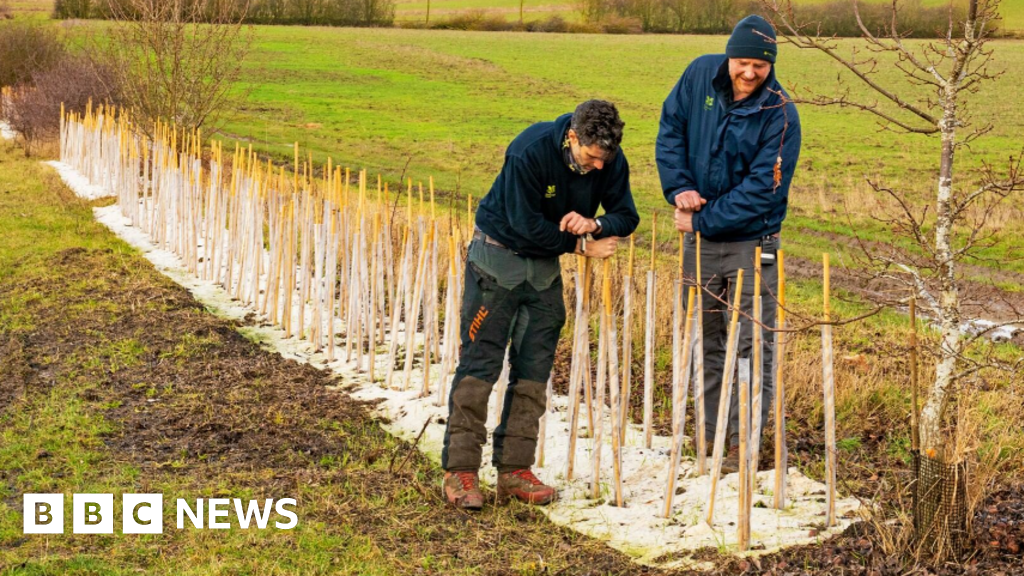
A significant hedgerow restoration project has commenced at the National Trust’s Wimpole Hall estate in Cambridgeshire. Over the next decade, the conservation charity aims to plant or restore approximately **23 km (14 miles)** of hedgerows on its **1,000-hectare (2,500-acre)** property. This initiative is designed to enhance wildlife habitats while simultaneously benefiting the working farm through improved firebreaks and erosion control.
The farm and countryside manager, **Dave Hassall**, emphasized the impact of restoring each section of hedgerow. “Each section of hedge that we restore makes the whole network bigger and better,” he stated. The restoration efforts will also contribute to a more resilient landscape, enhancing its functionality as a connected ecosystem in response to climate change.
Restoration Efforts Underway
The Wimpole Estate features a grand mansion, expansive parkland, and a functioning farm. This winter, staff and volunteers have successfully planted **30,000 trees** and restored **2.3 km (1.4 miles)** of hedgerow. The restoration strategy aims to promote flourishing hedgerows by encouraging flowering and fruit production, thus providing essential food and shelter for diverse wildlife.
Among the species expected to benefit are red-listed farmland birds like the **corn bunting**, **yellowhammer**, and **linnet**, as well as winter visitors such as fieldfares and redwings. Hassall noted that “we are using well-established, traditional techniques to restore our network of hedgerows.” He explained that while laying and coppicing hedgerows may appear drastic, these methods lead to rapid regrowth and revitalization.
Long-Term Vision for Biodiversity
The long-term hedgerow restoration programme was developed in **2023** and outlines specific targets for the estate. Approximately **10%** of the existing hedges will be coppiced, **6.7 km (4.1 miles)** will be traditionally laid, and **13.8 km (8.6 miles)** of new hedgerows will be planted, which translates to around **83,000 native trees and shrubs**.
This comprehensive approach not only aims to enhance biodiversity but also to create a sustainable environment that supports both wildlife and agricultural productivity. The National Trust’s commitment to restoring hedgerows reflects its broader mission to safeguard natural habitats and promote conservation efforts across its estates.
The Wimpole Estate continues to serve as a vital hub for conservation and education, showcasing the importance of traditional farming practices in maintaining biodiversity.













Belfast Gears Up for Vibrant St Patrick’s Day Parade on March 17

Cuba Faces Nationwide Blackout Amid Deepening Energy Crisis

Wirral Council to Restructure Leadership, Cutting Two Top Roles

Rethinking Resistance Training: Key Insights from US Experts

EU Membership on the Horizon: What It Means for Citizens

Ukrainian Drone Swarms Strike Moscow Region for Second Day

Henley Launches Innovative Initiative to Boost Local Economy

Court Ruling Allows Pandemic Tax Refund Claims Until 2026

Sean Penn’s Absence at 2026 Oscars Sparks Discussion

Coronation Street’s Shocking Murder Twist Reveals Family Secrets

Andrew Pierce Confirms Departure from ITV’s Good Morning Britain

Katie Price Faces New Health Concerns After Cancer Symptoms Resurface

Gyles Brandreth Shares Grandson’s Cancer Battle and Recovery

Sue Radford Reveals Weight Loss Journey, Shedding 12–13 kg

Kate Garraway Sells £2 Million Home Amid Financial Struggles

Jordan Brook Faces Health Crisis in Hospital as Sophie Kasaei Stays Away

EastEnders’ Nicola Mitchell Faces Unexpected Pregnancy Crisis

Reddit Study Reveals Distinctions Between Lurkers and Power Users
-
 World8 months ago
Coronation Street’s Shocking Murder Twist Reveals Family Secrets
-
 Entertainment8 months ago
Andrew Pierce Confirms Departure from ITV’s Good Morning Britain
-
 Health11 months ago
Katie Price Faces New Health Concerns After Cancer Symptoms Resurface
-
 Health6 months ago
Gyles Brandreth Shares Grandson’s Cancer Battle and Recovery
-
 Health6 months ago
Sue Radford Reveals Weight Loss Journey, Shedding 12–13 kg
-
 Entertainment1 year ago
Kate Garraway Sells £2 Million Home Amid Financial Struggles
-
 Entertainment5 months ago
Jordan Brook Faces Health Crisis in Hospital as Sophie Kasaei Stays Away
-
 World9 months ago
EastEnders’ Nicola Mitchell Faces Unexpected Pregnancy Crisis
-
 Science8 months ago
Reddit Study Reveals Distinctions Between Lurkers and Power Users
-

 World9 months ago
Mother Charged After Son, 9, Killed in Tragic Incident in Italy
-

 Entertainment11 months ago
Ann Ming Reflects on ITV’s ‘I Fought the Law’ Drama
-

 World9 months ago
Bailey Announces Heartbreaking Split from Rebecca After Reunion