
World
Iran Criticizes UN and EU for Inaction Amid Middle East Crisis

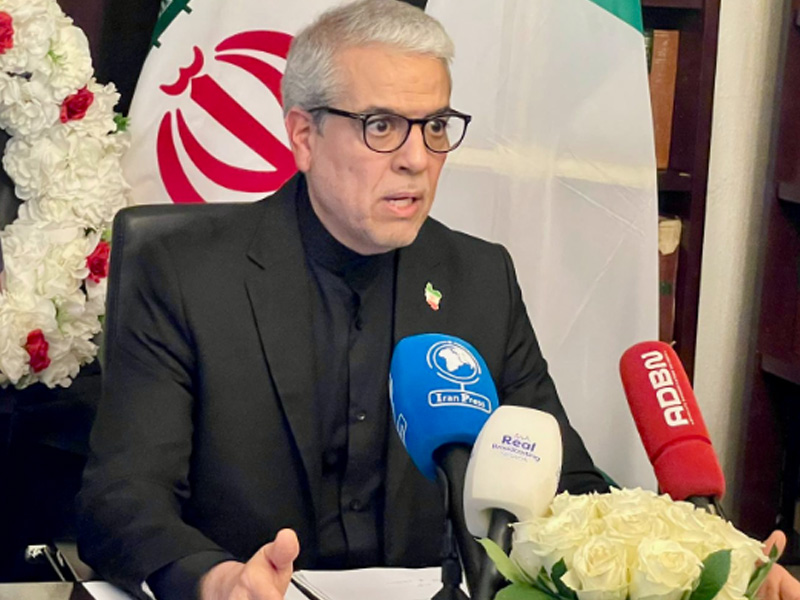
Iran has expressed significant dissatisfaction with major international organizations, accusing them of remaining silent in the face of escalating tensions in the Middle East. During a media briefing in Abuja, Nigeria, **Gholamreza Mahdavi Raja**, the Ambassador of the Islamic Republic of Iran, highlighted what he described as a failure of these institutions to uphold their responsibilities in ensuring global peace.
Mahdavi Raja specifically criticized the **United Nations** and the **European Union** for their perceived inaction regarding the ongoing crisis. He pointed out that the **United Nations Security Council** has not convened an urgent session to address the increasing hostilities, raising questions about the credibility of the institutions tasked with maintaining international stability.
“The whole region is facing conflict, yet there has been no urgent meeting of the Security Council, no strong reaction and no clear statement,” he stated. “Where is the United Nations? Where is the European Union? These institutions were created to manage global security, but today they are silent.”
The Iranian ambassador argued that the lack of decisive diplomatic intervention has fostered the impression that international organizations are swayed by the interests of powerful nations, particularly the **United States**. He warned that if global bodies do not respond impartially to acts of aggression, they risk losing their legitimacy.
“If international bodies remain silent in the face of such developments, they risk losing their credibility,” he remarked. He also accused Western powers of instigating destabilization policies throughout the Middle East, citing ongoing conflicts in **Lebanon**, **Syria**, **Yemen**, and **Iraq** as manifestations of broader geopolitical strife.
In the context of these tensions, Mahdavi Raja defended Iran’s recent military actions targeting American bases in the region as acts of self-defense. He clarified that these strikes were aimed at military facilities rather than civilian infrastructure, stating, “Our response is defensive. We are targeting military installations used against our country.”
Additionally, he emphasized that Iran had proactively communicated with neighboring Gulf states, assuring them that its military operations would focus on American facilities and not urban areas.
The ambassador warned that the ongoing crisis could have serious repercussions for the global economy, particularly in relation to energy markets. He noted that instability surrounding the strategic **Strait of Hormuz** could significantly disrupt energy shipments from the **Persian Gulf**, a critical conduit for a substantial share of the world’s oil and gas supplies.
“Any conflict in this region will inevitably affect oil prices, transportation, and the global economy,” he cautioned.
While asserting that Iran does not seek war, Mahdavi Raja reiterated that the country’s primary focus remains on defending its sovereignty and national security. He asserted that those who initiated the conflict bear the responsibility for de-escalation.
Despite his criticisms of international institutions, the ambassador conveyed Iran’s commitment to regional stability and peaceful coexistence. However, he warned that continued inaction from global bodies could exacerbate tensions across the Middle East.









Belfast Gears Up for Vibrant St Patrick’s Day Parade on March 17

Cuba Faces Nationwide Blackout Amid Deepening Energy Crisis

Wirral Council to Restructure Leadership, Cutting Two Top Roles

Rethinking Resistance Training: Key Insights from US Experts

EU Membership on the Horizon: What It Means for Citizens

Ukrainian Drone Swarms Strike Moscow Region for Second Day

Henley Launches Innovative Initiative to Boost Local Economy

Court Ruling Allows Pandemic Tax Refund Claims Until 2026

Sean Penn’s Absence at 2026 Oscars Sparks Discussion

Coronation Street’s Shocking Murder Twist Reveals Family Secrets

Andrew Pierce Confirms Departure from ITV’s Good Morning Britain

Katie Price Faces New Health Concerns After Cancer Symptoms Resurface

Gyles Brandreth Shares Grandson’s Cancer Battle and Recovery

Sue Radford Reveals Weight Loss Journey, Shedding 12–13 kg

Kate Garraway Sells £2 Million Home Amid Financial Struggles

Jordan Brook Faces Health Crisis in Hospital as Sophie Kasaei Stays Away

EastEnders’ Nicola Mitchell Faces Unexpected Pregnancy Crisis

Reddit Study Reveals Distinctions Between Lurkers and Power Users
-
 World8 months ago
Coronation Street’s Shocking Murder Twist Reveals Family Secrets
-
 Entertainment8 months ago
Andrew Pierce Confirms Departure from ITV’s Good Morning Britain
-
 Health12 months ago
Katie Price Faces New Health Concerns After Cancer Symptoms Resurface
-
 Health7 months ago
Gyles Brandreth Shares Grandson’s Cancer Battle and Recovery
-
 Health7 months ago
Sue Radford Reveals Weight Loss Journey, Shedding 12–13 kg
-
 Entertainment1 year ago
Kate Garraway Sells £2 Million Home Amid Financial Struggles
-
 Entertainment5 months ago
Jordan Brook Faces Health Crisis in Hospital as Sophie Kasaei Stays Away
-
 World10 months ago
EastEnders’ Nicola Mitchell Faces Unexpected Pregnancy Crisis
-
 Science8 months ago
Reddit Study Reveals Distinctions Between Lurkers and Power Users
-

 World9 months ago
Mother Charged After Son, 9, Killed in Tragic Incident in Italy
-

 Entertainment12 months ago
Ann Ming Reflects on ITV’s ‘I Fought the Law’ Drama
-

 World9 months ago
Bailey Announces Heartbreaking Split from Rebecca After Reunion