
Top Stories
Spain and Portugal Mark 40 Years in the EU: A Transformative Journey

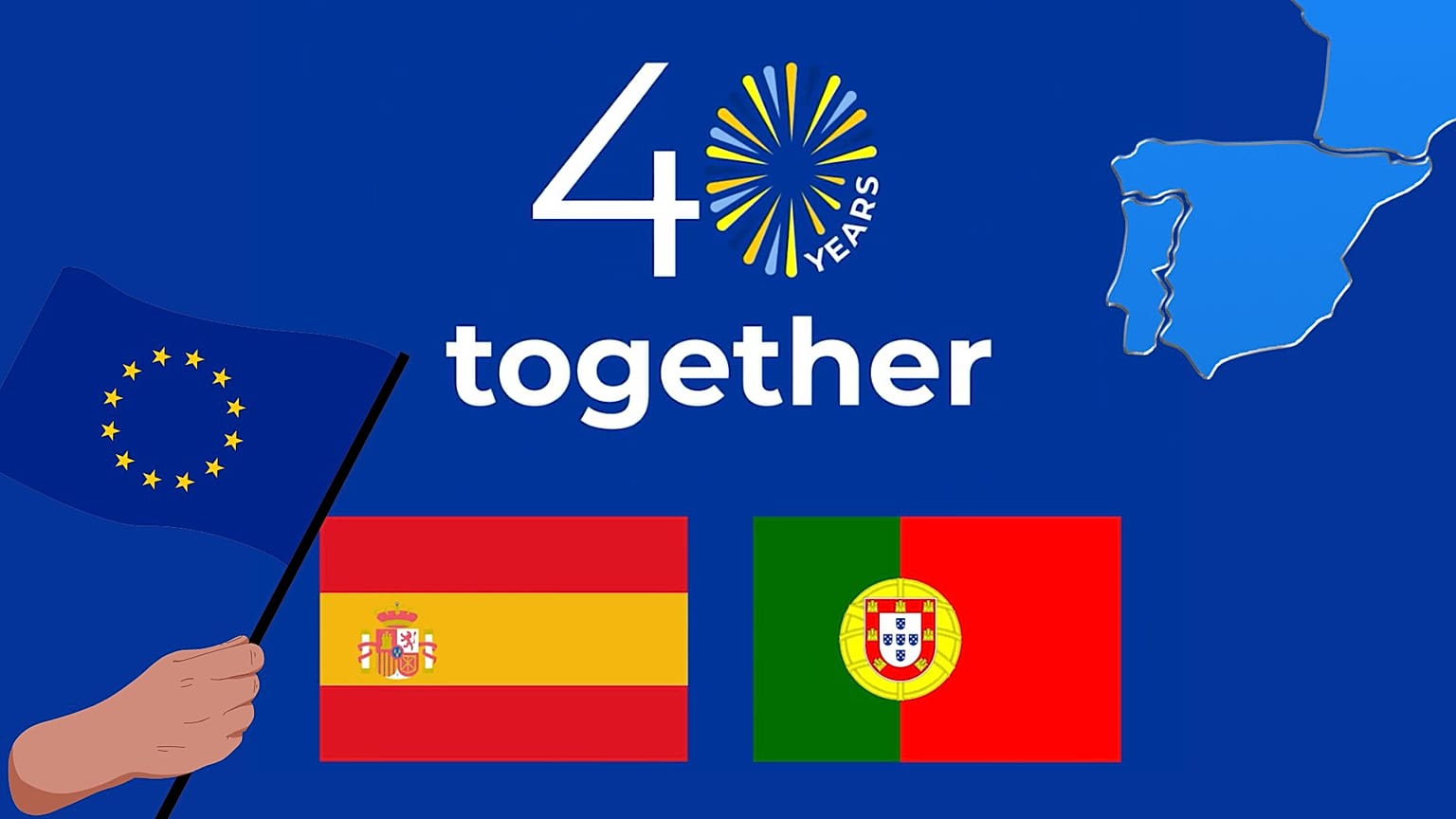
Spain and Portugal commemorate four decades since joining the European Economic Community on January 1, 1986. Both nations have undergone significant transformations since that pivotal moment, transitioning from the shadows of authoritarian regimes to becoming integral members of the European Union.
The historical context of Spain and Portugal’s accession is crucial to understanding their journey. In 1986, Spain was still grappling with the aftermath of the dictatorship led by Francisco Franco, who died just 11 years prior. Meanwhile, Portugal was recovering from the Carnation Revolution of 1974, which ended nearly five decades of authoritarian rule under António de Oliveira Salazar. At that time, both nations faced dire economic challenges, with Spain’s GDP hovering around €226 billion and an unemployment rate of 21%. Portugal’s economy was among the weakest in Western Europe, operating at only 60% of the average European GDP, largely due to the loss of its colonial empire.
The initial years of membership were characterized by a shared vision among both countries: integration into Europe as a pathway for recovery and growth. Over the past 40 years, this vision has materialized into substantial economic achievements.
Economic Growth and Infrastructure Development
As of 2025, Spain’s GDP has surged to approximately €1.5 trillion, marking a remarkable sixfold increase since its entry into the EEC. The country now ranks as the fourth-largest economy in the European Union. While unemployment remains a concern at 11%, the decline from previous heights indicates positive trends. Essential to this transformation has been the influx of over €185 billion in European funds, which have financed extensive infrastructure projects, employment programs, and innovation initiatives.
Portugal has experienced a similar trajectory. The Portuguese economy doubled in real terms during the first two decades in the EU, boasting growth rates of around 6% until the early 2000s. Notably, the purchasing power of the average Portuguese citizen rose from 50% of the EEC average in 1986 to approximately 75% of the current EU average. Key investments from EU Structural Funds have rejuvenated infrastructure, leading to a “golden age” of modern roads, improved access to regional areas, and upgraded ports and airports. Since joining the EU, Portugal has received more than €100 billion, primarily targeting transportation, sanitation, education, and public administration modernization.
Social and Cultural Integration
Beyond economic indicators, the EU has profoundly influenced the social fabric of both countries. The Schengen Agreement has facilitated free movement, allowing millions to travel, study, and work across Europe. Since the Erasmus program’s inception, around 1.6 million Spanish citizens have participated, while over 55,000 Portuguese students have benefitted from studying abroad.
The introduction of the euro in 1999, officially adopted in 2002, marked another significant step in economic integration for both nations.
Despite these advancements, challenges remain. The 2008 financial crisis severely impacted both Spain and Portugal. Spain’s unemployment rate soared to 27% in 2013, and Portugal required an international bailout. Austerity measures enacted during this period have left lasting effects on social welfare and public sentiment.
In recent reflections, Pedro Sánchez, Spain’s Prime Minister, articulated the transformative journey of both nations, stating, “A yearning for progress and hope became the greatest transforming lever of our country.” José Manuel Albares, Spain’s Foreign Minister, emphasized that a strong and democratic Spain contributes to a robust Europe.
Both countries continue to face structural issues, such as low productivity in Spain compared to Germany and France and Portugal’s declining birth rate, which poses a threat to future growth. Public support for the EU remains high, with 73% of Spaniards and 91% of Portuguese citizens viewing EU membership positively.
As part of the celebrations for the 40th anniversary of their EU accession, Luís Montenegro, Portugal’s Prime Minister, underscored the irreversible changes wrought by European integration. He highlighted that the commitment to the EU has been pivotal in accelerating economic growth and reinforcing democratic institutions. The signing of the Lisbon Declaration during the anniversary celebrations reaffirmed Portugal’s dedication to enhancing the European project, aiming for a secure, fair, and prosperous Union.
This anniversary not only marks significant milestones for Spain and Portugal but also serves as a reminder of the ongoing journey towards economic resilience and social cohesion within the European Union.







Belfast Gears Up for Vibrant St Patrick’s Day Parade on March 17

Cuba Faces Nationwide Blackout Amid Deepening Energy Crisis

Wirral Council to Restructure Leadership, Cutting Two Top Roles

Rethinking Resistance Training: Key Insights from US Experts

EU Membership on the Horizon: What It Means for Citizens

Ukrainian Drone Swarms Strike Moscow Region for Second Day

Henley Launches Innovative Initiative to Boost Local Economy

Court Ruling Allows Pandemic Tax Refund Claims Until 2026

Sean Penn’s Absence at 2026 Oscars Sparks Discussion

Coronation Street’s Shocking Murder Twist Reveals Family Secrets

Andrew Pierce Confirms Departure from ITV’s Good Morning Britain

Katie Price Faces New Health Concerns After Cancer Symptoms Resurface

Sue Radford Reveals Weight Loss Journey, Shedding 12–13 kg

Kate Garraway Sells £2 Million Home Amid Financial Struggles

Jordan Brook Faces Health Crisis in Hospital as Sophie Kasaei Stays Away

EastEnders’ Nicola Mitchell Faces Unexpected Pregnancy Crisis

Bailey Announces Heartbreaking Split from Rebecca After Reunion

Ann Ming Reflects on ITV’s ‘I Fought the Law’ Drama
-
 World4 months ago
Coronation Street’s Shocking Murder Twist Reveals Family Secrets
-
 Entertainment4 months ago
Andrew Pierce Confirms Departure from ITV’s Good Morning Britain
-
 Health7 months ago
Katie Price Faces New Health Concerns After Cancer Symptoms Resurface
-
 Health2 months ago
Sue Radford Reveals Weight Loss Journey, Shedding 12–13 kg
-
 Entertainment8 months ago
Kate Garraway Sells £2 Million Home Amid Financial Struggles
-
 Entertainment3 weeks ago
Jordan Brook Faces Health Crisis in Hospital as Sophie Kasaei Stays Away
-
 World5 months ago
EastEnders’ Nicola Mitchell Faces Unexpected Pregnancy Crisis
-
 World5 months ago
Bailey Announces Heartbreaking Split from Rebecca After Reunion
-
 Entertainment7 months ago
Ann Ming Reflects on ITV’s ‘I Fought the Law’ Drama
-

 Entertainment2 months ago
Selena Gomez’s Name Linked to Epstein: Examining the Claims
-

 Health7 months ago
TOWIE Stars Sophie Kasaei and Jordan Brook Pursue Fertility Treatment
-

 Health7 months ago
Fiona Phillips’ Husband Shares Heartbreaking Update on Her Health