
Top Stories
Nigeria’s Military Assumes Police Role Amid Security Crisis

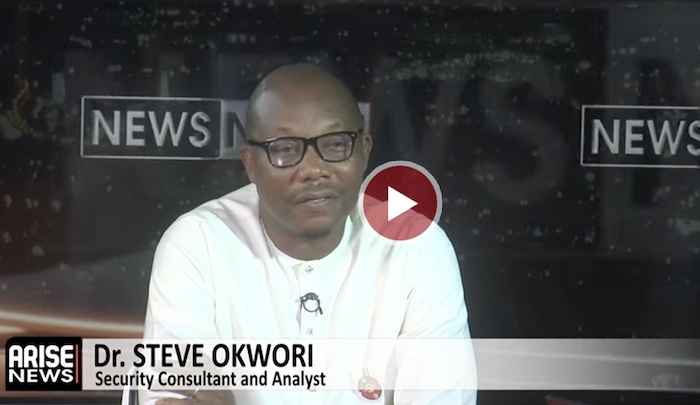
A security consultant has raised alarm over the increasing role of Nigeria’s military in domestic security, suggesting it reflects a broader failure in addressing the nation’s rising insecurity. Dr. Steve Okwori emphasized that the military has effectively taken over the constitutional responsibilities of the police due to escalating terrorism, banditry, and kidnappings across the country. His remarks came during an interview on ARISE News on March 4, 2024.
Okwori highlighted that many Nigerians are calling for urgent and effective action from the government and security agencies as violence spreads, particularly in states like Kogi. He stated, “I think that it’s high time that we go beyond the reading of speeches when it has to do with security issues. We need to see the practical aspect of it.” He noted that the current state of insecurity is not just a local issue but part of a global phenomenon exacerbated by internal challenges.
The consultant described the day-to-day reality for many Nigerians, stating, “Nigerians are kidnapped almost on a daily basis, ransom being paid and all that.” He stressed that citizens are seeking more decisive interventions, akin to the demands of Oliver Twist. While acknowledging some recent advances, such as joint operations between the police and military in Kogi State, Okwori argued that these actions should have been initiated much earlier.
He pointed out that the Nigeria Police Force has faced longstanding inadequacies, including issues of equipment, training, and logistics. “The police this year will be about 96 years old since it was established in 1930, and we are not seeing the expected efforts coming from them,” he remarked. Despite recent aerial operations involving helicopters and fighter aircraft, he believes these measures should not be viewed as exceptional but rather as a standard expectation from law enforcement agencies.
Okwori expressed concern that the military’s growing involvement in internal security has obscured the roles of police. He pointed to instances where military officers have responded first to internal security incidents, undermining the authority of police leadership. For example, he noted that during the abduction of schoolgirls in Kebbi, it was the Chief of Army Staff who arrived first, rather than the Inspector-General of Police, indicating a troubling shift in responsibility.
He called for the police to reclaim their lead role in internal security, stressing that they possess capabilities that many citizens are not aware of, including an air wing. “Let the police be more active so that we know they are carrying out their responsibility as the lead agency,” Okwori urged.
Focusing on the broader regional context, he warned that Nigeria is part of one of the world’s deadliest areas for extremist violence, particularly in the Sahel. He cited his research on terrorism in the region, identifying Burkina Faso, Mali, and Niger as similarly affected. Okwori expressed concern regarding these countries’ exit from the Economic Community of West African States (ECOWAS), suggesting it could weaken collaborative counter-terrorism efforts.
He highlighted terrorism financing as a significant challenge, stating that tracking illicit funds is complex. “When it comes to terrorism funding, it is difficult to track,” he explained, advocating for specialized training to identify terrorism financiers. He questioned the lack of accountability for companies previously linked to financing terrorism, noting, “What happened to those companies? We have not heard anything.”
Okwori also emphasized that ransom payments from kidnappings serve as a major source of funding for terrorism. “Unfortunately, we are unable to track these ransoms because they are paid in cash,” he said. He concluded by calling for improved training and intelligence capabilities within Nigeria’s security framework, arguing that without sustained action, the country’s security challenges will persist and potentially worsen.
In light of these pressing concerns, Okwori’s insights underscore the urgent need for a reassessment of security strategies in Nigeria, where the stakes continue to rise amidst a climate of fear and instability.









Belfast Gears Up for Vibrant St Patrick’s Day Parade on March 17

Cuba Faces Nationwide Blackout Amid Deepening Energy Crisis

Wirral Council to Restructure Leadership, Cutting Two Top Roles

Rethinking Resistance Training: Key Insights from US Experts

EU Membership on the Horizon: What It Means for Citizens

Ukrainian Drone Swarms Strike Moscow Region for Second Day

Henley Launches Innovative Initiative to Boost Local Economy

Court Ruling Allows Pandemic Tax Refund Claims Until 2026

Sean Penn’s Absence at 2026 Oscars Sparks Discussion

Coronation Street’s Shocking Murder Twist Reveals Family Secrets

Andrew Pierce Confirms Departure from ITV’s Good Morning Britain

Katie Price Faces New Health Concerns After Cancer Symptoms Resurface

Sue Radford Reveals Weight Loss Journey, Shedding 12–13 kg

Kate Garraway Sells £2 Million Home Amid Financial Struggles

Jordan Brook Faces Health Crisis in Hospital as Sophie Kasaei Stays Away

EastEnders’ Nicola Mitchell Faces Unexpected Pregnancy Crisis

Bailey Announces Heartbreaking Split from Rebecca After Reunion

Ann Ming Reflects on ITV’s ‘I Fought the Law’ Drama
-
 World4 months ago
Coronation Street’s Shocking Murder Twist Reveals Family Secrets
-
 Entertainment4 months ago
Andrew Pierce Confirms Departure from ITV’s Good Morning Britain
-
 Health7 months ago
Katie Price Faces New Health Concerns After Cancer Symptoms Resurface
-
 Health3 months ago
Sue Radford Reveals Weight Loss Journey, Shedding 12–13 kg
-
 Entertainment9 months ago
Kate Garraway Sells £2 Million Home Amid Financial Struggles
-
 Entertainment1 month ago
Jordan Brook Faces Health Crisis in Hospital as Sophie Kasaei Stays Away
-
 World5 months ago
EastEnders’ Nicola Mitchell Faces Unexpected Pregnancy Crisis
-
 World5 months ago
Bailey Announces Heartbreaking Split from Rebecca After Reunion
-
 Entertainment7 months ago
Ann Ming Reflects on ITV’s ‘I Fought the Law’ Drama
-

 Entertainment2 months ago
Selena Gomez’s Name Linked to Epstein: Examining the Claims
-

 Health8 months ago
TOWIE Stars Sophie Kasaei and Jordan Brook Pursue Fertility Treatment
-

 Health8 months ago
Fiona Phillips’ Husband Shares Heartbreaking Update on Her Health