
Science
Scientists Trace Origins of Moon-Forming Planet Theia to Inner Solar System

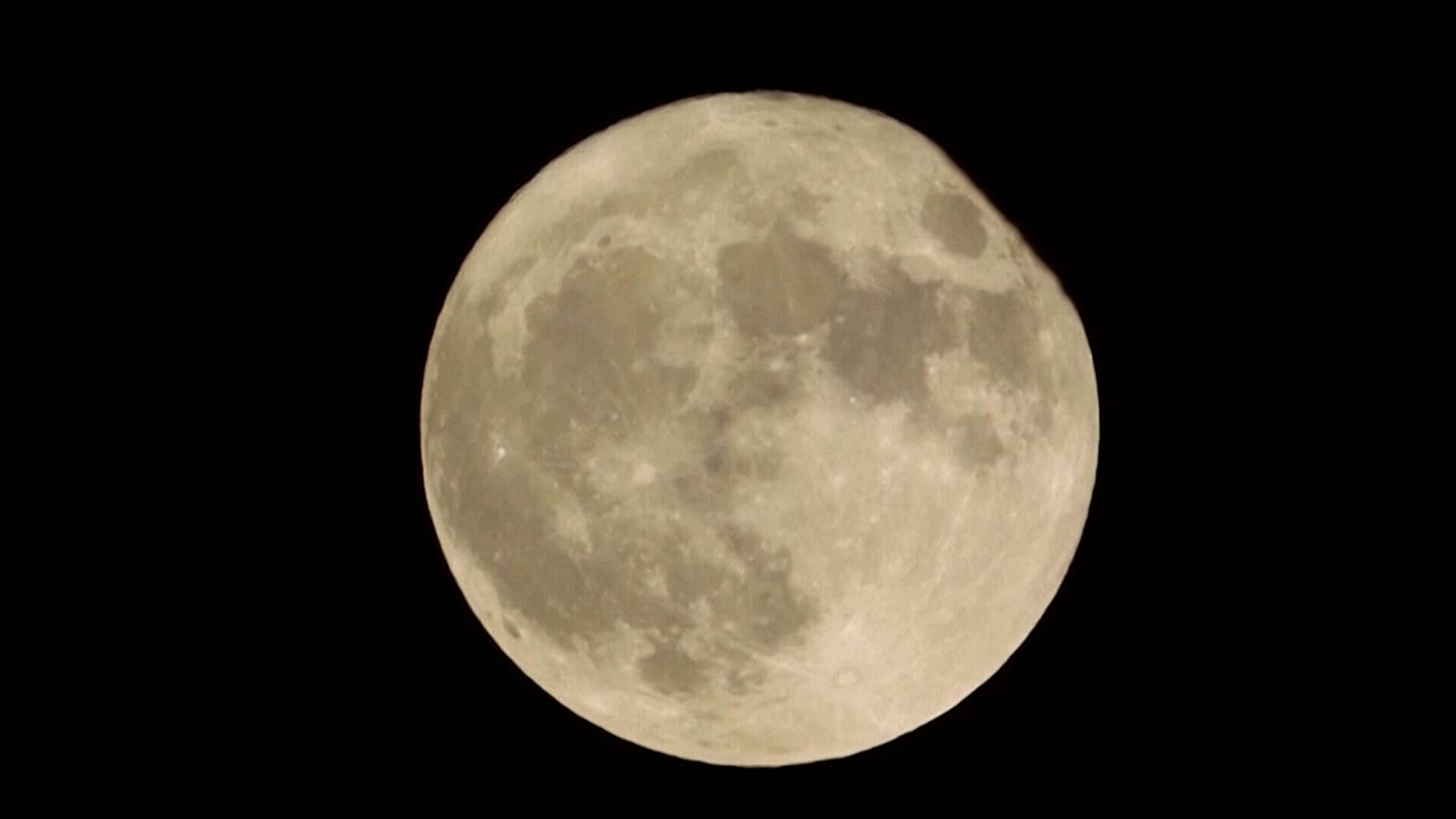
A recent analysis has revealed that Theia, the long-lost planet believed to have played a crucial role in the formation of the Moon, likely originated from the inner Solar System. This finding challenges previous assumptions about the planet’s location before it collided with Earth approximately 4.5 billion years ago.
The hypothesis surrounding Theia posits that it collided with early Earth, resulting in debris that eventually formed the Moon. For decades, this theory, known as the giant impact theory, has been the prevailing explanation for the Moon’s creation, but the absence of direct chemical evidence has made it difficult to confirm Theia’s exact origin and composition.
Analysis of Ancient Rocks Reveals New Insights
A team of astronomers from France, Germany, and the United States conducted a comprehensive analysis using ancient lunar and terrestrial rocks. Their research involved examining isotopes, which are chemical fingerprints that can provide insights into the history of celestial bodies.
Jake Foster, an astronomer at the Royal Observatory Greenwich in the UK, commented on the significance of the findings: “One of the things about this research that does make it so exciting is not only is it helping to paint a picture of what happened to the Earth four and a half billion years ago, but also it’s able to almost exactly pinpoint where this object came from.”
The research team embarked on a process referred to as planetary reverse engineering. By studying isotopes of elements such as iron, chromium, zirconium, and molybdenum, they modeled hundreds of scenarios to determine the possible origins of Theia.
New Findings Challenge Previous Theories
The results indicated that materials closer to the Sun, like Theia, formed under different temperatures and conditions than those further out in the Solar System. By comparing isotope patterns across various regions, researchers concluded that Theia most likely existed even closer to the Sun than early Earth, contradicting some earlier theories that suggested it formed in the outer Solar System.
The study’s findings could pave the way for future research into the growth, collisions, and evolution of planets in the early stages of solar systems. Understanding Theia’s origins not only sheds light on the history of the Moon but also enhances our understanding of planetary formation in general.
As scientists continue to analyze the data collected from both lunar samples and terrestrial rocks, the hope is that this research will contribute significantly to our knowledge of how celestial bodies interact and evolve over billions of years.










Belfast Gears Up for Vibrant St Patrick’s Day Parade on March 17

Cuba Faces Nationwide Blackout Amid Deepening Energy Crisis

Wirral Council to Restructure Leadership, Cutting Two Top Roles

Rethinking Resistance Training: Key Insights from US Experts

EU Membership on the Horizon: What It Means for Citizens

Ukrainian Drone Swarms Strike Moscow Region for Second Day

Henley Launches Innovative Initiative to Boost Local Economy

Court Ruling Allows Pandemic Tax Refund Claims Until 2026

Sean Penn’s Absence at 2026 Oscars Sparks Discussion

Coronation Street’s Shocking Murder Twist Reveals Family Secrets

Andrew Pierce Confirms Departure from ITV’s Good Morning Britain

Katie Price Faces New Health Concerns After Cancer Symptoms Resurface

Gyles Brandreth Shares Grandson’s Cancer Battle and Recovery

Sue Radford Reveals Weight Loss Journey, Shedding 12–13 kg

Kate Garraway Sells £2 Million Home Amid Financial Struggles

Jordan Brook Faces Health Crisis in Hospital as Sophie Kasaei Stays Away

EastEnders’ Nicola Mitchell Faces Unexpected Pregnancy Crisis

Reddit Study Reveals Distinctions Between Lurkers and Power Users
-
 World8 months ago
Coronation Street’s Shocking Murder Twist Reveals Family Secrets
-
 Entertainment8 months ago
Andrew Pierce Confirms Departure from ITV’s Good Morning Britain
-
 Health12 months ago
Katie Price Faces New Health Concerns After Cancer Symptoms Resurface
-
 Health7 months ago
Gyles Brandreth Shares Grandson’s Cancer Battle and Recovery
-
 Health7 months ago
Sue Radford Reveals Weight Loss Journey, Shedding 12–13 kg
-
 Entertainment1 year ago
Kate Garraway Sells £2 Million Home Amid Financial Struggles
-
 Entertainment5 months ago
Jordan Brook Faces Health Crisis in Hospital as Sophie Kasaei Stays Away
-
 World9 months ago
EastEnders’ Nicola Mitchell Faces Unexpected Pregnancy Crisis
-
 Science8 months ago
Reddit Study Reveals Distinctions Between Lurkers and Power Users
-

 World9 months ago
Mother Charged After Son, 9, Killed in Tragic Incident in Italy
-

 Entertainment12 months ago
Ann Ming Reflects on ITV’s ‘I Fought the Law’ Drama
-

 World9 months ago
Bailey Announces Heartbreaking Split from Rebecca After Reunion