
Top Stories
Vučić Addresses Media on Political Tensions in Montenegro

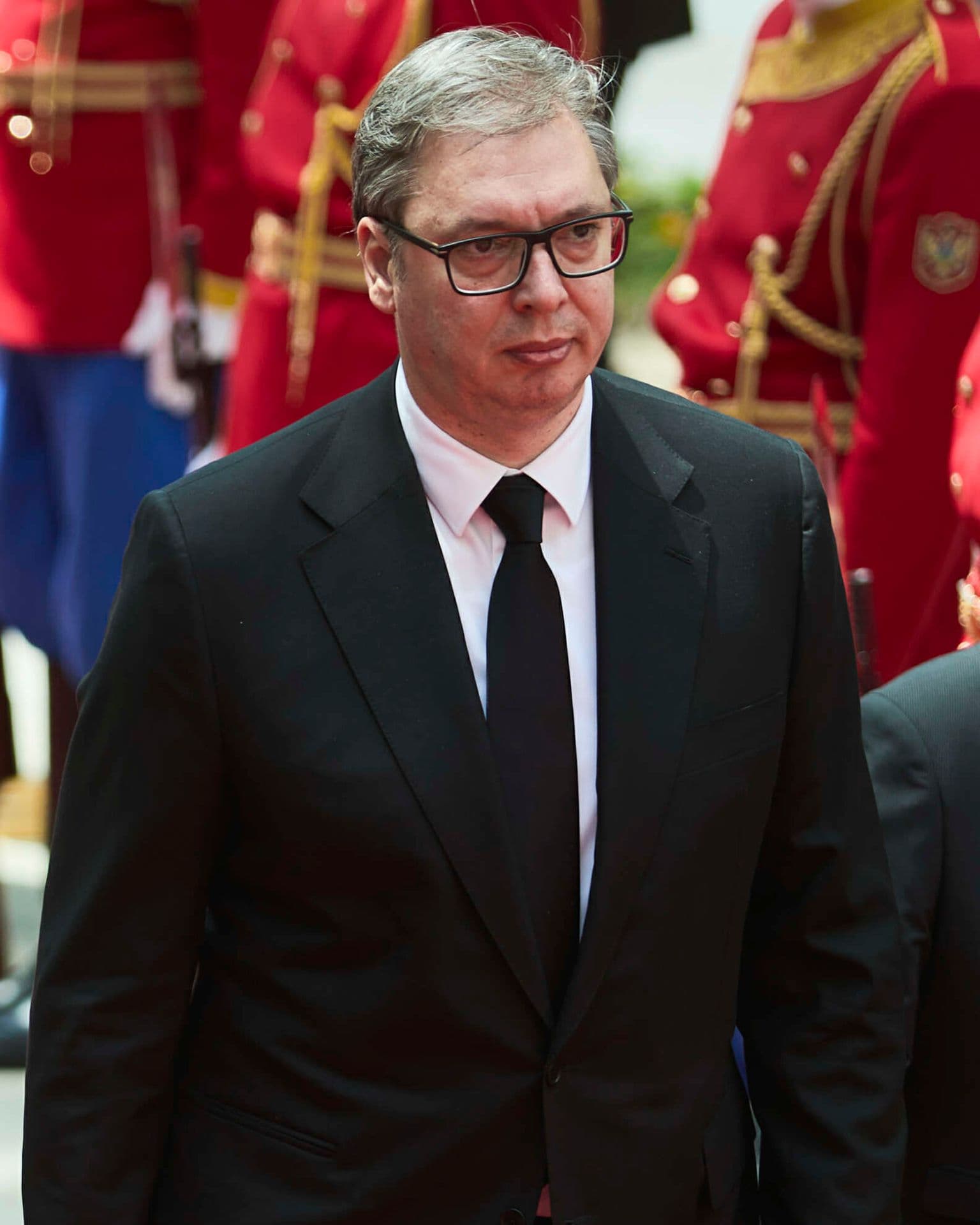
During a recent annual press conference, Serbian President Aleksandar Vučić expressed his concerns regarding ongoing political tensions in Montenegro. He revealed that he had spoken twice with Milan Knežević, a key leader of the Serbian community in Montenegro, about the situation. Vučić accused factions aligned with Montenegrin President Milo Đukanović of repeatedly attacking him, while emphasizing that Knežević and his supporters are not among those who have resorted to violence.
Vučić stated, “I am worried because those who attacked the police did not come from their homes. Knežević is a leader of the Serbs in Montenegro, and we have expressed our concerns.” He reiterated his hope for peace, mentioning that he aims to avoid escalating tensions and does not intend to interfere in Montenegrin affairs. The Serbian president conveyed his desire for the well-being of the people in Montenegro, stating, “I will always care and show concern for our people.”
The press conference took a critical turn when Vučić responded to media claims regarding his interference in Montenegro’s internal matters. In an ironic tone, he remarked, “The media is right that there were no arrests; they were taken to a fair. We are all blind and did not see what happened. A total of 54 people were detained, however you want to label it.” His comments followed the release of footage showing a police officer instructing Knežević to exit a police vehicle, which was quickly misinterpreted by some Serbian media as an arrest.
Security and Crime in the Region
Vučić discussed security issues in Serbia, noting a significant influx of criminal groups from Montenegro, Bosnia and Herzegovina, and Kosovo. He announced plans to enhance counterintelligence measures and increase personnel in special military and police units. “We are purchasing arms from various countries, including France, Israel, China, and Russia, to ensure that we never experience a situation like that of 1999 again,” he asserted.
The Serbian president also addressed the recent protests led by students across the country, which have garnered over 400,000 signatures in support of elections. Vučić dismissed this figure, stating that the maximum attendance at protests was around 92,000 people. He characterized the upcoming elections as potentially the most challenging in Serbia’s modern history, emphasizing that no winner will be declared until all votes are counted by 22:00.
Referring to the ongoing protests, Vučić highlighted the importance of maintaining peace despite illegal gatherings. He expressed pride that Serbia has preserved stability, contrasting this with the violence experienced in France during protests. He cited incidents of political violence in Serbia, including the shooting of Milan Bogdanović out of political hatred.
Economic Goals and Energy Concerns
Looking ahead, Vučić outlined two key goals for Serbia in the coming year: achieving peace and stability, and ensuring the best economic performance in the country’s history. He affirmed his commitment to military neutrality and adherence to UN resolutions concerning global crises, extending beyond the issues surrounding Kosovo.
On the pressing energy situation, Vučić expressed cautious optimism regarding the future of NIS (Naftna Industrija Srbije) and the anticipated decision from the American OFAC (Office of Foreign Assets Control) regarding licensing. He noted that Serbia has faced challenges with oil supply, specifically referencing a 83-day period without oil from the JANAF pipeline. Despite these challenges, he assured citizens of stable supply, albeit with an urgent drawdown of reserves accumulated over the years.
Vučić underscored the necessity of operational efficiency at the Pancevo refinery as a condition for the sale of NIS. He announced plans for significant investments in oil pipelines to Hungary and the construction of a gas interconnector with North Macedonia. He also mentioned the need for both small and large nuclear reactors as part of a broader strategy for clean energy.
In the healthcare sector, despite advancements in building clinical centers that Vučić likened to “spaceships,” challenges remain. The waiting list for surgeries, especially in orthopedics, has decreased from 65,000 in October 2022 to 29,000 currently. Vučić pointed out that fewer children are receiving treatment through fundraising efforts compared to countries in Scandinavia, the United States, and Europe, asserting that Serbia now possesses top-tier medical equipment and capable physicians to perform complex surgeries.









Belfast Gears Up for Vibrant St Patrick’s Day Parade on March 17

Cuba Faces Nationwide Blackout Amid Deepening Energy Crisis

Wirral Council to Restructure Leadership, Cutting Two Top Roles

Rethinking Resistance Training: Key Insights from US Experts

EU Membership on the Horizon: What It Means for Citizens

Ukrainian Drone Swarms Strike Moscow Region for Second Day

Henley Launches Innovative Initiative to Boost Local Economy

Court Ruling Allows Pandemic Tax Refund Claims Until 2026

Sean Penn’s Absence at 2026 Oscars Sparks Discussion

Coronation Street’s Shocking Murder Twist Reveals Family Secrets

Andrew Pierce Confirms Departure from ITV’s Good Morning Britain

Katie Price Faces New Health Concerns After Cancer Symptoms Resurface

Sue Radford Reveals Weight Loss Journey, Shedding 12–13 kg

Kate Garraway Sells £2 Million Home Amid Financial Struggles

Jordan Brook Faces Health Crisis in Hospital as Sophie Kasaei Stays Away

EastEnders’ Nicola Mitchell Faces Unexpected Pregnancy Crisis

Bailey Announces Heartbreaking Split from Rebecca After Reunion

Ann Ming Reflects on ITV’s ‘I Fought the Law’ Drama
-
 World4 months ago
Coronation Street’s Shocking Murder Twist Reveals Family Secrets
-
 Entertainment4 months ago
Andrew Pierce Confirms Departure from ITV’s Good Morning Britain
-
 Health7 months ago
Katie Price Faces New Health Concerns After Cancer Symptoms Resurface
-
 Health3 months ago
Sue Radford Reveals Weight Loss Journey, Shedding 12–13 kg
-
 Entertainment8 months ago
Kate Garraway Sells £2 Million Home Amid Financial Struggles
-
 Entertainment4 weeks ago
Jordan Brook Faces Health Crisis in Hospital as Sophie Kasaei Stays Away
-
 World5 months ago
EastEnders’ Nicola Mitchell Faces Unexpected Pregnancy Crisis
-
 World5 months ago
Bailey Announces Heartbreaking Split from Rebecca After Reunion
-
 Entertainment7 months ago
Ann Ming Reflects on ITV’s ‘I Fought the Law’ Drama
-

 Entertainment2 months ago
Selena Gomez’s Name Linked to Epstein: Examining the Claims
-

 Health7 months ago
TOWIE Stars Sophie Kasaei and Jordan Brook Pursue Fertility Treatment
-

 Health8 months ago
Fiona Phillips’ Husband Shares Heartbreaking Update on Her Health