
Top Stories
Emirates Set to Maintain Largest Boeing Widebody Fleet by 2026


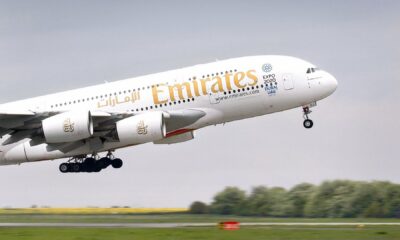
Emirates is poised to operate the largest Boeing widebody fleet in 2026, reinforcing its dominance in long-haul travel and cargo logistics. As of January 1, 2026, the Dubai-based airline not only leads in the number of Boeing widebody aircraft but also boasts a significant order backlog that continues to shape the future of global connectivity. This position is emblematic of the airline’s strategic focus on widebody aircraft, particularly the Boeing 777 family, which has underpinned its operations for over two decades.
Emirates operates more than 140 Boeing widebody aircraft, comprising both passenger and cargo roles, according to fleet data from ch-aviation. The airline’s fleet is predominantly made up of the Boeing 777-300ER, which serves as the backbone of its extensive long-haul network. The scale of Emirates’ operations stands in stark contrast to many global competitors, who often manage smaller fleets comprising multiple aircraft types. The airline’s all-widebody strategy allows it to connect Dubai to virtually any major city worldwide, a model not pursued by most airlines.
Fleet Composition and Future Outlook
The significance of Emirates’ fleet extends beyond its current operations. The airline has committed to acquiring hundreds of additional Boeing widebodies, primarily from the 777X family. Although deliveries have faced delays due to certification issues, the eventual integration of these aircraft will further solidify Emirates’ status as the largest Boeing widebody operator. The 777X is designed to replace older models and enhance operational efficiency, making it central to the airline’s growth strategy.
Emirates has also maintained the Boeing 777-200LR as a key player in its fleet, operating ten units that specialize in ultra-long-haul routes. This aircraft’s capability to endure long distances without compromising payload performance has made it indispensable for challenging routes, particularly to destinations in the Americas. While the introduction of newer aircraft like the Airbus A350 may eventually reduce the number of 777-200LRs, their contribution to Emirates’ overall fleet remains significant.
The airline’s cargo operations are equally impressive. Emirates SkyCargo operates 11 Boeing 777-200F freighters with an additional ten on order, making it one of the largest operators of this aircraft type globally. The integration of cargo and passenger services not only reflects a strategic business model but also underscores the demand for Boeing widebody aircraft within Emirates’ operations.
Comparative Analysis with Rivals
When examining the competitive landscape, Emirates stands apart from its regional rivals, such as Etihad Airways and Qatar Airways. While all three airlines leverage the Gulf region’s advantageous location for long-haul operations, their fleet strategies differ significantly. Etihad has significantly downsized its operations in response to financial challenges, focusing primarily on the Boeing 787 Dreamliner. As a result, it operates a limited number of Boeing widebody aircraft compared to Emirates.
Qatar Airways maintains a robust fleet of Boeing 777-300ERs and 787s, but its mixed-fleet strategy, which includes a substantial number of Airbus aircraft, limits its overall Boeing widebody capacity. While Qatar competes effectively on efficiency and route diversity, it cannot match Emirates’ scale and concentration within the Boeing fleet.
Despite Emirates’ leadership in widebody operations, challenges persist. The airline’s strategy of relying heavily on a limited number of aircraft types poses risks. Continued delays with the 777X could force Emirates to retain older aircraft longer than anticipated, increasing maintenance costs and operational complexities. However, the airline has a track record of adaptability, employing fleet refurbishments and flexible deployment strategies to navigate uncertainties.
The future of Emirates’ widebody fleet is not just a reflection of its current standing but also a predictor of trends in global aviation. By emphasizing the Boeing 777 family, the airline has carved out a unique market position. With more than 140 Boeing widebodies currently in service and hundreds more on order, Emirates is set to maintain its status as the world’s largest operator of Boeing widebody aircraft well into the next decade.
As the industry evolves, the success of the 777X will be critical not only for Emirates’ future but also for the broader landscape of large widebody operations. If the program fulfills its potential, the airline’s lead could become a defining feature of global aviation in the late 2020s.











Belfast Gears Up for Vibrant St Patrick’s Day Parade on March 17

Cuba Faces Nationwide Blackout Amid Deepening Energy Crisis

Wirral Council to Restructure Leadership, Cutting Two Top Roles

Rethinking Resistance Training: Key Insights from US Experts

EU Membership on the Horizon: What It Means for Citizens

Ukrainian Drone Swarms Strike Moscow Region for Second Day

Henley Launches Innovative Initiative to Boost Local Economy

Court Ruling Allows Pandemic Tax Refund Claims Until 2026

Sean Penn’s Absence at 2026 Oscars Sparks Discussion

Coronation Street’s Shocking Murder Twist Reveals Family Secrets

Andrew Pierce Confirms Departure from ITV’s Good Morning Britain

Katie Price Faces New Health Concerns After Cancer Symptoms Resurface

Gyles Brandreth Shares Grandson’s Cancer Battle and Recovery

Sue Radford Reveals Weight Loss Journey, Shedding 12–13 kg

Kate Garraway Sells £2 Million Home Amid Financial Struggles

Jordan Brook Faces Health Crisis in Hospital as Sophie Kasaei Stays Away

EastEnders’ Nicola Mitchell Faces Unexpected Pregnancy Crisis

Reddit Study Reveals Distinctions Between Lurkers and Power Users
-
 World8 months ago
Coronation Street’s Shocking Murder Twist Reveals Family Secrets
-
 Entertainment8 months ago
Andrew Pierce Confirms Departure from ITV’s Good Morning Britain
-
 Health12 months ago
Katie Price Faces New Health Concerns After Cancer Symptoms Resurface
-
 Health7 months ago
Gyles Brandreth Shares Grandson’s Cancer Battle and Recovery
-
 Health7 months ago
Sue Radford Reveals Weight Loss Journey, Shedding 12–13 kg
-
 Entertainment1 year ago
Kate Garraway Sells £2 Million Home Amid Financial Struggles
-
 Entertainment5 months ago
Jordan Brook Faces Health Crisis in Hospital as Sophie Kasaei Stays Away
-
 World10 months ago
EastEnders’ Nicola Mitchell Faces Unexpected Pregnancy Crisis
-
 Science8 months ago
Reddit Study Reveals Distinctions Between Lurkers and Power Users
-

 World9 months ago
Mother Charged After Son, 9, Killed in Tragic Incident in Italy
-

 Entertainment12 months ago
Ann Ming Reflects on ITV’s ‘I Fought the Law’ Drama
-

 World9 months ago
Bailey Announces Heartbreaking Split from Rebecca After Reunion