
Top Stories
Addressing Violence Against Women in Public Spaces: A Call to Action

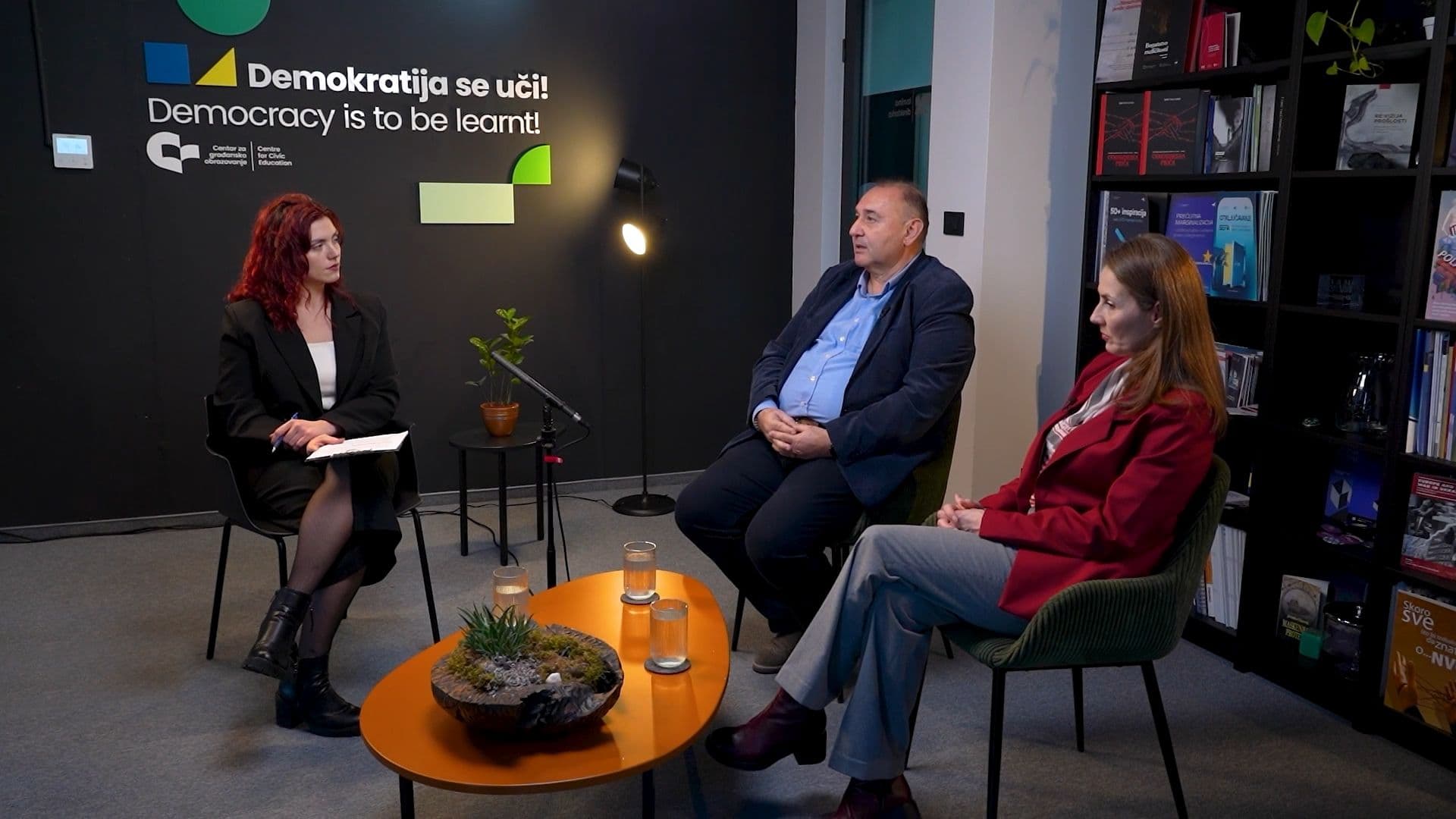
Violence against women in public spaces remains a critical social issue, despite progress made in recent years toward addressing and recognizing this pervasive problem. Sinisa Bjekovic, Montenegro’s Human Rights and Freedoms Protector, highlighted these ongoing challenges during a recent appearance on the PROUDCAST hosted by the Center for Civil Education (CGO). He emphasized that while there has been some advancement in understanding accountability regarding such violence, it continues to be trivialized in many contexts.
Bjekovic noted that a decade ago, it was often difficult to convey the responsibility of perpetrators, who would dismiss their actions by stating that the victim was their wife. “From that moment until today, we have progressed through several stages in terms of accountability and the sensitivity of certain institutions,” he said. He presented findings from a study conducted in collaboration with the United Nations Development Programme (UNDP), revealing approximately 300,000 cases of hate speech online from July to October 2022, with around 5% specifically relating to gender-based violence.
He further illustrated the volume of cases that institutions are expected to manage, indicating that the number of individual instances could range from 5,000 to 7,000 monthly. Bjekovic underscored the necessity for preventive measures, particularly for women in public spaces, who are frequently the targets of such illegal behaviors.
The rise in reported cases of violence, especially in criminal courts, has revealed deeply ingrained stereotypes regarding women’s roles in society. Bjekovic stated, “We must finally accept that women have the same dignity as men, and no one has the right to publicly discredit them, especially not through violence.” This sentiment was echoed by Brankica Jankovic, former Commissioner for the Protection of Equality from Serbia, who described various forms of discrimination, including hate speech and derogatory remarks, as longstanding issues that have now transitioned into the digital realm.
“Digital tools enable one click to reach a massive audience,” Jankovic explained. She highlighted how women, once legally pushed out of public life, now face sophisticated digital means of exclusion. The impact of this is significant, with many women withdrawing from public life, particularly politics, which ultimately constricts democratic spaces and diminishes decision-making quality.
Jankovic identified one of the most common forms of online violence as the distribution of sexually explicit content. She pointed out a crucial gap in trained personnel within institutions responsible for processing these incidents. “There is an urgent need to strengthen the capacities of prosecutors, especially in departments handling high-tech crime, as well as the police and courts, to ensure that victims receive adequate protection,” she stated, adding that many women hesitate to report violence due to a lack of trust in institutions and feelings of shame.
Women are often subjected to questions that shift blame onto them, such as “What did you do to provoke him?” This occurs in both physical and digital contexts. Jankovic noted that when women express themselves confidently and become visible, they can face various forms of digital violence, including sexual harassment and doxing. “The shift from one form of violence to another remains familiar to many citizens,” she clarified.
Both Bjekovic and Jankovic agreed that violence against publicly active women also occurs within parliamentary settings. They acknowledged that while there are mechanisms for ethical oversight, these are insufficient and require a thorough review. It is evident that women in the public sphere face significantly more challenges than their male counterparts, with personal attacks being more common than critiques of their work.
Preventive measures, including education and the role of the media, were highlighted as crucial. “Even preschool education presents an opportunity to instill the belief that all people are equal, that everyone has equal dignity, and that all individuals should be accepted as they are,” Bjekovic emphasized. Jankovic concluded that both education and the media play a pivotal role in combating violence, stressing the need for media outlets to avoid normalizing violence and instead promote societal values that unequivocally condemn it.












Belfast Gears Up for Vibrant St Patrick’s Day Parade on March 17

Cuba Faces Nationwide Blackout Amid Deepening Energy Crisis

Wirral Council to Restructure Leadership, Cutting Two Top Roles

Rethinking Resistance Training: Key Insights from US Experts

EU Membership on the Horizon: What It Means for Citizens

Ukrainian Drone Swarms Strike Moscow Region for Second Day

Henley Launches Innovative Initiative to Boost Local Economy

Court Ruling Allows Pandemic Tax Refund Claims Until 2026

Sean Penn’s Absence at 2026 Oscars Sparks Discussion

Coronation Street’s Shocking Murder Twist Reveals Family Secrets

Andrew Pierce Confirms Departure from ITV’s Good Morning Britain

Katie Price Faces New Health Concerns After Cancer Symptoms Resurface

Sue Radford Reveals Weight Loss Journey, Shedding 12–13 kg

Kate Garraway Sells £2 Million Home Amid Financial Struggles

Jordan Brook Faces Health Crisis in Hospital as Sophie Kasaei Stays Away

EastEnders’ Nicola Mitchell Faces Unexpected Pregnancy Crisis

Bailey Announces Heartbreaking Split from Rebecca After Reunion

Ann Ming Reflects on ITV’s ‘I Fought the Law’ Drama
-
 World4 months ago
Coronation Street’s Shocking Murder Twist Reveals Family Secrets
-
 Entertainment4 months ago
Andrew Pierce Confirms Departure from ITV’s Good Morning Britain
-
 Health7 months ago
Katie Price Faces New Health Concerns After Cancer Symptoms Resurface
-
 Health2 months ago
Sue Radford Reveals Weight Loss Journey, Shedding 12–13 kg
-
 Entertainment8 months ago
Kate Garraway Sells £2 Million Home Amid Financial Struggles
-
 Entertainment3 weeks ago
Jordan Brook Faces Health Crisis in Hospital as Sophie Kasaei Stays Away
-
 World5 months ago
EastEnders’ Nicola Mitchell Faces Unexpected Pregnancy Crisis
-
 World5 months ago
Bailey Announces Heartbreaking Split from Rebecca After Reunion
-
 Entertainment7 months ago
Ann Ming Reflects on ITV’s ‘I Fought the Law’ Drama
-

 Entertainment2 months ago
Selena Gomez’s Name Linked to Epstein: Examining the Claims
-

 Health7 months ago
TOWIE Stars Sophie Kasaei and Jordan Brook Pursue Fertility Treatment
-

 Health7 months ago
Fiona Phillips’ Husband Shares Heartbreaking Update on Her Health