
Science
Astronomers Debate Age of 3I/ATLAS, Potentially 14 Billion Years Old

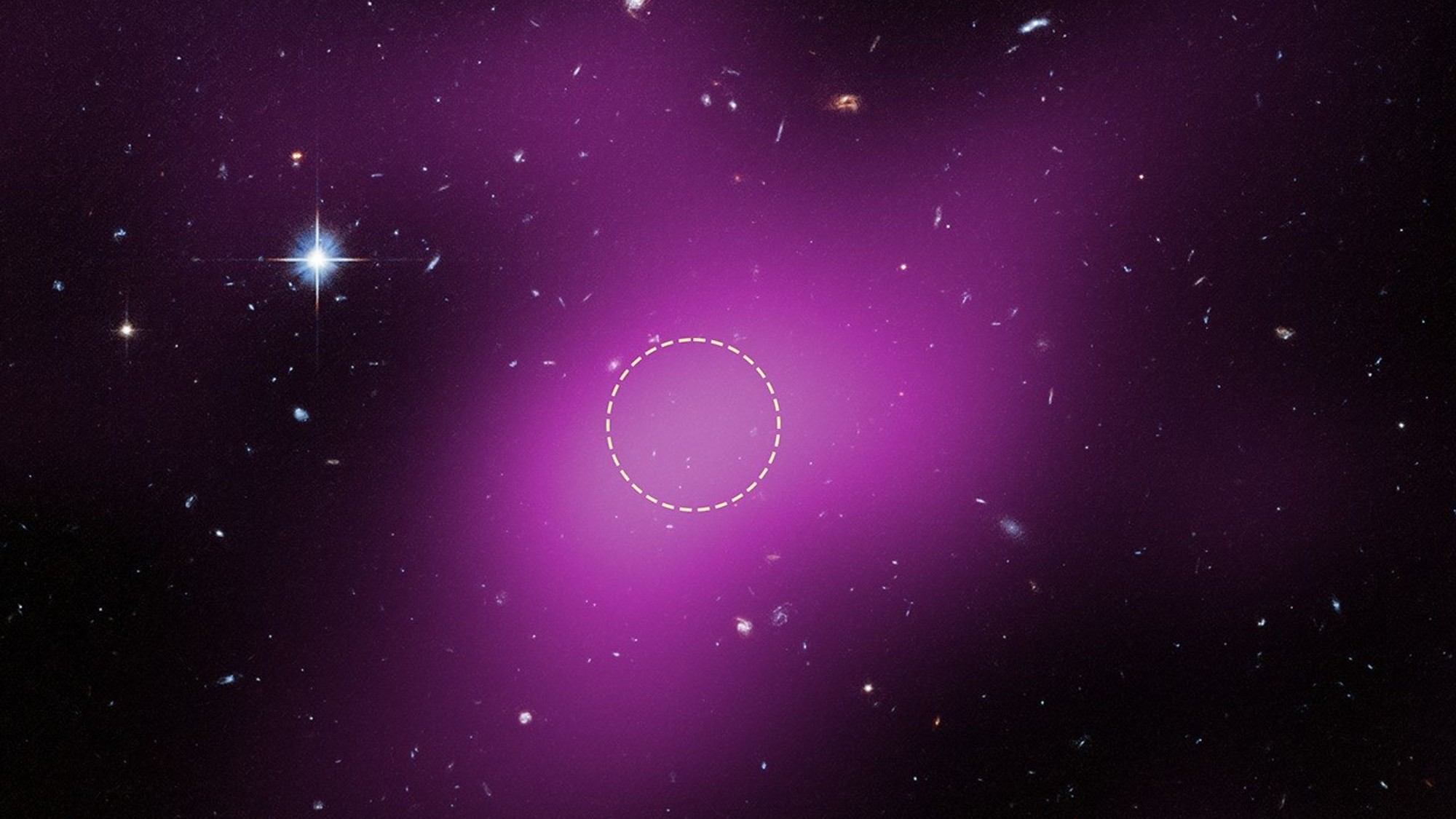
A new interstellar object, designated as 3I/ATLAS, has sparked significant debate among astronomers regarding its age and origins. Discovered by the Asteroid Terrestrial-impact Last Alert System in Chile on July 1, 2025, this object was initially thought to be a near-Earth asteroid. However, its hyperbolic trajectory revealed it to be an interstellar visitor, challenging existing astrophysical theories.
The most striking claim is that 3I/ATLAS could be as old as 14 billion years, potentially making it older than the Sun and possibly even the universe itself. This theory, proposed by astronomer Michele Bannister and her team at the University of Canterbury in New Zealand, posits that the object may be a remnant from a long-extinct star system. If validated, it would serve as a “messenger from afar,” providing insights into conditions in the early universe.
Challenges in Determining Age
Despite the intriguing hypothesis, the scientific community remains cautious. The primary challenge lies in the lack of physical samples necessary for precise isotopic analysis, which is essential for accurate dating. As it stands, researchers must rely on indirect measurements, such as the object’s velocity, which is currently estimated at 137,000 miles per hour relative to the Sun. This makes any age estimation a matter of complex modeling rather than empirical evidence.
Bannister’s model suggests that 3I/ATLAS originated from the Milky Way’s “thick disk,” a region where stars formed shortly after the Big Bang. Nonetheless, discussions of radiocarbon dating have emerged, though experts quickly dismiss this approach. Carbon-14 dating is only applicable to organic materials up to 50,000 years old, rendering it ineffective for this metallic and icy interstellar object.
NASA has adopted a more conservative stance, suggesting that while 3I/ATLAS is indeed an outsider, its characteristics align more closely with Oort Cloud comets, indicating it could be around 4.5 billion years old.
Unusual Characteristics and Observations
Observations from the James Webb Space Telescope (JWST) and the Very Large Telescope (VLT) in Chile have unveiled a chemical composition that is distinctive compared to known solar system objects. 3I/ATLAS exhibits a high ratio of carbon dioxide to water, alongside unexpected emissions of nickel and iron. These metallic signatures, which are typically found in the cores of stars or rocky planets, appear in the comet’s coma at distances where they should, by all accounts, be frozen.
The VLT confirmed the presence of atomic nickel vapor at 3.3 astronomical units from the Sun, a distance previously thought to be too cold for such sublimation without intense heating. Additionally, astronomers at the Teide Observatory in Tenerife have observed peculiar “wobbling” jets and anti-tail structures that do not align with solar radiation pressure. These jets shift every seven hours and 45 minutes, leading some, including Harvard’s Avi Loeb, to speculate about a technological origin, although most scientists attribute this phenomenon to a natural wobble of the nucleus.
On December 19, 2025, 3I/ATLAS made its closest approach to Earth, passing at a safe distance of 1.8 astronomical units, or approximately 170 million miles. While the absence of a dramatic event during this close encounter was a relief, the scientific intrigue surrounding this object continues. As of January 2026, it has faded to magnitude 13 and is currently located within the constellation of Leo.
As 3I/ATLAS embarks on its long journey back into the cosmos, it leaves behind a trail of questions. This icy traveler serves as a reminder of the vast unknowns in the universe, illustrating how much remains to be discovered beyond our solar system. Scientists are left pondering if this object is a fragment of a larger progenitor or a solitary remnant from a long-gone galaxy.










Belfast Gears Up for Vibrant St Patrick’s Day Parade on March 17

Cuba Faces Nationwide Blackout Amid Deepening Energy Crisis

Wirral Council to Restructure Leadership, Cutting Two Top Roles

Rethinking Resistance Training: Key Insights from US Experts

EU Membership on the Horizon: What It Means for Citizens

Ukrainian Drone Swarms Strike Moscow Region for Second Day

Henley Launches Innovative Initiative to Boost Local Economy

Court Ruling Allows Pandemic Tax Refund Claims Until 2026

Sean Penn’s Absence at 2026 Oscars Sparks Discussion

Coronation Street’s Shocking Murder Twist Reveals Family Secrets

Andrew Pierce Confirms Departure from ITV’s Good Morning Britain

Katie Price Faces New Health Concerns After Cancer Symptoms Resurface

Gyles Brandreth Shares Grandson’s Cancer Battle and Recovery

Sue Radford Reveals Weight Loss Journey, Shedding 12–13 kg

Kate Garraway Sells £2 Million Home Amid Financial Struggles

Jordan Brook Faces Health Crisis in Hospital as Sophie Kasaei Stays Away

EastEnders’ Nicola Mitchell Faces Unexpected Pregnancy Crisis

Reddit Study Reveals Distinctions Between Lurkers and Power Users
-
 World9 months ago
Coronation Street’s Shocking Murder Twist Reveals Family Secrets
-
 Entertainment8 months ago
Andrew Pierce Confirms Departure from ITV’s Good Morning Britain
-
 Health12 months ago
Katie Price Faces New Health Concerns After Cancer Symptoms Resurface
-
 Health7 months ago
Gyles Brandreth Shares Grandson’s Cancer Battle and Recovery
-
 Health7 months ago
Sue Radford Reveals Weight Loss Journey, Shedding 12–13 kg
-
 Entertainment1 year ago
Kate Garraway Sells £2 Million Home Amid Financial Struggles
-
 Entertainment5 months ago
Jordan Brook Faces Health Crisis in Hospital as Sophie Kasaei Stays Away
-
 World10 months ago
EastEnders’ Nicola Mitchell Faces Unexpected Pregnancy Crisis
-
 Science8 months ago
Reddit Study Reveals Distinctions Between Lurkers and Power Users
-

 World9 months ago
Mother Charged After Son, 9, Killed in Tragic Incident in Italy
-

 Entertainment12 months ago
Ann Ming Reflects on ITV’s ‘I Fought the Law’ Drama
-

 World9 months ago
Bailey Announces Heartbreaking Split from Rebecca After Reunion