
Business
Emirates Set to Dominate Boeing Widebody Market in 2026


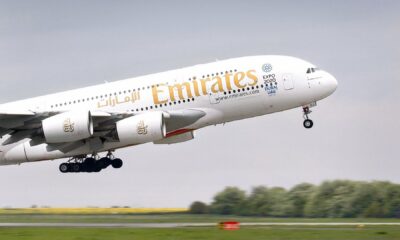
As of January 1, 2026, Emirates will operate the world’s largest fleet of Boeing widebody aircraft, solidifying its status as a leading player in long-haul aviation. This Dubai-based airline has strategically positioned itself to extend its dominance in an industry shaped by evolving demands and supply chain challenges. The impressive scale of Emirates’ fleet underscores its commitment to long-haul travel, cargo logistics, and global connectivity.
Emirates has built its reputation on a fleet that relies heavily on Boeing widebody aircraft, particularly the Boeing 777 family, which serves both passenger and cargo operations. The airline currently operates over 140 Boeing widebody aircraft, with the Boeing 777-300ER serving as the backbone of its operations. This fleet is complemented by a substantial order backlog that positions Emirates to maintain its lead in the coming years, despite challenges related to aircraft delivery schedules.
Emirates’ Fleet Strategy and Global Position
Emirates has adopted a unique fleet philosophy that prioritizes widebody aircraft. Unlike many competitors, the airline has never incorporated narrowbody jets into its operations, focusing instead on high-capacity, long-range jets that can connect Dubai with virtually any major city worldwide. The geographical advantage of Dubai, located at the crossroads of Europe, Asia, Africa, and Australasia, enhances the airline’s ability to operate long-haul flights efficiently.
The Boeing 777-300ER, with its combination of range, capacity, and reliability, has become synonymous with the Emirates brand. With 119 active units, Emirates is the largest operator of this aircraft model globally. The airline has continuously invested in maintaining the relevance of the 777-300ER through extensive cabin refurbishments, ensuring that older models remain competitive in the market.
In addition to passenger services, Emirates SkyCargo plays a crucial role in the airline’s operations. The cargo division operates 11 Boeing 777-200F freighters, with plans to add more, demonstrating a commitment to integrating air freight into its broader network strategy. This deep integration of passenger and cargo operations makes Emirates a formidable player in both sectors.
The Future of Emirates’ Boeing Fleet
Looking ahead, the Boeing 777X is poised to become a cornerstone of Emirates’ fleet, with the airline having ordered 235 Boeing 777-9s and 35 Boeing 777-8s. This aircraft is expected to replace older models while offering enhanced efficiency and passenger comfort. Although delays in certification have raised concerns about timely delivery, even a limited entry into service would further solidify Emirates’ position as the world’s largest operator of Boeing widebody aircraft.
The airline’s reliance on a concentrated fleet strategy does present risks. Currently, Emirates operates only three aircraft types: the Boeing 777, the Airbus A380, and the Airbus A350. This limited diversification could expose the airline to operational challenges should systemic issues arise with Boeing’s widebody models. Nonetheless, Emirates has consistently demonstrated its ability to adapt, leveraging its fleet for operational flexibility.
Comparatively, airlines like Etihad Airways and Qatar Airways provide context for Emirates’ success. Etihad has scaled back its operations significantly and now relies primarily on the Boeing 787, while Qatar Airways maintains a more mixed fleet with a notable presence of Airbus aircraft. Despite these competitors, Emirates’ focus on the Boeing 777 family and its extensive order book ensure its dominance in the widebody market.
Overall, Emirates is not merely positioned as a leader in Boeing widebody operations; it is set to redefine the landscape of long-haul aviation. With a strategic focus on fleet composition and a commitment to customer service, the airline is prepared to navigate future challenges while maintaining its status at the forefront of global aviation. As the industry evolves, Emirates will likely continue to adapt, leveraging its extensive experience and robust fleet to shape the future of long-distance air travel.











Belfast Gears Up for Vibrant St Patrick’s Day Parade on March 17

Cuba Faces Nationwide Blackout Amid Deepening Energy Crisis

Wirral Council to Restructure Leadership, Cutting Two Top Roles

Rethinking Resistance Training: Key Insights from US Experts

EU Membership on the Horizon: What It Means for Citizens

Ukrainian Drone Swarms Strike Moscow Region for Second Day

Henley Launches Innovative Initiative to Boost Local Economy

Court Ruling Allows Pandemic Tax Refund Claims Until 2026

Sean Penn’s Absence at 2026 Oscars Sparks Discussion

Coronation Street’s Shocking Murder Twist Reveals Family Secrets

Andrew Pierce Confirms Departure from ITV’s Good Morning Britain

Katie Price Faces New Health Concerns After Cancer Symptoms Resurface

Sue Radford Reveals Weight Loss Journey, Shedding 12–13 kg

Kate Garraway Sells £2 Million Home Amid Financial Struggles

Jordan Brook Faces Health Crisis in Hospital as Sophie Kasaei Stays Away

EastEnders’ Nicola Mitchell Faces Unexpected Pregnancy Crisis

Bailey Announces Heartbreaking Split from Rebecca After Reunion

Ann Ming Reflects on ITV’s ‘I Fought the Law’ Drama
-
 World4 months ago
Coronation Street’s Shocking Murder Twist Reveals Family Secrets
-
 Entertainment4 months ago
Andrew Pierce Confirms Departure from ITV’s Good Morning Britain
-
 Health7 months ago
Katie Price Faces New Health Concerns After Cancer Symptoms Resurface
-
 Health2 months ago
Sue Radford Reveals Weight Loss Journey, Shedding 12–13 kg
-
 Entertainment8 months ago
Kate Garraway Sells £2 Million Home Amid Financial Struggles
-
 Entertainment3 weeks ago
Jordan Brook Faces Health Crisis in Hospital as Sophie Kasaei Stays Away
-
 World5 months ago
EastEnders’ Nicola Mitchell Faces Unexpected Pregnancy Crisis
-
 World5 months ago
Bailey Announces Heartbreaking Split from Rebecca After Reunion
-
 Entertainment7 months ago
Ann Ming Reflects on ITV’s ‘I Fought the Law’ Drama
-

 Entertainment2 months ago
Selena Gomez’s Name Linked to Epstein: Examining the Claims
-

 Health7 months ago
TOWIE Stars Sophie Kasaei and Jordan Brook Pursue Fertility Treatment
-

 Health7 months ago
Fiona Phillips’ Husband Shares Heartbreaking Update on Her Health