
Health
Study Reveals Brain’s Adaptation in Children with Limb Differences

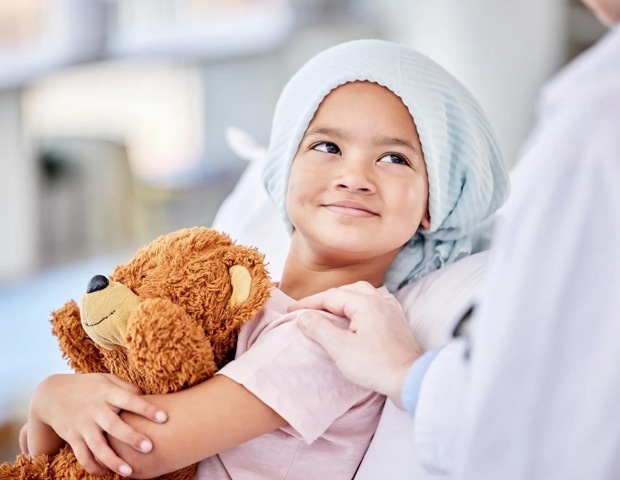
A groundbreaking study has shown how the brains of children born with upper limb differences adapt to support daily activities. Conducted by researchers from the University of Cambridge and Durham University, the research highlights significant changes in brain activity that enable these children to navigate a world designed for individuals with two hands. The findings were published in Nature Communications.
In this study, scientists employed advanced imaging techniques to observe brain activity in 16 children aged five to seven who were born with a congenital limb difference, such as having one hand. They compared these results to those from 21 children without limb differences. The investigation aimed to understand how the brain compensates for the missing limb by reallocating resources in the somatosensory cortex, the area responsible for processing sensory information related to various body parts.
The research team faced challenges in conducting brain imaging studies with children, who tend to move more than adults, complicating the use of functional magnetic resonance imaging (fMRI). To address this, the researchers developed a unique test involving storytelling and sensory stimulation. Participants listened to a narrative about an enchanted forest and wore devices that mimicked butterfly wing sensations on different body parts. This innovative approach allowed the team to map brain activity effectively.
The results revealed that, unlike adults who lose a hand later in life, children’s brains show remarkable flexibility. The area typically reserved for the missing limb instead represented multiple body parts. Additionally, changes were evident throughout the entire body map, indicating a shift that enhances overall functionality.
Professor Tamar Makin from the MRC Cognition & Brain Sciences Unit at the University of Cambridge remarked on the implications of these findings. “These kids have to figure out how to adapt to a world designed for people with two hands. Their entire body map is shifted and changed from an early age,” she explained. The study suggests that the brain is inherently equipped to support these adaptations, with resources allocated to different body parts early in life.
The research also involved adult participants, including those born with similar limb differences. By comparing their brain maps to those of the children, the team found that the changes observed in early childhood tend to stabilize into adulthood, even as adults rely more heavily on their functional limb.
In a related commentary, Dr. Raffaele Tucciarelli highlighted the significance of the study. “Although we found changes in the brain relating to behaviour, we saw much wider changes due to homeostatic plasticity,” he noted. This process helps maintain stability in brain activity, ensuring that areas do not become inactive or overly active, thus preventing potential issues.
The study also engaged with the charity Reach, which supports families of children with upper limb differences. The charity played a crucial role in recruiting families to participate in the research. Parents like Gemma Lonnon, whose son Noah took part, expressed gratitude for the opportunity to contribute to understanding how children adapt. “Taking part was important to us. It is fascinating to see how children like Noah develop unique skills to overcome challenges,” she shared.
The findings not only shed light on the adaptability of the human brain but also provide reassurance to families navigating the challenges associated with limb differences. The research underscores the importance of understanding how children’s brains are wired differently, ultimately supporting their innovative approaches to everyday tasks.
As this research continues to develop, it may offer further insights into the mechanisms of brain plasticity and adaptation, potentially benefiting children with similar conditions worldwide.





Belfast Gears Up for Vibrant St Patrick’s Day Parade on March 17

Cuba Faces Nationwide Blackout Amid Deepening Energy Crisis

Wirral Council to Restructure Leadership, Cutting Two Top Roles

Rethinking Resistance Training: Key Insights from US Experts

EU Membership on the Horizon: What It Means for Citizens

Ukrainian Drone Swarms Strike Moscow Region for Second Day

Henley Launches Innovative Initiative to Boost Local Economy

Court Ruling Allows Pandemic Tax Refund Claims Until 2026

Sean Penn’s Absence at 2026 Oscars Sparks Discussion

Coronation Street’s Shocking Murder Twist Reveals Family Secrets

Andrew Pierce Confirms Departure from ITV’s Good Morning Britain

Katie Price Faces New Health Concerns After Cancer Symptoms Resurface

Gyles Brandreth Shares Grandson’s Cancer Battle and Recovery

Sue Radford Reveals Weight Loss Journey, Shedding 12–13 kg

Kate Garraway Sells £2 Million Home Amid Financial Struggles

Jordan Brook Faces Health Crisis in Hospital as Sophie Kasaei Stays Away

EastEnders’ Nicola Mitchell Faces Unexpected Pregnancy Crisis

Mother Charged After Son, 9, Killed in Tragic Incident in Italy
-
 World7 months ago
Coronation Street’s Shocking Murder Twist Reveals Family Secrets
-
 Entertainment7 months ago
Andrew Pierce Confirms Departure from ITV’s Good Morning Britain
-
 Health10 months ago
Katie Price Faces New Health Concerns After Cancer Symptoms Resurface
-
 Health5 months ago
Gyles Brandreth Shares Grandson’s Cancer Battle and Recovery
-
 Health6 months ago
Sue Radford Reveals Weight Loss Journey, Shedding 12–13 kg
-
 Entertainment11 months ago
Kate Garraway Sells £2 Million Home Amid Financial Struggles
-
 Entertainment4 months ago
Jordan Brook Faces Health Crisis in Hospital as Sophie Kasaei Stays Away
-
 World8 months ago
EastEnders’ Nicola Mitchell Faces Unexpected Pregnancy Crisis
-
 World8 months ago
Mother Charged After Son, 9, Killed in Tragic Incident in Italy
-

 Entertainment10 months ago
Ann Ming Reflects on ITV’s ‘I Fought the Law’ Drama
-

 World8 months ago
Bailey Announces Heartbreaking Split from Rebecca After Reunion
-

 Entertainment5 months ago
Selena Gomez’s Name Linked to Epstein: Examining the Claims