
World
Yamagata Claims Ramen Capital Title with Culinary Passion

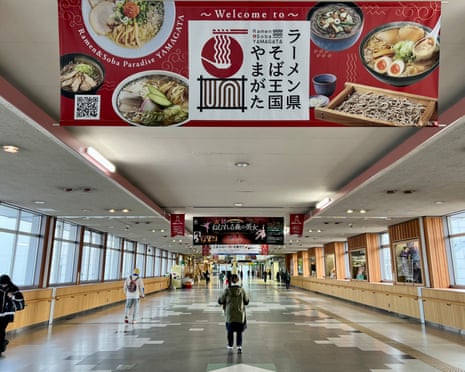
The city of Yamagata, located in northeastern Japan, has officially earned the title of Japan’s ramen capital, surpassing its closest competitor, Niigata. This designation reflects a deep-rooted cultural appreciation for ramen, a dish that has become synonymous with the city, where residents devote significant time and resources to savoring it. On a recent cold afternoon at Men Endo, a local ramen shop, diners engaged in lively exchanges with the chefs as they enjoyed bowls of steaming noodles.
At Men Endo, situated near a school and residential area, patrons eagerly select from a variety of options. Choices range from traditional shoyu (soy sauce) ramen, available in small, medium, or large portions, to the unique maji soba—a soupless combination of toppings, sauce, and noodles that diners mix with chopsticks. The restaurant has cultivated a loyal clientele, comprising construction workers, couples, and solo diners who appreciate the quality of the offerings.
According to Osamu Higuchi, assistant manager in Yamagata’s brand strategy section, the local devotion to ramen is evident. “People here don’t ask each other where they want to go for dinner, but which ramen restaurant to go to,” he stated. This cultural phenomenon has led to the establishment of approximately 230 ramen shops in Yamagata, all of which cater to the cravings of noodle enthusiasts.
In 2022, households in Yamagata spent an average of ¥22,389 (around £106) on ramen, significantly outpacing Niigata’s average of ¥16,292. This spending reflects a broader trend in the area, where ramen plays a central role in daily life. The internal affairs ministry is set to announce the winner for 2025, and anticipation is high among ramen aficionados.
The journey to reclaim the ramen capital title comes after Yamagata lost it to Niigata in 2021, a result that shocked many local residents. Higuchi expressed the city’s feelings of disappointment, stating, “Eating ramen is a big part of daily life here… to be honest, it hurt our feelings.”
Despite the joy of ramen consumption, health experts have raised concerns about the potential risks associated with frequent ramen intake, particularly due to the high salt content in the broth. A study conducted by Yamagata University involving nearly 7,000 individuals aged 40 and over revealed that those consuming ramen three or more times a week face a mortality risk 1.52 times higher than those who eat it less frequently. The study, published in the Journal of Nutrition, Health and Aging, noted that the increased risk could be attributed to other lifestyle choices prevalent among frequent ramen consumers, such as high salt intake, alcohol consumption, and smoking.
Higuchi, who has already enjoyed 225 bowls of ramen this year, acknowledges the challenge of moderation. “I’ve been trying not to drink all of the soup, but it’s very moreish… it feels rude to leave any,” he remarked. Despite the health considerations, he maintains that the average household expenditure on ramen, about ¥2,000 per month, is reasonable.
Ramen’s popularity in Japan can be traced back to the post-World War II era, when returning soldiers fondly remembered the dish from their time in Japanese-occupied China. The cultural significance of ramen has evolved, with critics like Rikiya Yamaji asserting that Yamagata has mastered the art of adapting this originally Chinese dish to fit the Japanese palate. Yamaji noted, “A distinctive feature of Japanese food culture is its ability to ‘localise’ dishes introduced from overseas.”
The history of Yamagata’s ramen obsession is intertwined with the aftermath of the 1923 Great Kanto Earthquake, which devastated Tokyo and left many ramen chefs seeking refuge in Yamagata. These chefs introduced their ramen-making skills to a city eager for warm, comforting meals during harsh winters. Over time, ramen became a staple for gatherings, replacing more traditional offerings like sushi for many families.
In a concerted effort to restore Yamagata’s status as the ramen capital, local shop owners and officials have formed an organization focused on promoting the region’s culinary strengths. Higuchi remains optimistic about the future, stating, “If our ramen businesses do well, then so does the local economy—farmers, soy sauce manufacturers, and even companies that produce hot towels for restaurants benefit.”
As the announcement for the 2025 ramen capital approaches, Yamagata’s residents are hopeful that their passion for this beloved dish will secure their title once again. “I don’t think it’s going too far to say that Yamagata is ramen,” Higuchi concluded, encapsulating the city’s identity and dedication to this cherished culinary tradition.










Belfast Gears Up for Vibrant St Patrick’s Day Parade on March 17

Cuba Faces Nationwide Blackout Amid Deepening Energy Crisis

Wirral Council to Restructure Leadership, Cutting Two Top Roles

Rethinking Resistance Training: Key Insights from US Experts

EU Membership on the Horizon: What It Means for Citizens

Ukrainian Drone Swarms Strike Moscow Region for Second Day

Henley Launches Innovative Initiative to Boost Local Economy

Court Ruling Allows Pandemic Tax Refund Claims Until 2026

Sean Penn’s Absence at 2026 Oscars Sparks Discussion

Coronation Street’s Shocking Murder Twist Reveals Family Secrets

Andrew Pierce Confirms Departure from ITV’s Good Morning Britain

Katie Price Faces New Health Concerns After Cancer Symptoms Resurface

Sue Radford Reveals Weight Loss Journey, Shedding 12–13 kg

Kate Garraway Sells £2 Million Home Amid Financial Struggles

Jordan Brook Faces Health Crisis in Hospital as Sophie Kasaei Stays Away

EastEnders’ Nicola Mitchell Faces Unexpected Pregnancy Crisis

Bailey Announces Heartbreaking Split from Rebecca After Reunion

Ann Ming Reflects on ITV’s ‘I Fought the Law’ Drama
-
 World4 months ago
Coronation Street’s Shocking Murder Twist Reveals Family Secrets
-
 Entertainment4 months ago
Andrew Pierce Confirms Departure from ITV’s Good Morning Britain
-
 Health7 months ago
Katie Price Faces New Health Concerns After Cancer Symptoms Resurface
-
 Health2 months ago
Sue Radford Reveals Weight Loss Journey, Shedding 12–13 kg
-
 Entertainment8 months ago
Kate Garraway Sells £2 Million Home Amid Financial Struggles
-
 Entertainment3 weeks ago
Jordan Brook Faces Health Crisis in Hospital as Sophie Kasaei Stays Away
-
 World5 months ago
EastEnders’ Nicola Mitchell Faces Unexpected Pregnancy Crisis
-
 World5 months ago
Bailey Announces Heartbreaking Split from Rebecca After Reunion
-
 Entertainment7 months ago
Ann Ming Reflects on ITV’s ‘I Fought the Law’ Drama
-

 Entertainment2 months ago
Selena Gomez’s Name Linked to Epstein: Examining the Claims
-

 Health7 months ago
TOWIE Stars Sophie Kasaei and Jordan Brook Pursue Fertility Treatment
-

 Health7 months ago
Fiona Phillips’ Husband Shares Heartbreaking Update on Her Health