
Science
Multi-ion Cancer Therapy Revolutionizes Treatment Approaches

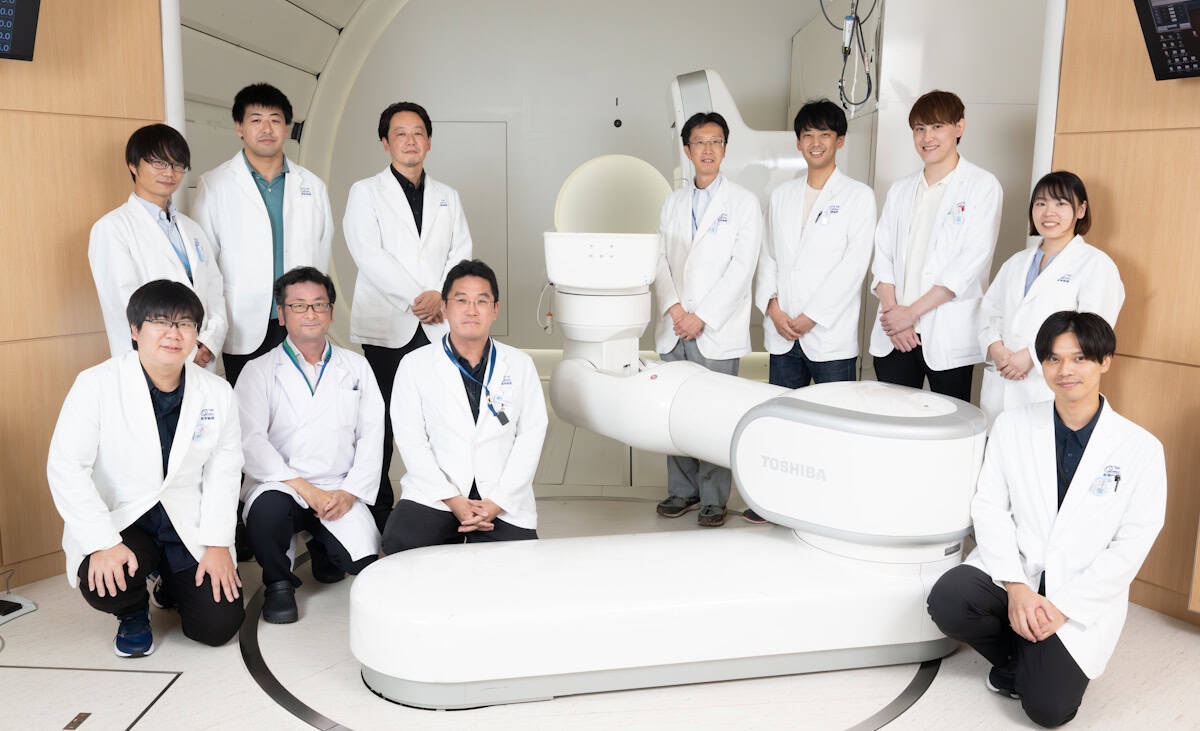
Recent advancements in cancer treatment have emerged from the National Institutes for Quantum Science and Technology (QST) in Japan, where researchers are exploring multi-ion therapy. This innovative approach combines beams of carbon, oxygen, and neon ions, offering potential advantages over traditional proton therapy. The therapy aims to address the challenges posed by high linear energy transfer (LET) radiation, which can effectively treat even difficult-to-target tumors.
Takamitsu Masuda, a researcher at QST, stated, “Different ions exhibit distinct physical and biological characteristics. Combining them in a tailored way enhances tumor control while minimizing damage to surrounding healthy tissues.” This multi-ion method aims to elevate the dose-averaged LET (LETd) within tumors, specifically in a phase I trial assessing its safety and feasibility for treating head-and-neck cancers.
Exploring the LET Trilemma
The incorporation of high LETd in cancer treatments can significantly improve efficacy. However, it also introduces complexity, termed the “LET trilemma.” This involves balancing target dose homogeneity, range robustness, and achieving a high LETd, a critical challenge in optimizing particle therapy. The latest findings by Masuda and his team, published in Physics in Medicine & Biology, investigate how range and setup uncertainties impact LETd-optimized multi-ion treatment plans.
The research team retrospectively analyzed data from six patients treated with carbon-ion therapy. Among these, patients had varying tumor sizes and locations in relation to dose-limiting organs-at-risk (OARs). For instance, patients 1, 2, and 3 had central tumors of small, medium, and large sizes, respectively, while patients 4, 5, and 6 presented peripheral tumors without adjacent OARs.
The researchers developed baseline carbon-ion therapy plans and integrated oxygen or neon-ion beams, adjusting the plans to achieve a target LETd of 90 keV/μm for the gross tumor volume (GTV). By accounting for range deviations of +2.5% and -2.5% and various setup uncertainties, the team assessed their combined effects on dose and LETd distributions.
Findings revealed that range uncertainty significantly affected plan quality, with overshoot increasing the target dose while undershoot decreased it. Notably, patient #1 exhibited a deviation of approximately ±6% from the reference, while patient #3 showed a deviation of just ±1%. While robust target coverage persisted for all large or peripheral tumors, it deteriorated for patient 1, leading to an uncertainty band of roughly 11%.
Masuda elaborated, “Wide uncertainty bands indicate a higher risk that the intended dose may not be accurately delivered. A pronounced lower band for the GTV suggests potential cold spots within the tumor, which could compromise local tumor control.”
Strategies for Improved Treatment Robustness
To enhance treatment robustness, the research team devised five new plans for patient 1, characterized by a small, central tumor particularly vulnerable to uncertainties. Modifications included expanding the target area, altering beam angles, increasing irradiation fields, and selecting heavier ions for better outcomes.
The “heavier-ion selection” plan proved most effective in mitigating range uncertainty, significantly narrowing the dose uncertainty bands compared to the original approach. The researchers attribute this success to the inherently higher LETd in heavier ions, facilitating the achievement of the 90 keV/μm target with oxygen-ion beams alone. Other adjustments yielded limited improvements.
These results indicate that strategically utilizing heavier ions can help to navigate the LET trilemma’s complexities, balancing range robustness, uniform dose delivery, and high LETd. Masuda noted, “Clinically, this strategy is particularly well-suited for small, deep-seated tumors and complex sites where uncertainties are amplified.”
Looking ahead, the research team is investigating the integration of advanced technologies such as robust optimization, arc therapy, dual-energy CT, in-beam PET, and online adaptation. According to Masuda, “This integration is highly desirable for applying multi-ion therapy to challenging cases such as pancreatic cancer, where uncertainties are inherently large.”
The developments in multi-ion cancer therapy represent a significant step forward in the quest for more effective cancer treatments, potentially enhancing outcomes for patients with difficult-to-treat tumors.










Belfast Gears Up for Vibrant St Patrick’s Day Parade on March 17

Cuba Faces Nationwide Blackout Amid Deepening Energy Crisis

Wirral Council to Restructure Leadership, Cutting Two Top Roles

Rethinking Resistance Training: Key Insights from US Experts

EU Membership on the Horizon: What It Means for Citizens

Ukrainian Drone Swarms Strike Moscow Region for Second Day

Henley Launches Innovative Initiative to Boost Local Economy

Court Ruling Allows Pandemic Tax Refund Claims Until 2026

Sean Penn’s Absence at 2026 Oscars Sparks Discussion

Coronation Street’s Shocking Murder Twist Reveals Family Secrets

Andrew Pierce Confirms Departure from ITV’s Good Morning Britain

Katie Price Faces New Health Concerns After Cancer Symptoms Resurface

Gyles Brandreth Shares Grandson’s Cancer Battle and Recovery

Sue Radford Reveals Weight Loss Journey, Shedding 12–13 kg

Kate Garraway Sells £2 Million Home Amid Financial Struggles

Jordan Brook Faces Health Crisis in Hospital as Sophie Kasaei Stays Away

EastEnders’ Nicola Mitchell Faces Unexpected Pregnancy Crisis

Reddit Study Reveals Distinctions Between Lurkers and Power Users
-
 World8 months ago
Coronation Street’s Shocking Murder Twist Reveals Family Secrets
-
 Entertainment8 months ago
Andrew Pierce Confirms Departure from ITV’s Good Morning Britain
-
 Health12 months ago
Katie Price Faces New Health Concerns After Cancer Symptoms Resurface
-
 Health7 months ago
Gyles Brandreth Shares Grandson’s Cancer Battle and Recovery
-
 Health7 months ago
Sue Radford Reveals Weight Loss Journey, Shedding 12–13 kg
-
 Entertainment1 year ago
Kate Garraway Sells £2 Million Home Amid Financial Struggles
-
 Entertainment5 months ago
Jordan Brook Faces Health Crisis in Hospital as Sophie Kasaei Stays Away
-
 World10 months ago
EastEnders’ Nicola Mitchell Faces Unexpected Pregnancy Crisis
-
 Science8 months ago
Reddit Study Reveals Distinctions Between Lurkers and Power Users
-

 World9 months ago
Mother Charged After Son, 9, Killed in Tragic Incident in Italy
-

 Entertainment12 months ago
Ann Ming Reflects on ITV’s ‘I Fought the Law’ Drama
-

 World9 months ago
Bailey Announces Heartbreaking Split from Rebecca After Reunion