
Top Stories
Researchers Explore Electron-Phonon Interactions to Enhance Quantum Tech


Recent advancements in quantum technology have prompted researchers to investigate how electron-phonon interactions might improve the stability of quantum hardware. Tests conducted on nanowires at the Massachusetts Institute of Technology (MIT) have revealed insights into the fundamental noise issues that can affect electronic devices.
Low-frequency electronic flicker noise, often experienced as disruptions in cellphone calls, stems from the movement of electrons within materials. This phenomenon occurs due to various scattering processes that interrupt the flow of electrons in metals. Understanding these interactions is crucial for enhancing the performance of quantum devices, which rely on stable electron behavior.
Understanding Electron-Phonon Interactions
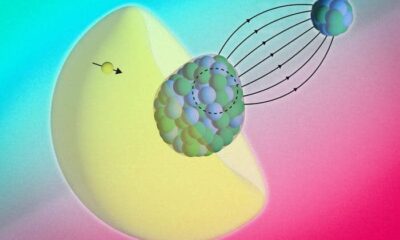
The research team at MIT focused on how electrons interact with phonons, which are quantized sound waves that can influence electron movement. By conducting tests on nanowires, the team observed that specific electron-phonon interactions could lead to a more stable electron flow, thereby reducing noise levels.
In their experiments, researchers noted that manipulating these interactions could potentially mitigate the effects of electronic flicker noise. This is particularly important for quantum computing applications, where stability and coherence of quantum states are essential for reliable operation. The findings suggest that optimizing electron-phonon interactions could pave the way for more robust quantum hardware.
The implications of these tests are significant. With the demand for advanced quantum technology increasing, understanding the underlying mechanisms of electron movement is pivotal. The research conducted at MIT not only sheds light on the challenges faced by quantum devices but also offers potential solutions that could lead to breakthroughs in this field.
Future Directions in Quantum Hardware Development
As the field of quantum technology continues to evolve, the importance of addressing noise and stability issues cannot be overstated. Researchers are now considering how these findings might influence future designs of quantum circuits and devices.
By leveraging the insights gained from the nanowire tests, engineers and scientists can work together to develop strategies that minimize the impact of electronic noise in quantum systems. This collaborative effort may contribute to the realization of more efficient quantum computers capable of performing complex calculations at unprecedented speeds.
In conclusion, the exploration of electron-phonon interactions offers promising pathways for enhancing the stability of quantum hardware. As research progresses, the potential to overcome existing limitations in quantum technology becomes increasingly tangible, heralding a new era in electronic device performance.












Belfast Gears Up for Vibrant St Patrick’s Day Parade on March 17

Cuba Faces Nationwide Blackout Amid Deepening Energy Crisis

Wirral Council to Restructure Leadership, Cutting Two Top Roles

Rethinking Resistance Training: Key Insights from US Experts

EU Membership on the Horizon: What It Means for Citizens

Ukrainian Drone Swarms Strike Moscow Region for Second Day

Henley Launches Innovative Initiative to Boost Local Economy

Court Ruling Allows Pandemic Tax Refund Claims Until 2026

Sean Penn’s Absence at 2026 Oscars Sparks Discussion

Coronation Street’s Shocking Murder Twist Reveals Family Secrets

Andrew Pierce Confirms Departure from ITV’s Good Morning Britain

Katie Price Faces New Health Concerns After Cancer Symptoms Resurface

Gyles Brandreth Shares Grandson’s Cancer Battle and Recovery

Sue Radford Reveals Weight Loss Journey, Shedding 12–13 kg

Kate Garraway Sells £2 Million Home Amid Financial Struggles

Jordan Brook Faces Health Crisis in Hospital as Sophie Kasaei Stays Away

EastEnders’ Nicola Mitchell Faces Unexpected Pregnancy Crisis

Reddit Study Reveals Distinctions Between Lurkers and Power Users
-
 World8 months ago
Coronation Street’s Shocking Murder Twist Reveals Family Secrets
-
 Entertainment8 months ago
Andrew Pierce Confirms Departure from ITV’s Good Morning Britain
-
 Health11 months ago
Katie Price Faces New Health Concerns After Cancer Symptoms Resurface
-
 Health6 months ago
Gyles Brandreth Shares Grandson’s Cancer Battle and Recovery
-
 Health6 months ago
Sue Radford Reveals Weight Loss Journey, Shedding 12–13 kg
-
 Entertainment1 year ago
Kate Garraway Sells £2 Million Home Amid Financial Struggles
-
 Entertainment5 months ago
Jordan Brook Faces Health Crisis in Hospital as Sophie Kasaei Stays Away
-
 World9 months ago
EastEnders’ Nicola Mitchell Faces Unexpected Pregnancy Crisis
-
 Science8 months ago
Reddit Study Reveals Distinctions Between Lurkers and Power Users
-

 World9 months ago
Mother Charged After Son, 9, Killed in Tragic Incident in Italy
-

 Entertainment11 months ago
Ann Ming Reflects on ITV’s ‘I Fought the Law’ Drama
-

 World9 months ago
Bailey Announces Heartbreaking Split from Rebecca After Reunion