
Top Stories
Opposition Lawmakers Challenge Climate Change Law’s Constitutionality

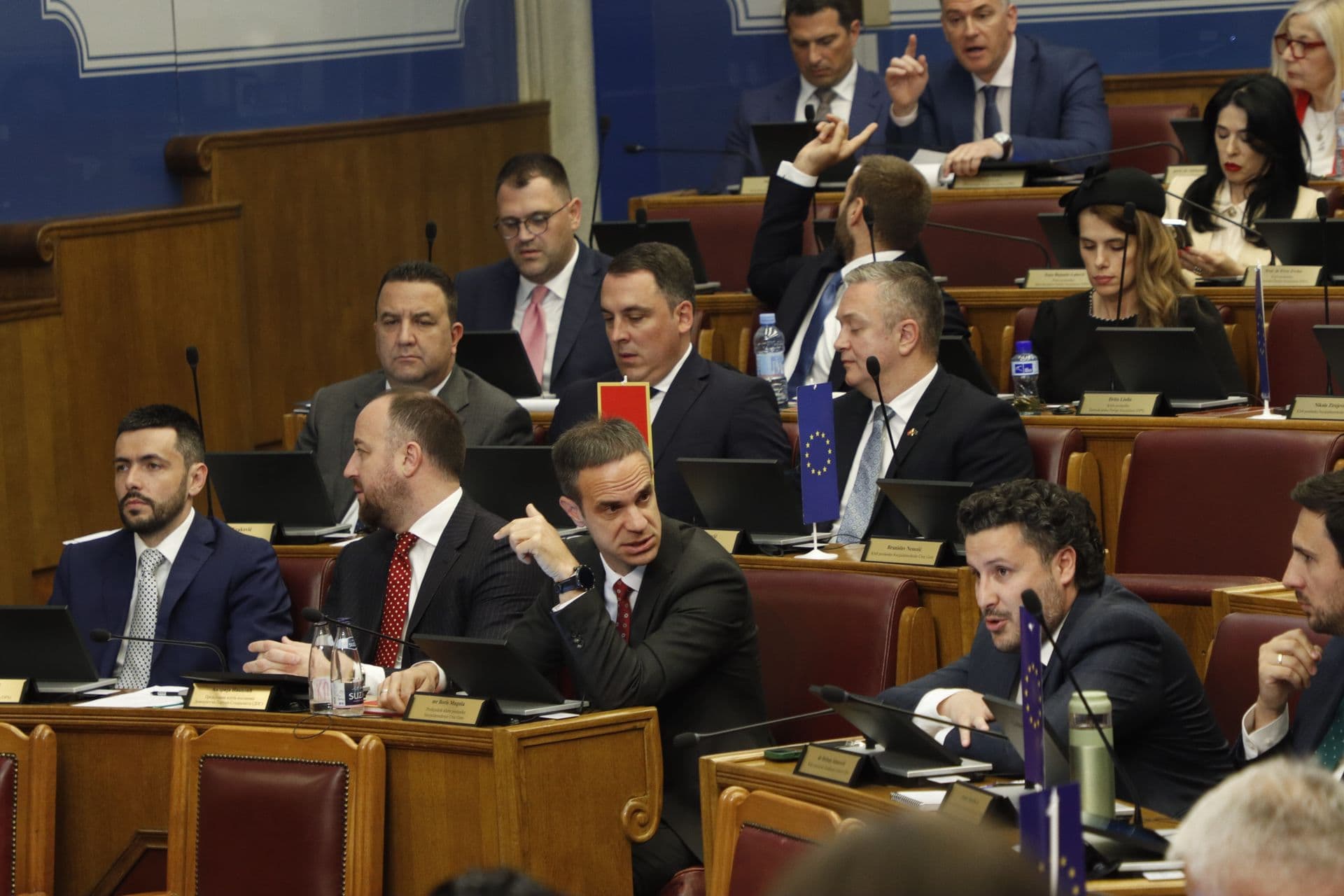
Opposition lawmakers in Montenegro have submitted a proposal to the Constitutional Court, seeking a review of the constitutionality and legality of Article 100 of the Climate Change Law. The opposition, consisting of representatives such as Nikola Milović, Nikola Rakočević, and Mihailo Anđušić, argue that this provision infringes upon fundamental constitutional principles, including legal certainty and the prohibition of retroactive legislation.
The contested article stipulates that emission allowances granted at no cost under a previous legal framework will become invalid as of May 1, 2026. This change is perceived as a direct violation of the rights of businesses that have legally acquired these allowances, without a clearly defined public interest or legal justification. The lawmakers assert that the Uniprom Aluminum Plant in Podgorica, which has invested in ecological reconstruction, stands to be significantly affected by this amendment.
Concerns Over Legal and Environmental Implications
Lawmakers emphasize that the selective and retroactive cancellation of emission rights poses a legal dilemma and threatens the ecological policy of Montenegro. They believe the decision could undermine the primary objective of the Emission Trading System (ETS), which is to reduce overall emissions through market mechanisms while encouraging investments in clean technologies.
In their statement, the opposition pointed out that the abrupt termination of these rights, without evident public interest, not only jeopardizes a key industrial representative of Montenegro but also risks increasing pollution levels. They warned that such a move could imperil the health of citizens in regions like Zeta and Podgorica, drawing parallels to past environmental crises experienced in Pljevlja.
The opposition also reminded stakeholders that Montenegro, as part of its European integration process and commitments under the Stabilization and Association Agreement, has established a national emissions trading system aligned with European Union legal standards and the Energy Community Secretariat’s regulations. This system has been recognized as functional and compliant with European norms.
Legal Rights and Investor Confidence at Stake
In their proposal, lawmakers noted that emission credits possess economic value and are recognized as property under the law. Therefore, their elimination would infringe upon the constitutional right to peaceful enjoyment of property, guaranteed by both the Constitution of Montenegro and Protocol 1 of the European Convention on Human Rights.
Due to the potential for irreparable harm, the opposition has called for the Constitutional Court to issue a temporary measure to suspend the implementation of Article 100 of the Climate Change Law until a final decision on its constitutionality is reached. They contend that environmental protection cannot be built on legal uncertainty, retroactivity, and selective enforcement of laws, as this approach ultimately leads to increased pollution, decreased investor confidence, and a distancing from European standards that Montenegro aspires to meet.












Belfast Gears Up for Vibrant St Patrick’s Day Parade on March 17

Cuba Faces Nationwide Blackout Amid Deepening Energy Crisis

Wirral Council to Restructure Leadership, Cutting Two Top Roles

Rethinking Resistance Training: Key Insights from US Experts

EU Membership on the Horizon: What It Means for Citizens

Ukrainian Drone Swarms Strike Moscow Region for Second Day

Henley Launches Innovative Initiative to Boost Local Economy

Court Ruling Allows Pandemic Tax Refund Claims Until 2026

Sean Penn’s Absence at 2026 Oscars Sparks Discussion

Coronation Street’s Shocking Murder Twist Reveals Family Secrets

Andrew Pierce Confirms Departure from ITV’s Good Morning Britain

Katie Price Faces New Health Concerns After Cancer Symptoms Resurface

Sue Radford Reveals Weight Loss Journey, Shedding 12–13 kg

Kate Garraway Sells £2 Million Home Amid Financial Struggles

Jordan Brook Faces Health Crisis in Hospital as Sophie Kasaei Stays Away

EastEnders’ Nicola Mitchell Faces Unexpected Pregnancy Crisis

Bailey Announces Heartbreaking Split from Rebecca After Reunion

Ann Ming Reflects on ITV’s ‘I Fought the Law’ Drama
-
 World4 months ago
Coronation Street’s Shocking Murder Twist Reveals Family Secrets
-
 Entertainment4 months ago
Andrew Pierce Confirms Departure from ITV’s Good Morning Britain
-
 Health7 months ago
Katie Price Faces New Health Concerns After Cancer Symptoms Resurface
-
 Health2 months ago
Sue Radford Reveals Weight Loss Journey, Shedding 12–13 kg
-
 Entertainment8 months ago
Kate Garraway Sells £2 Million Home Amid Financial Struggles
-
 Entertainment3 weeks ago
Jordan Brook Faces Health Crisis in Hospital as Sophie Kasaei Stays Away
-
 World5 months ago
EastEnders’ Nicola Mitchell Faces Unexpected Pregnancy Crisis
-
 World5 months ago
Bailey Announces Heartbreaking Split from Rebecca After Reunion
-
 Entertainment7 months ago
Ann Ming Reflects on ITV’s ‘I Fought the Law’ Drama
-

 Entertainment2 months ago
Selena Gomez’s Name Linked to Epstein: Examining the Claims
-

 Health7 months ago
TOWIE Stars Sophie Kasaei and Jordan Brook Pursue Fertility Treatment
-

 Health7 months ago
Fiona Phillips’ Husband Shares Heartbreaking Update on Her Health