
Top Stories
Montenegrin Parliament Debates Sunday Trade Ban Amid Economic Concerns

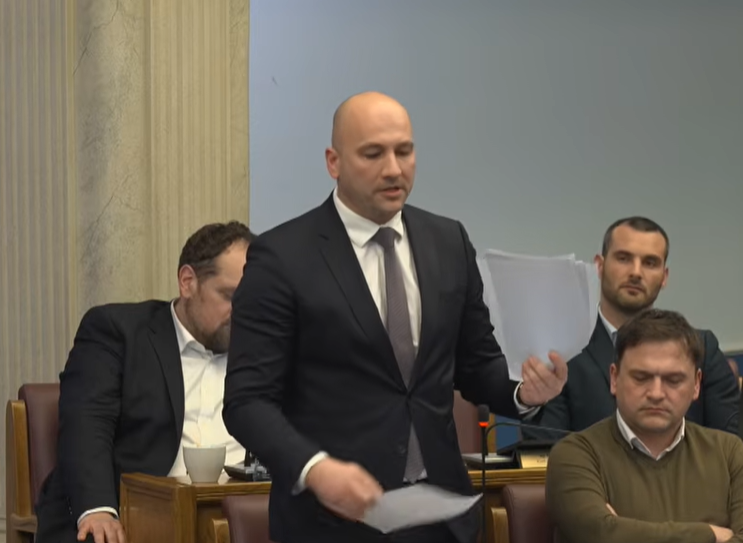
Montenegro’s parliament is currently engaged in discussions regarding a proposed ban on Sunday trading, with lawmakers expressing a near-unanimous stance in favor of maintaining a non-working Sunday. Miloš Pižurica, a member of the Pokret Evropa sad (PES), voiced concerns that reintroducing Sunday trading could lead to increased prices and fuel inflation. He argued that the notion of a non-working Sunday being detrimental to Montenegro’s economy is unfounded, stating, “It all comes down to tourists needing to buy a bottle of water in Montenegro on a Sunday.”
The debate centers around amendments to the Law on Internal Trade, initiated by PES, which aims to guarantee a non-working Sunday. This discussion follows a comprehensive session of the Assembly’s Committee on Economy, Finance, and Budget. A prior ruling by the Constitutional Court of Montenegro deemed Article 35a of the Law on Internal Trade unconstitutional, effectively nullifying the ban on Sunday trading. This decision was published in the Official Gazette of Montenegro.
In light of this ruling, the PES parliamentary group has requested an extraordinary session of parliament to amend the previously invalidated law. Additionally, Jakov Milatović, the President of Montenegro, has proposed an amendment to the Constitution, seeking to enshrine the principle that employees in Montenegro should not work on Sundays or public holidays.
The Social Council has unanimously approved changes to the Law on Internal Trade, suggesting that stores in Montenegro should be allowed to operate on Sundays, but only during peak summer and winter tourist seasons, and with restrictions on the number of shifts and locations per municipality. This proposal is still pending a decision from the government.
Nikola Rakočević from the Demokratska partija socijalista (DPS) highlighted that a similar decision to establish a non-working Sunday was passed in 2019 when his party was in power. As discussions unfold, the implications of these legislative changes on Montenegro’s economy and tourism sector remain critical considerations for lawmakers. The outcome of this debate may set a precedent for labor policies in the country, reflecting the balance between economic activity and worker rights.











Belfast Gears Up for Vibrant St Patrick’s Day Parade on March 17

Cuba Faces Nationwide Blackout Amid Deepening Energy Crisis

Wirral Council to Restructure Leadership, Cutting Two Top Roles

Rethinking Resistance Training: Key Insights from US Experts

EU Membership on the Horizon: What It Means for Citizens

Ukrainian Drone Swarms Strike Moscow Region for Second Day

Henley Launches Innovative Initiative to Boost Local Economy

Court Ruling Allows Pandemic Tax Refund Claims Until 2026

Sean Penn’s Absence at 2026 Oscars Sparks Discussion

Coronation Street’s Shocking Murder Twist Reveals Family Secrets

Andrew Pierce Confirms Departure from ITV’s Good Morning Britain

Katie Price Faces New Health Concerns After Cancer Symptoms Resurface

Gyles Brandreth Shares Grandson’s Cancer Battle and Recovery

Sue Radford Reveals Weight Loss Journey, Shedding 12–13 kg

Kate Garraway Sells £2 Million Home Amid Financial Struggles

Jordan Brook Faces Health Crisis in Hospital as Sophie Kasaei Stays Away

EastEnders’ Nicola Mitchell Faces Unexpected Pregnancy Crisis

Reddit Study Reveals Distinctions Between Lurkers and Power Users
-
 World8 months ago
Coronation Street’s Shocking Murder Twist Reveals Family Secrets
-
 Entertainment8 months ago
Andrew Pierce Confirms Departure from ITV’s Good Morning Britain
-
 Health12 months ago
Katie Price Faces New Health Concerns After Cancer Symptoms Resurface
-
 Health7 months ago
Gyles Brandreth Shares Grandson’s Cancer Battle and Recovery
-
 Health7 months ago
Sue Radford Reveals Weight Loss Journey, Shedding 12–13 kg
-
 Entertainment1 year ago
Kate Garraway Sells £2 Million Home Amid Financial Struggles
-
 Entertainment5 months ago
Jordan Brook Faces Health Crisis in Hospital as Sophie Kasaei Stays Away
-
 World9 months ago
EastEnders’ Nicola Mitchell Faces Unexpected Pregnancy Crisis
-
 Science8 months ago
Reddit Study Reveals Distinctions Between Lurkers and Power Users
-

 World9 months ago
Mother Charged After Son, 9, Killed in Tragic Incident in Italy
-

 Entertainment12 months ago
Ann Ming Reflects on ITV’s ‘I Fought the Law’ Drama
-

 World9 months ago
Bailey Announces Heartbreaking Split from Rebecca After Reunion