
Top Stories
Genetic Study Debunks Myths About Petrovic Family Origins

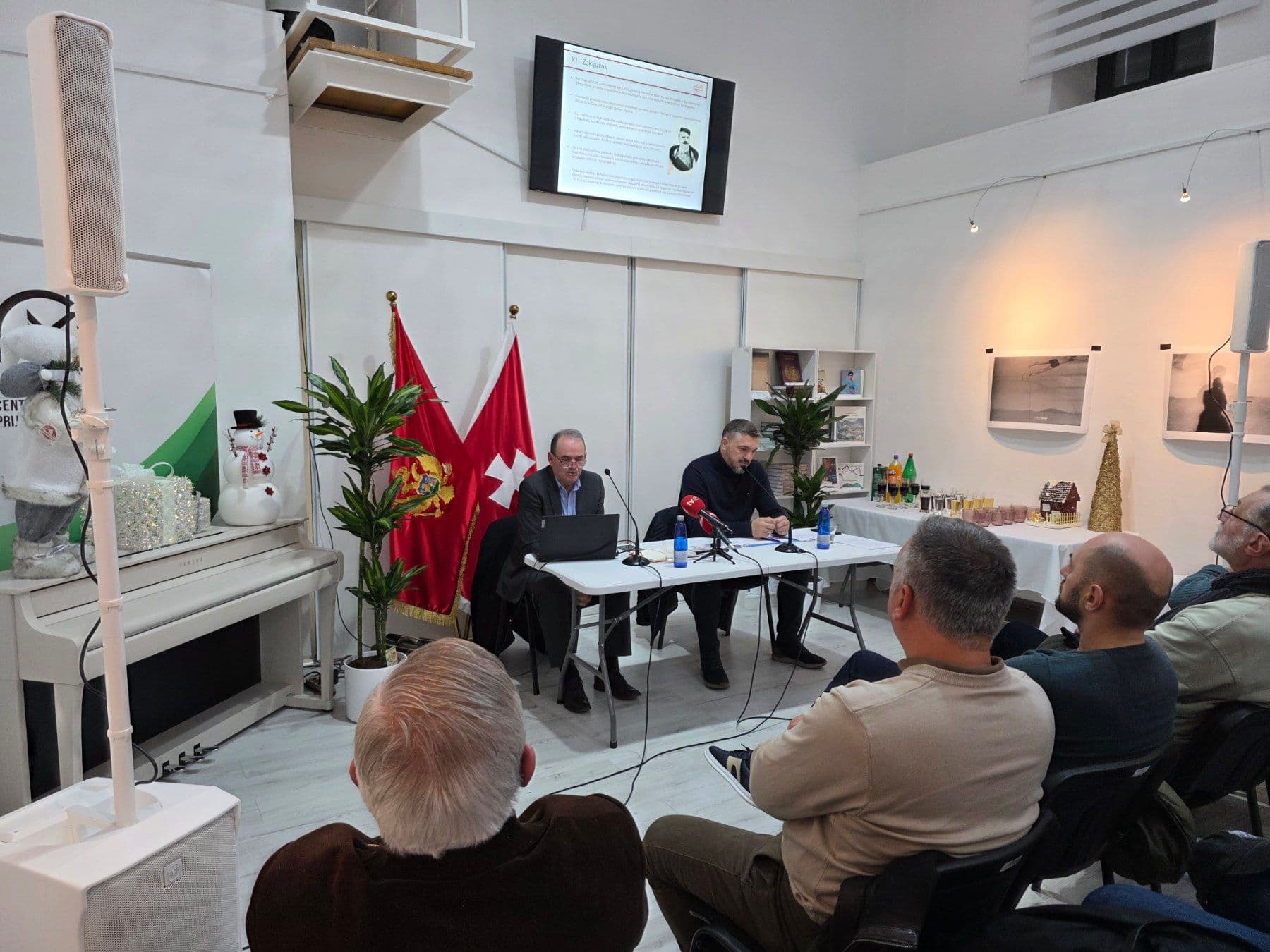
A comprehensive genetic and genealogical study conducted by Arben Murić and Borislav Banović, under the auspices of the association Crnogorski DNK kod, has challenged long-held beliefs regarding the origins of the Montenegrin royal family, the Petrović-Njegoš. The findings reveal that the family belongs to the indigenous Mediterranean-Balkan population, present in what is now Montenegro thousands of years prior to the Slavic migrations. This contradicts the traditional narrative linking the Petrović lineage to Kosovo and the legendary figure of Pavle Orlović.
The researchers established that the male members of the Petrović family carry the haplogroup E-V13, a genetic marker associated with ancient populations of the Balkans and the Mediterranean dating back to the Neolithic period. This haplogroup was prevalent during the Hellenistic, Illyrian, and Roman eras, indicating a strong presence in the Balkans and other parts of Europe. Its continuity has been noted in the medieval regions of Duklja and Zeta.
Challenging Historical Narratives
The study utilized a combined qualitative-quantitative case study method, comparing contemporary and ancient genetic samples, with results publicly presented in Cetinje. The authors emphasize that previous attempts to trace the Petrović lineage relied primarily on traditional genealogy and oral histories, leading to a series of unverified and often contradictory theories. Some theories suggest the Petrović family arrived in Njeguši from Zenica, while others link them to Banjani, Drobnjaci, or Kazanci. The most widespread narrative claims descent from Kosovo, linking the family to the purported nobleman Pavle Orlović, a figure whose existence has not been substantiated in credible historical sources.
The researchers highlighted the importance of applying modern scientific methods to these theories. They stated, “This has been crucial yet challenging, as we aimed to scrutinize these theories through contemporary scientific tools.”
Genetic Distribution and Historical Context
The E-V13 haplogroup is currently most prevalent in Kosovo, Albania, and Montenegro, with a lesser presence in Serbia, Bosnia and Herzegovina, Croatia, and Romania. Notably, a smaller fraction of this haplogroup has been recorded in Scandinavian countries, attributed to ancient migration processes.
Despite this, very few tested men belong to the sub-branches of E-V13 associated with the Petrović family. Such samples have been identified among contemporaries in Greece, Albania, and Bulgaria, as well as at an archaeological site in Vienna, dating back to around 800 CE. Leading global DNA companies estimate the relatedness of these samples to the Petrović lineage to be between 800 and 1,300 years.
No closer genetic matches have been established for the Petrović family in Montenegro or their traditionally associated regions. The authors do not dismiss the possibility of some degree of kinship with certain families from Njeguši, but they stress that further, in-depth investigations would be necessary to confirm this.
Models and methods employed by modern genetic laboratories suggest that the genetic markers of the Petrović family may trace back to the southern part of the Zeta plain and the Skadar Lake basin. This region has documented early migrations towards Albania, Greece, Bulgaria, and Central Europe, aligning with the findings from both contemporary and ancient samples.
In conclusion, the authors assert that the aim of this research is not to revise or replace existing historical knowledge but to enrich it with scientifically verifiable evidence, particularly in areas where earlier interpretations relied on limited or indirect sources. The results are based on an extensive domestic genetic database and contemporary analytical methods employed in leading European and global DNA research centers.
The Crnogorski DNK kod has announced plans to continue investigating the origins of the entire population of Montenegro in collaboration with scientific and cultural institutions. The presentation of these findings was attended by a member of the Petrović-Njegoš family, Marko Petrović-Njegoš, highlighting the significance of this research in understanding Montenegrin heritage.












Belfast Gears Up for Vibrant St Patrick’s Day Parade on March 17

Cuba Faces Nationwide Blackout Amid Deepening Energy Crisis

Wirral Council to Restructure Leadership, Cutting Two Top Roles

Rethinking Resistance Training: Key Insights from US Experts

EU Membership on the Horizon: What It Means for Citizens

Ukrainian Drone Swarms Strike Moscow Region for Second Day

Henley Launches Innovative Initiative to Boost Local Economy

Court Ruling Allows Pandemic Tax Refund Claims Until 2026

Sean Penn’s Absence at 2026 Oscars Sparks Discussion

Coronation Street’s Shocking Murder Twist Reveals Family Secrets

Andrew Pierce Confirms Departure from ITV’s Good Morning Britain

Katie Price Faces New Health Concerns After Cancer Symptoms Resurface

Gyles Brandreth Shares Grandson’s Cancer Battle and Recovery

Sue Radford Reveals Weight Loss Journey, Shedding 12–13 kg

Kate Garraway Sells £2 Million Home Amid Financial Struggles

Jordan Brook Faces Health Crisis in Hospital as Sophie Kasaei Stays Away

EastEnders’ Nicola Mitchell Faces Unexpected Pregnancy Crisis

Reddit Study Reveals Distinctions Between Lurkers and Power Users
-
 World8 months ago
Coronation Street’s Shocking Murder Twist Reveals Family Secrets
-
 Entertainment8 months ago
Andrew Pierce Confirms Departure from ITV’s Good Morning Britain
-
 Health12 months ago
Katie Price Faces New Health Concerns After Cancer Symptoms Resurface
-
 Health7 months ago
Gyles Brandreth Shares Grandson’s Cancer Battle and Recovery
-
 Health7 months ago
Sue Radford Reveals Weight Loss Journey, Shedding 12–13 kg
-
 Entertainment1 year ago
Kate Garraway Sells £2 Million Home Amid Financial Struggles
-
 Entertainment5 months ago
Jordan Brook Faces Health Crisis in Hospital as Sophie Kasaei Stays Away
-
 World9 months ago
EastEnders’ Nicola Mitchell Faces Unexpected Pregnancy Crisis
-
 Science8 months ago
Reddit Study Reveals Distinctions Between Lurkers and Power Users
-

 World9 months ago
Mother Charged After Son, 9, Killed in Tragic Incident in Italy
-

 Entertainment12 months ago
Ann Ming Reflects on ITV’s ‘I Fought the Law’ Drama
-

 World9 months ago
Bailey Announces Heartbreaking Split from Rebecca After Reunion