
Top Stories
Europe’s Trump Whisperer Questions U.S. Foreign Policy Shift

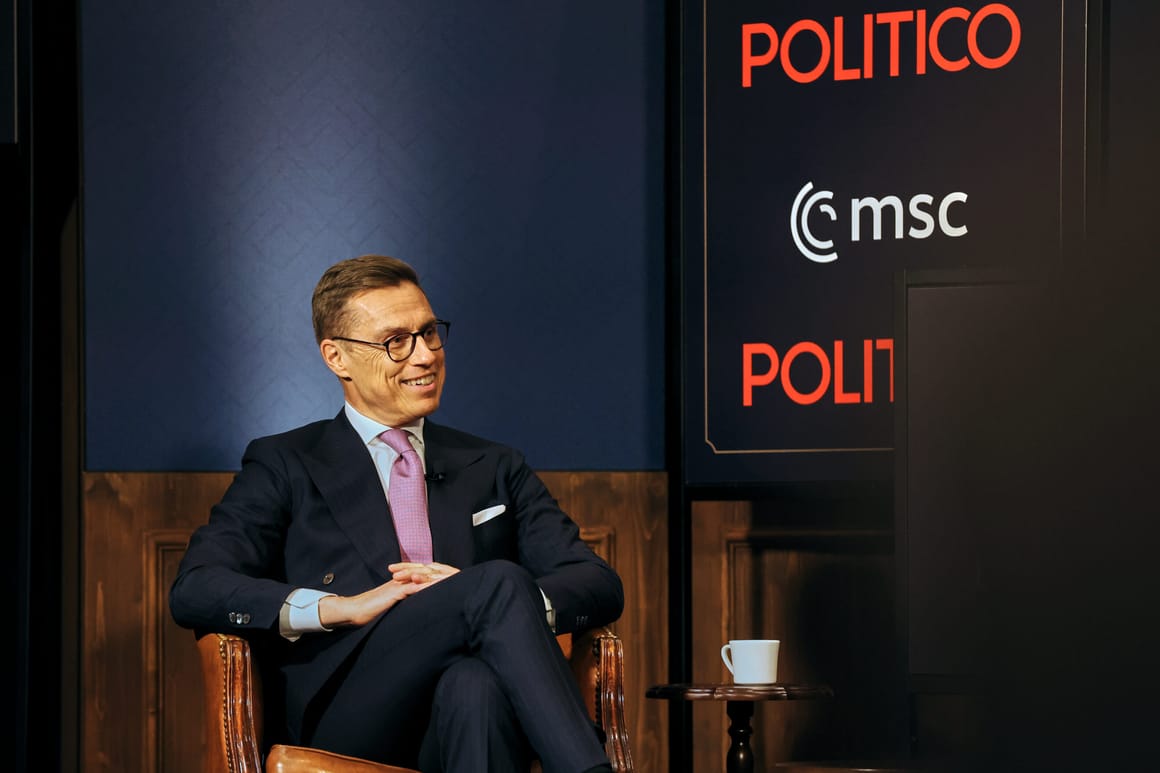
The Munich Security Conference has seen a notable shift in the tone of U.S. foreign policy, according to Finnish President Alexander Stubb. While the U.S. delegation is adopting a less confrontational stance this year, Stubb emphasizes that the underlying substance of American policy remains unchanged. In a live interview with POLITICO, he articulated his views on the current U.S. approach, highlighting concerns regarding its ideological underpinnings.
Stubb pointed to the U.S. National Security Strategy, which contains stark critiques of European allies. He described the American foreign policy as a blend of ideology and hierarchy, with the principles of “Make America Great Again” and “America First” playing significant roles. This assessment followed a speech by U.S. Secretary of State Marco Rubio, who touched on themes resonant with the Trump administration, emphasizing shared heritage and values between the U.S. and Europe.
In his address, Rubio reassured attendees that the U.S. continues to view European nations as allies, contrasting sharply with the rhetoric of JD Vance, the U.S. Vice President, from last year’s conference, which was marked by overt hostility. Matthew Whitaker, the U.S. Ambassador to NATO and a close ally of Trump, reinforced this message, stating, “The Americans are not leaving.”
Despite this seemingly softer approach, Stubb expressed skepticism regarding the true implications of Rubio’s remarks. He noted that the focus on shifting defense responsibilities to Europe while prioritizing interests in the Western Hemisphere and Asia reflects a consistent theme in U.S. policy. He stated, “I think we brought down the temperature in the transatlantic relationship,” following a lengthy discussion he had with Rubio post-speech.
Stubb clarified that the U.S. has reordered its global priorities, placing emphasis on the Western Hemisphere, followed by the Indo-Pacific, and then Europe. He urged European nations to comprehend the implications of this shift under Trump’s leadership.
The Finnish president, who has long advocated for strong transatlantic ties, asserted that Finland’s military cooperation with the United States remains robust, predating its NATO membership. He remarked, “Bilateral cooperation is better than it has ever been.” Stubb reassured that the transatlantic partnership is not diminishing but rather evolving into a different dynamic.
He emphasized the importance of maintaining strong defense capabilities in nations like Finland, Sweden, and Norway, stating, “It’s in the interest of the United States to have very strong defense forces in Finland, Sweden and Norway.” Stubb concluded by reaffirming the commitment to enhancing the transatlantic partnership, indicating a readiness to adapt to the changing geopolitical landscape while preserving essential alliances.











Belfast Gears Up for Vibrant St Patrick’s Day Parade on March 17

Cuba Faces Nationwide Blackout Amid Deepening Energy Crisis

Wirral Council to Restructure Leadership, Cutting Two Top Roles

Rethinking Resistance Training: Key Insights from US Experts

EU Membership on the Horizon: What It Means for Citizens

Ukrainian Drone Swarms Strike Moscow Region for Second Day

Henley Launches Innovative Initiative to Boost Local Economy

Court Ruling Allows Pandemic Tax Refund Claims Until 2026

Sean Penn’s Absence at 2026 Oscars Sparks Discussion

Coronation Street’s Shocking Murder Twist Reveals Family Secrets

Andrew Pierce Confirms Departure from ITV’s Good Morning Britain

Katie Price Faces New Health Concerns After Cancer Symptoms Resurface

Sue Radford Reveals Weight Loss Journey, Shedding 12–13 kg

Kate Garraway Sells £2 Million Home Amid Financial Struggles

Jordan Brook Faces Health Crisis in Hospital as Sophie Kasaei Stays Away

EastEnders’ Nicola Mitchell Faces Unexpected Pregnancy Crisis

Bailey Announces Heartbreaking Split from Rebecca After Reunion

Ann Ming Reflects on ITV’s ‘I Fought the Law’ Drama
-
 World4 months ago
Coronation Street’s Shocking Murder Twist Reveals Family Secrets
-
 Entertainment4 months ago
Andrew Pierce Confirms Departure from ITV’s Good Morning Britain
-
 Health7 months ago
Katie Price Faces New Health Concerns After Cancer Symptoms Resurface
-
 Health3 months ago
Sue Radford Reveals Weight Loss Journey, Shedding 12–13 kg
-
 Entertainment8 months ago
Kate Garraway Sells £2 Million Home Amid Financial Struggles
-
 Entertainment4 weeks ago
Jordan Brook Faces Health Crisis in Hospital as Sophie Kasaei Stays Away
-
 World5 months ago
EastEnders’ Nicola Mitchell Faces Unexpected Pregnancy Crisis
-
 World5 months ago
Bailey Announces Heartbreaking Split from Rebecca After Reunion
-
 Entertainment7 months ago
Ann Ming Reflects on ITV’s ‘I Fought the Law’ Drama
-

 Entertainment2 months ago
Selena Gomez’s Name Linked to Epstein: Examining the Claims
-

 Health7 months ago
TOWIE Stars Sophie Kasaei and Jordan Brook Pursue Fertility Treatment
-

 Health7 months ago
Fiona Phillips’ Husband Shares Heartbreaking Update on Her Health