
Top Stories
Campaigners Demand Action on Life-Threatening Childbirth Condition

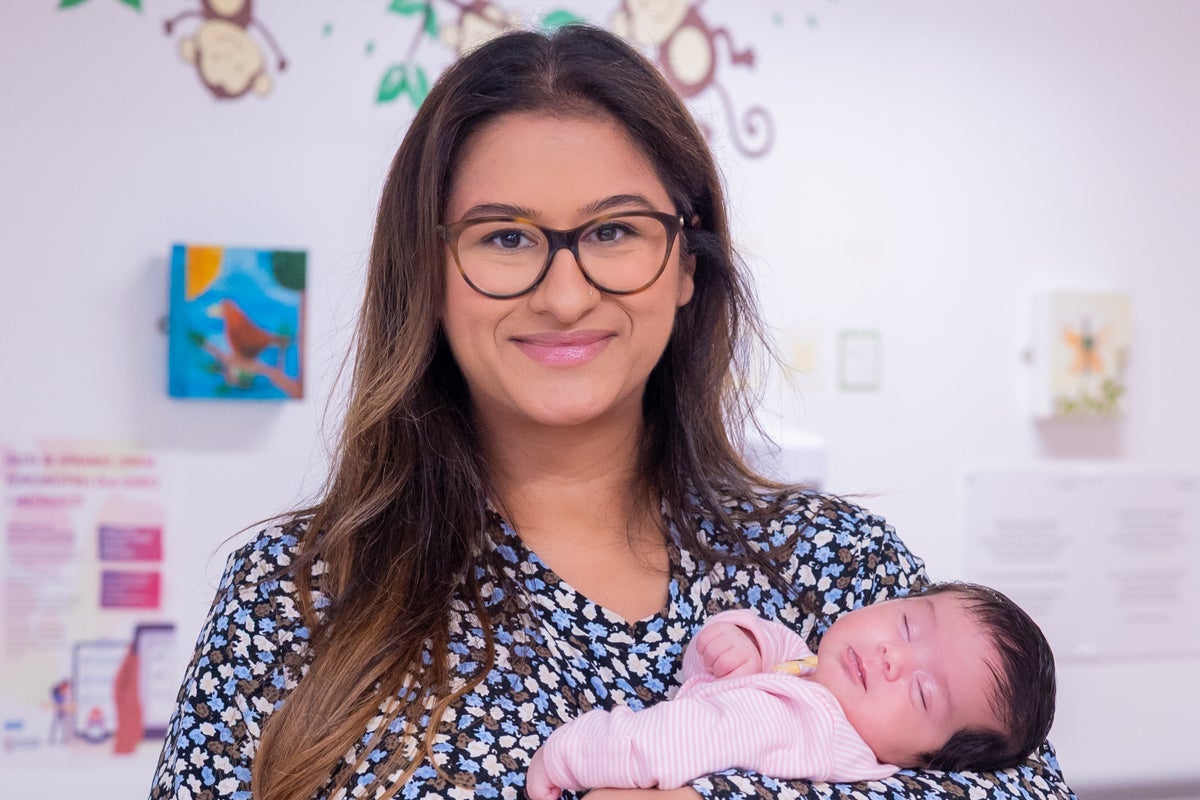
Campaigners are raising alarms about serious shortcomings in the National Health Service (NHS) regarding the management of a life-threatening childbirth condition known as Placenta Accreta Spectrum (PAS). As part of the “Action for Accreta” campaign, survivors like Amisha Adhia are sharing their harrowing experiences to highlight gaps in care that can have fatal consequences.
PAS is a complication where the placenta grows too deeply into the uterine wall, leading to potentially catastrophic haemorrhaging during childbirth. The condition, linked to rising rates of caesarean sections and in vitro fertilization (IVF), can be difficult to identify, especially in its atypical presentations. Adhia, a mother of two from Ilford, recounts her terrifying experience where five different hospitals failed to diagnose her condition during her second pregnancy.
“I felt like I was going to die,” Adhia said. “I even considered writing a letter to my husband and son, just in case the worst-case scenario happened.” Fortunately, Dr. Chineze Otigbah, a consultant obstetrician, finally diagnosed her condition, ensuring both Adhia and her newborn daughter received the necessary care when she gave birth in September 2025.
Rising Awareness and Support for Action
More than 40 families have come forward, echoing similar experiences of late detection or undiagnosed PAS cases, according to Adhia. In light of these alarming stories, leading charities and parliamentarians are rallying behind the campaign to address what they describe as outdated NHS guidelines.
The condition has been largely overlooked in the UK, despite a significant rise in risk factors. “The main risk factors for PAS are C-sections and IVF, which have massively increased,” Dr. Otigbah stated. “The NHS has not kept up to date with this reality, and PAS is often missed due to its complex nature.”
Recent research from the University of California, Los Angeles (UCLA) revealed that around 14,000 pregnancies are affected by PAS each year, a figure that advocates believe the NHS significantly underestimates. The campaign calls for urgent reforms in detection, training, and updated protocols to prepare every maternity unit for this serious condition.
Helen Morgan, the Liberal Democrat shadow health secretary, emphasized the seriousness of this issue, stating that mothers’ concerns must be listened to more attentively. Former health minister Lord Hunt echoed these sentiments, urging Health Secretary Wes Streeting to develop a national strategy for the detection and treatment of PAS.
Calls for Systemic Change
Leading pregnancy and baby loss charities, including Tommy’s and Sands, have joined the campaign to improve awareness and surveillance of pregnancy complications. They argue that better data and research, alongside the voices of families, are essential for enhancing maternity safety. “Action for Accreta is helping to highlight important gaps in awareness and learning,” they stated.
The campaign unfolds amid increased scrutiny of UK maternity services, with a national investigation led by Baroness Amos currently underway. Updated guidelines from the Royal College of Obstetricians and Gynaecologists (RCOG) are expected to be released in the coming month.
In response to the growing concerns, Donald Peebles, national clinical director for maternity at NHS England, underscored the need for early identification of women at higher risk of PAS. “Maternity teams are trained to look for warning signs, particularly in women who’ve previously had a caesarean,” he noted.
A spokesperson for the Department of Health and Social Care expressed commitment to improving maternity care, stating, “We are listening to the voices of women and families.” The spokesperson highlighted ongoing efforts, including a £149 million investment aimed at making maternity units safer and the introduction of initiatives to reduce avoidable complications.
As the campaign gains momentum, advocates stress that without immediate action, more women may suffer the consequences of undiagnosed PAS. The call for systemic change is clear: enhanced training, updated guidelines, and adequate preparation across all maternity units are essential to safeguard maternal health in the UK.












Belfast Gears Up for Vibrant St Patrick’s Day Parade on March 17

Cuba Faces Nationwide Blackout Amid Deepening Energy Crisis

Wirral Council to Restructure Leadership, Cutting Two Top Roles

Rethinking Resistance Training: Key Insights from US Experts

EU Membership on the Horizon: What It Means for Citizens

Ukrainian Drone Swarms Strike Moscow Region for Second Day

Henley Launches Innovative Initiative to Boost Local Economy

Court Ruling Allows Pandemic Tax Refund Claims Until 2026

Sean Penn’s Absence at 2026 Oscars Sparks Discussion

Coronation Street’s Shocking Murder Twist Reveals Family Secrets

Andrew Pierce Confirms Departure from ITV’s Good Morning Britain

Katie Price Faces New Health Concerns After Cancer Symptoms Resurface

Sue Radford Reveals Weight Loss Journey, Shedding 12–13 kg

Kate Garraway Sells £2 Million Home Amid Financial Struggles

Jordan Brook Faces Health Crisis in Hospital as Sophie Kasaei Stays Away

EastEnders’ Nicola Mitchell Faces Unexpected Pregnancy Crisis

Bailey Announces Heartbreaking Split from Rebecca After Reunion

Ann Ming Reflects on ITV’s ‘I Fought the Law’ Drama
-
 World4 months ago
Coronation Street’s Shocking Murder Twist Reveals Family Secrets
-
 Entertainment4 months ago
Andrew Pierce Confirms Departure from ITV’s Good Morning Britain
-
 Health7 months ago
Katie Price Faces New Health Concerns After Cancer Symptoms Resurface
-
 Health2 months ago
Sue Radford Reveals Weight Loss Journey, Shedding 12–13 kg
-
 Entertainment8 months ago
Kate Garraway Sells £2 Million Home Amid Financial Struggles
-
 Entertainment3 weeks ago
Jordan Brook Faces Health Crisis in Hospital as Sophie Kasaei Stays Away
-
 World5 months ago
EastEnders’ Nicola Mitchell Faces Unexpected Pregnancy Crisis
-
 World5 months ago
Bailey Announces Heartbreaking Split from Rebecca After Reunion
-
 Entertainment7 months ago
Ann Ming Reflects on ITV’s ‘I Fought the Law’ Drama
-

 Entertainment2 months ago
Selena Gomez’s Name Linked to Epstein: Examining the Claims
-

 Health7 months ago
TOWIE Stars Sophie Kasaei and Jordan Brook Pursue Fertility Treatment
-

 Health7 months ago
Fiona Phillips’ Husband Shares Heartbreaking Update on Her Health