
Sports
Montenegro Advances Energy Legislation to Align with EU Standards

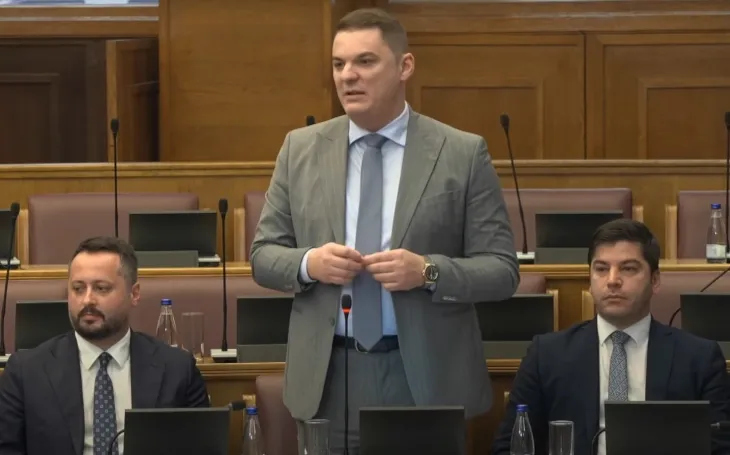
The Montenegrin Parliament has concluded discussions on a comprehensive set of energy laws aimed at aligning the country with the European Union’s energy regulations. This legislative package is a significant step towards integrating Montenegro into the unified European electricity market, as reported by MINA-business.
Key Legislative Changes and Objectives
Among the proposed laws is the Law on Cross-Border Electricity and Natural Gas Exchange, which was presented by Admir Šahmanović, Minister of Energy and Mining. He emphasized that this law is strategically vital for the energy sector during this legislative term. Its adoption is crucial for the closure of Chapter 15, which pertains to energy, and facilitates the complete transfer of essential packages for market integration.
Šahmanović explained that without this law, the benefits of cross-border electricity trading and planned undersea cable projects would be limited. The existing legislation, enacted in 2016, comprises approximately 50 articles, while the proposed new law expands to over 300 articles, introducing significant innovations in line with EU regulations.
“This transition marks our shift from a basic regulatory framework to a comprehensive European system of market, technical, and safety rules,” Šahmanović noted. The new laws will incorporate a wide range of EU regulations into Montenegrin law for the first time, especially in areas concerning capacity allocation and congestion management between states.
Impacts on Energy Security and Market Integration
One of the primary goals of these legislative changes is to ensure that electricity markets are interconnected, allowing for free price formation. “These are the foundations of a modern and stable electricity system in Europe,” stated Šahmanović. The laws will also introduce mandatory planning for risk readiness, including national and regional scenarios, early warning systems, and inter-state assistance mechanisms.
By adopting these measures, Montenegro aims to meet European standards for managing energy crises, which is particularly important given current climate change challenges and sector instability. “The adoption of this law is a direct prerequisite for market connectivity with Italy, which is our strategic goal,” he explained. This connectivity is expected to facilitate direct access for Montenegrin producers to the European market, increasing competition, security of supply, and price stability.
Šahmanović highlighted that this legislation is not merely a compliance obligation towards international partners; it opens the door to the unified European electricity market and directly influences the closure of Chapter 15, linking Montenegro with Italy and the broader EU market.
In response to the proposed laws, Amer Smailović, president of the Bosniak Party, expressed that these legislative initiatives are closely tied to closing Chapter 15 in negotiations with the EU. He assured that the Bosniak Party would support the proposed legal acts, emphasizing the importance of energy supply security and consumer-friendly pricing.
Velimir Đokovic, representing the ZBCG – New Serbian Democracy, remarked that the proposed laws primarily address Montenegro’s commitments on its path to EU membership. He noted significant improvements in energy sector stability over recent years, citing that electricity prices in Montenegro are among the lowest in the region.
Nikola Rovčanin, a representative from the Democratic Party, stated that these laws will create new value and directly benefit the energy sector and citizens. He underscored that the law on cross-border electricity and natural gas exchange will enhance supply security in times of crisis.
In addition, Nikola Rakčević from the Democratic Party of Socialists emphasized the importance of the undersea cable connecting Montenegro and Italy, noting that the investment has already yielded substantial returns, generating between $30 million to $45 million annually.
Looking ahead, Šahmanović confirmed that plans are underway to initiate the construction of a second undersea cable with a capacity of 600 megawatts (MW) by 2027. He expressed optimism that there are no obstacles to this project, which will double the capacity to 1.2 gigawatts (GW).
The legislative advancements signify a pivotal moment for Montenegro as it seeks to enhance its energy infrastructure and secure its position within the European energy landscape.










Belfast Gears Up for Vibrant St Patrick’s Day Parade on March 17

Cuba Faces Nationwide Blackout Amid Deepening Energy Crisis

Wirral Council to Restructure Leadership, Cutting Two Top Roles

Rethinking Resistance Training: Key Insights from US Experts

EU Membership on the Horizon: What It Means for Citizens

Ukrainian Drone Swarms Strike Moscow Region for Second Day

Henley Launches Innovative Initiative to Boost Local Economy

Court Ruling Allows Pandemic Tax Refund Claims Until 2026

Sean Penn’s Absence at 2026 Oscars Sparks Discussion

Coronation Street’s Shocking Murder Twist Reveals Family Secrets

Andrew Pierce Confirms Departure from ITV’s Good Morning Britain

Katie Price Faces New Health Concerns After Cancer Symptoms Resurface

Gyles Brandreth Shares Grandson’s Cancer Battle and Recovery

Sue Radford Reveals Weight Loss Journey, Shedding 12–13 kg

Kate Garraway Sells £2 Million Home Amid Financial Struggles

Jordan Brook Faces Health Crisis in Hospital as Sophie Kasaei Stays Away

EastEnders’ Nicola Mitchell Faces Unexpected Pregnancy Crisis

Reddit Study Reveals Distinctions Between Lurkers and Power Users
-
 World8 months ago
Coronation Street’s Shocking Murder Twist Reveals Family Secrets
-
 Entertainment8 months ago
Andrew Pierce Confirms Departure from ITV’s Good Morning Britain
-
 Health12 months ago
Katie Price Faces New Health Concerns After Cancer Symptoms Resurface
-
 Health7 months ago
Gyles Brandreth Shares Grandson’s Cancer Battle and Recovery
-
 Health7 months ago
Sue Radford Reveals Weight Loss Journey, Shedding 12–13 kg
-
 Entertainment1 year ago
Kate Garraway Sells £2 Million Home Amid Financial Struggles
-
 Entertainment5 months ago
Jordan Brook Faces Health Crisis in Hospital as Sophie Kasaei Stays Away
-
 World9 months ago
EastEnders’ Nicola Mitchell Faces Unexpected Pregnancy Crisis
-
 Science8 months ago
Reddit Study Reveals Distinctions Between Lurkers and Power Users
-

 World9 months ago
Mother Charged After Son, 9, Killed in Tragic Incident in Italy
-

 Entertainment12 months ago
Ann Ming Reflects on ITV’s ‘I Fought the Law’ Drama
-

 World9 months ago
Bailey Announces Heartbreaking Split from Rebecca After Reunion