
Sports
Expert Analyzes AI Manipulation in Videos of Milos Medenica

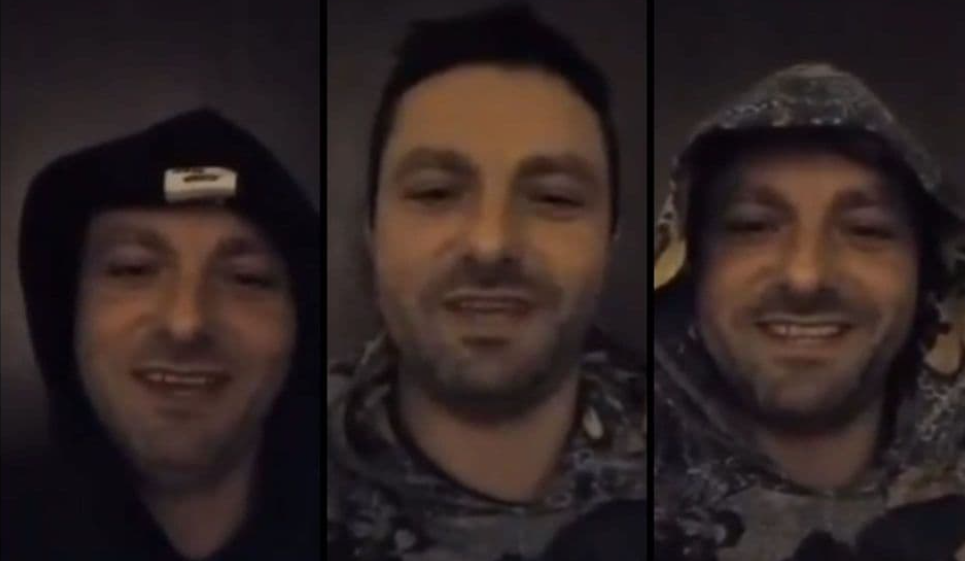
An analysis of videos purportedly featuring the fugitive Milos Medenica suggests strong evidence of AI-generated content, according to Aleksandar Manasiev, a media expert and president of the NarativAI Association. Speaking to RTCG, Manasiev estimated an 80 percent probability that the videos have been manipulated, although he noted that definitive conclusions are hindered by the absence of original files.
In discussing the authenticity of digital media, Manasiev emphasized that no single indicator can conclusively confirm AI generation. A reliable assessment hinges on a combination of factors, including visual, audio, and contextual elements. For video analysis, he pointed out the importance of examining facial behavior in relation to the head and surroundings, lip-sync accuracy, skin stability, eye movements, and lighting consistency across different frames.
The challenge intensifies when videos are heavily compressed, poorly lit, or repeatedly re-uploaded, as these conditions can obscure forensic traces. “When compression is significant, certain forensic clues become lost or difficult to detect,” Manasiev explained.
Audio manipulation poses an even greater risk, he noted, citing the case of Slovak journalist Monika Todova from the publication Denník N. In this instance, AI-generated audio was used to create the illusion of an authentic conversation. “Modern tools can convincingly replicate voice, intonation, and emotional tone, but they still falter in subtle details such as speech rhythm, pauses, breathing, and the context in which sentences are used,” he stated. Recognizing these nuances is critical for thorough analysis, yet they can be elusive without experience and comparative material.
Manasiev warned of more sophisticated manipulation techniques, where an individual could record text in a pure Montenegrin dialect with natural intonation, which could then be used to train a model to imitate another person’s voice. “The dialect, rhythm, and emphasis exist in the original recording, while AI is solely used to alter the voice,” he explained. This can yield very convincing yet highly manipulative content.
When discussing the initial videos of Medenica, Manasiev reiterated that the analysis indicates a strong likelihood of AI manipulation, with an estimated probability of 80 percent. However, he cautioned that subsequent videos show weaker indicators of manipulation, which does not validate their authenticity. Instead, it highlights how the quality of original material, compression levels, and recording conditions influence reliable detection.
According to Manasiev, the creators of these videos seem well aware of verification processes. “The strong compression and poor lighting, almost as if the videos were made with a decade-old mobile phone, may have been intentionally used to obscure potential manipulation,” he noted.
The paradox, he added, lies in the fact that such material quality prevents definitive proof of both authenticity and falsification. “This is a typical effect of deliberately manipulated content distribution,” he remarked.
Context and Distribution Channels Matter
Manasiev stressed that technical analysis alone is insufficient without considering the broader context. He suggested evaluating whether the individual in the videos had previously communicated in such a manner, whether they had a history of posting video messages or public comments, and if not, why this was occurring at this specific time.
Equally important is the question of distribution channels. In this case, the content is not appearing through a previously known or directly linked channel of the individual but rather through a profile on platform X, raising questions about the identity behind the account and its intentions. “This combination of an unclear source, timing, and the technical limitations of the material further heightens suspicion and indicates a need for cautious interpretation,” Manasiev emphasized.
Technological Advancements Outpace Detection
Manasiev reminded that while AI-generated photographs are often easier to identify due to anatomically illogical details or irregular reflections, video and audio are significantly more complex because they involve movement and continuity over time. “The key lies in combining technical tools with human forensic evaluation. However, most serious tools require payment and technical expertise,” he stated.
A further complication is that the public rarely has access to original files, typically only receiving compressed versions from social media, devoid of metadata. “When original material is available, analysis can be relatively quick and accurate. In cases involving re-uploaded and compressed recordings without sources, the process often concludes with probability assessments rather than absolute conclusions,” said Manasiev.
On the potential use of “deepfake” technology in live broadcasts, he noted that theoretically, it is possible to perform face-swaps and synthetically generate speech in real time. “However, such scenarios necessitate serious technical infrastructure and strictly controlled recording conditions. In practice, low resolution, poor lighting, and limited framing are often employed to hide technological shortcomings and complicate the detection of any irregularities,” Manasiev explained.
He advocates for relevant institutions, such as cybersecurity centers or national CERTs, to address such situations. “Their role is not to pass judgment but to professionally explain what can and cannot be reliably determined, thus reducing the space for speculation and misinformation in the public sphere,” he stated.
Manasiev underscored the critical issue of the increasing accessibility and quality of “deepfake” creation technology, contrasted with the slower progress of detection systems. “This mismatch is the greatest challenge today, not only for journalists and researchers but for institutions and society as a whole,” he concluded.
As a reminder, seven videos featuring Milos Medenica have been posted on a profile on platform X. The police have responded by asserting that the videos are fake. Medenica has been on the run since January 28, 2026, after being sentenced to ten years and two months in prison by the Higher Court in Podgorica.










Belfast Gears Up for Vibrant St Patrick’s Day Parade on March 17

Cuba Faces Nationwide Blackout Amid Deepening Energy Crisis

Wirral Council to Restructure Leadership, Cutting Two Top Roles

Rethinking Resistance Training: Key Insights from US Experts

EU Membership on the Horizon: What It Means for Citizens

Ukrainian Drone Swarms Strike Moscow Region for Second Day

Henley Launches Innovative Initiative to Boost Local Economy

Court Ruling Allows Pandemic Tax Refund Claims Until 2026

Sean Penn’s Absence at 2026 Oscars Sparks Discussion

Coronation Street’s Shocking Murder Twist Reveals Family Secrets

Andrew Pierce Confirms Departure from ITV’s Good Morning Britain

Katie Price Faces New Health Concerns After Cancer Symptoms Resurface

Sue Radford Reveals Weight Loss Journey, Shedding 12–13 kg

Kate Garraway Sells £2 Million Home Amid Financial Struggles

Jordan Brook Faces Health Crisis in Hospital as Sophie Kasaei Stays Away

EastEnders’ Nicola Mitchell Faces Unexpected Pregnancy Crisis

Bailey Announces Heartbreaking Split from Rebecca After Reunion

Ann Ming Reflects on ITV’s ‘I Fought the Law’ Drama
-
 World4 months ago
Coronation Street’s Shocking Murder Twist Reveals Family Secrets
-
 Entertainment4 months ago
Andrew Pierce Confirms Departure from ITV’s Good Morning Britain
-
 Health7 months ago
Katie Price Faces New Health Concerns After Cancer Symptoms Resurface
-
 Health3 months ago
Sue Radford Reveals Weight Loss Journey, Shedding 12–13 kg
-
 Entertainment8 months ago
Kate Garraway Sells £2 Million Home Amid Financial Struggles
-
 Entertainment4 weeks ago
Jordan Brook Faces Health Crisis in Hospital as Sophie Kasaei Stays Away
-
 World5 months ago
EastEnders’ Nicola Mitchell Faces Unexpected Pregnancy Crisis
-
 World5 months ago
Bailey Announces Heartbreaking Split from Rebecca After Reunion
-
 Entertainment7 months ago
Ann Ming Reflects on ITV’s ‘I Fought the Law’ Drama
-

 Entertainment2 months ago
Selena Gomez’s Name Linked to Epstein: Examining the Claims
-

 Health7 months ago
TOWIE Stars Sophie Kasaei and Jordan Brook Pursue Fertility Treatment
-

 Health8 months ago
Fiona Phillips’ Husband Shares Heartbreaking Update on Her Health