
Science
Discover Aries: The Faint Ram of Winter Skies This Week

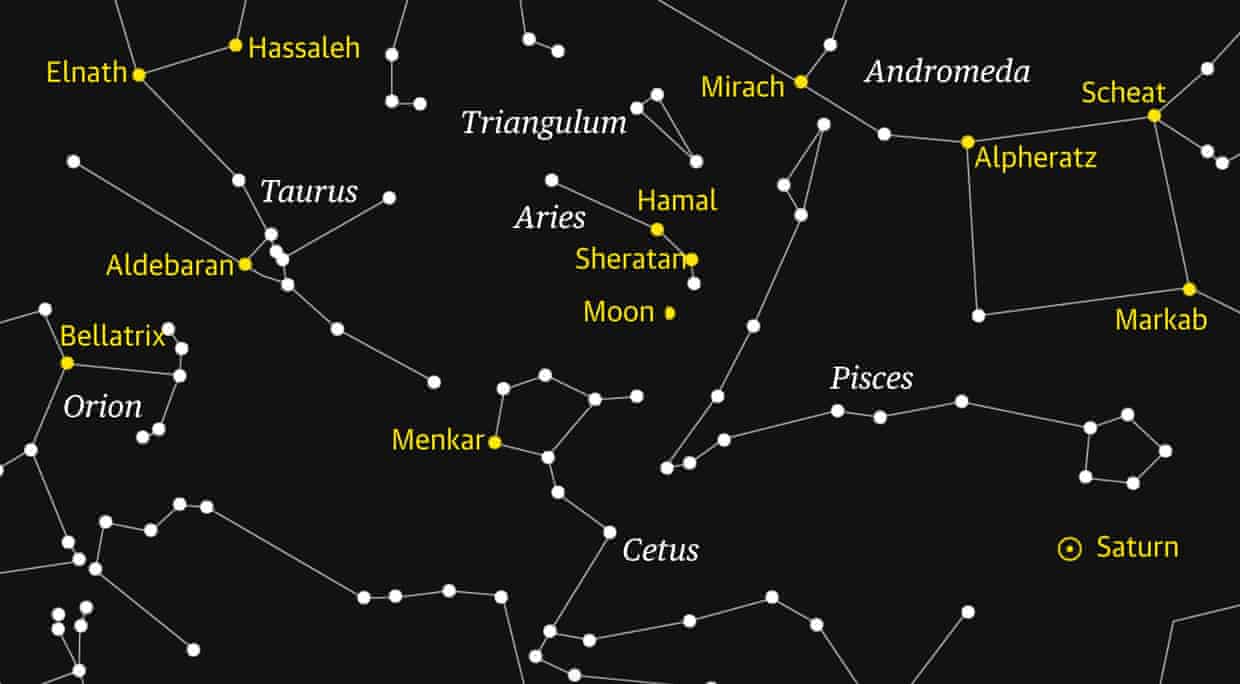
This week, stargazers have the opportunity to observe the constellation Aries, known as the ram, which is positioned between Taurus to the east and Pisces to the west. While Aries is often overlooked due to its faintness, the presence of the moon will aid in its visibility, making this an ideal time for both seasoned astronomers and casual viewers to explore this ancient constellation.
Historical Significance of Aries
Aries has a rich history that dates back to ancient civilizations. Initially identified by the early Babylonians, the constellation represented a hired hand who tended the fields. Over time, it evolved into the symbol of a ram, a designation that has persisted across various cultures. In Egyptian mythology, Aries is associated with Amun-Ra, the ram-headed god of creativity and fertility. Meanwhile, Greek mythology links Aries to the quest for the golden fleece, famously sought by Jason and the Argonauts.
The constellation contains two of its brighter stars, Hamal and Sheratan, which are located close to each other. These stars often serve as the starting point for many observers attempting to locate Aries in the night sky. Despite being relatively dim compared to other celestial bodies, their proximity makes them a helpful guide.
Viewing Conditions and Tips
This week, the moon will play a critical role in enhancing visibility for those looking to spot Aries. On the night of December 29, at approximately 20:00 GMT, the moon will be 72% illuminated, providing a natural signpost for observers. For those located in the northern hemisphere, looking southward will yield the best view of Aries. In contrast, viewers in the southern hemisphere should direct their gaze towards the north-west at sunset.
While Aries may not boast the brightness of some other constellations, its historical significance and mythological connections make it a fascinating target for exploration. As the winter months provide clearer skies in many regions, now is an excellent time to familiarize oneself with this celestial gem. Whether using binoculars or a telescope, or simply relying on the naked eye, the faint ram of the winter skies awaits discovery.



Belfast Gears Up for Vibrant St Patrick’s Day Parade on March 17

Cuba Faces Nationwide Blackout Amid Deepening Energy Crisis

Wirral Council to Restructure Leadership, Cutting Two Top Roles

Rethinking Resistance Training: Key Insights from US Experts

EU Membership on the Horizon: What It Means for Citizens

Ukrainian Drone Swarms Strike Moscow Region for Second Day

Henley Launches Innovative Initiative to Boost Local Economy

Court Ruling Allows Pandemic Tax Refund Claims Until 2026

Sean Penn’s Absence at 2026 Oscars Sparks Discussion

Coronation Street’s Shocking Murder Twist Reveals Family Secrets

Andrew Pierce Confirms Departure from ITV’s Good Morning Britain

Katie Price Faces New Health Concerns After Cancer Symptoms Resurface

Sue Radford Reveals Weight Loss Journey, Shedding 12–13 kg

Kate Garraway Sells £2 Million Home Amid Financial Struggles

Jordan Brook Faces Health Crisis in Hospital as Sophie Kasaei Stays Away

EastEnders’ Nicola Mitchell Faces Unexpected Pregnancy Crisis

Bailey Announces Heartbreaking Split from Rebecca After Reunion

Ann Ming Reflects on ITV’s ‘I Fought the Law’ Drama
-
 World4 months ago
Coronation Street’s Shocking Murder Twist Reveals Family Secrets
-
 Entertainment4 months ago
Andrew Pierce Confirms Departure from ITV’s Good Morning Britain
-
 Health7 months ago
Katie Price Faces New Health Concerns After Cancer Symptoms Resurface
-
 Health3 months ago
Sue Radford Reveals Weight Loss Journey, Shedding 12–13 kg
-
 Entertainment8 months ago
Kate Garraway Sells £2 Million Home Amid Financial Struggles
-
 Entertainment4 weeks ago
Jordan Brook Faces Health Crisis in Hospital as Sophie Kasaei Stays Away
-
 World5 months ago
EastEnders’ Nicola Mitchell Faces Unexpected Pregnancy Crisis
-
 World5 months ago
Bailey Announces Heartbreaking Split from Rebecca After Reunion
-
 Entertainment7 months ago
Ann Ming Reflects on ITV’s ‘I Fought the Law’ Drama
-

 Entertainment2 months ago
Selena Gomez’s Name Linked to Epstein: Examining the Claims
-

 Health7 months ago
TOWIE Stars Sophie Kasaei and Jordan Brook Pursue Fertility Treatment
-

 Health8 months ago
Fiona Phillips’ Husband Shares Heartbreaking Update on Her Health