
Science
Couple Engages in MRI Experiment to Study Sexual Anatomy

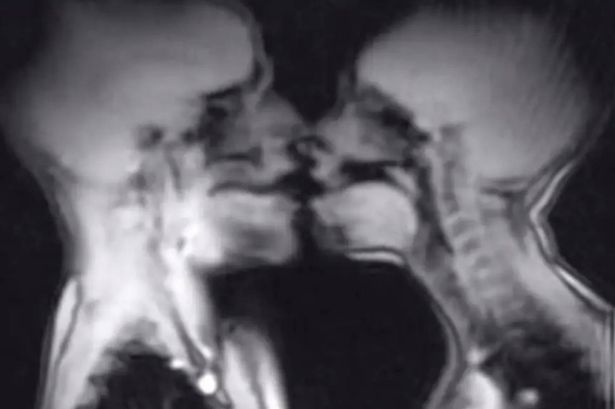
A couple has participated in a unique scientific experiment that involved engaging in sexual intercourse inside a magnetic resonance imaging (MRI) scanner. This unusual study, conducted by researchers and published in the British Medical Journal in 1999, aimed to provide insights into human anatomy during sexual activity.
Ida Sabelis and her boyfriend, Jupp, volunteered for the project, which sought to explore the physiological changes that occur during sex. According to the study, the researchers concluded that “taking magnetic resonance images of the male and female genitals during coitus is feasible and contributes to understanding of anatomy.” Notably, the results revealed that during intercourse in the “missionary position,” the penis takes on a shape resembling a boomerang, with one-third of its length comprised of the root. The study also noted that during female sexual arousal—prior to intercourse—the uterus elevates while the anterior vaginal wall elongates, although the size of the uterus remains unchanged during arousal.
While the findings were insightful, researchers encountered an unexpected phenomenon. Among the participants, which included eight couples and three single women, scientists observed a common occurrence: the women’s bladders filled rapidly during the scans. Menko Victor ‘Pek’ van Andel, an expert involved in the study, suggested this could be an evolutionary adaptation intended to encourage women to urinate after sex, potentially reducing the risk of urinary tract infections. Van Andel noted, “In every final scan, we could see a big, full bladder, even though most of the women went to the toilet before they went inside the MRI.”
Sabelis, reflecting on the experience, described it as lacking romance but emphasized her commitment to advancing understanding of the female body in medical science. She stated that the endeavor was an “act of love and a performance,” highlighting her advocacy for women’s rights in scientific research.
The study’s scientific approach contrasts sharply with another incident involving an MRI scan that resulted in serious injury. A 22-year-old woman faced significant harm after a sex toy, mistakenly believed to be entirely made of silicone, contained metal at its core. During her MRI procedure, the metal reacted with the machine, leading to the dangerous extraction of the toy from her body. Reports indicated that the foreign object was pulled into her chest cavity, resulting in major injuries, although she survived the ordeal.
Social media users have since circulated warnings against wearing metal objects during MRI appointments, with one individual sharing a graphic image accompanied by the cautionary message, “Never wear a butt plug to your MRI appointment. My God.”
These contrasting narratives highlight the complexities and potential risks associated with MRI technology in personal and scientific contexts. While Sabelis and Jupp’s participation contributed valuable knowledge to the field of sexual health, the other incident serves as a stark reminder of the dangers posed by foreign objects in medical settings.



Belfast Gears Up for Vibrant St Patrick’s Day Parade on March 17

Cuba Faces Nationwide Blackout Amid Deepening Energy Crisis

Wirral Council to Restructure Leadership, Cutting Two Top Roles

Rethinking Resistance Training: Key Insights from US Experts

EU Membership on the Horizon: What It Means for Citizens

Ukrainian Drone Swarms Strike Moscow Region for Second Day

Henley Launches Innovative Initiative to Boost Local Economy

Court Ruling Allows Pandemic Tax Refund Claims Until 2026

Sean Penn’s Absence at 2026 Oscars Sparks Discussion

Coronation Street’s Shocking Murder Twist Reveals Family Secrets

Andrew Pierce Confirms Departure from ITV’s Good Morning Britain

Katie Price Faces New Health Concerns After Cancer Symptoms Resurface

Sue Radford Reveals Weight Loss Journey, Shedding 12–13 kg

Kate Garraway Sells £2 Million Home Amid Financial Struggles

Jordan Brook Faces Health Crisis in Hospital as Sophie Kasaei Stays Away

EastEnders’ Nicola Mitchell Faces Unexpected Pregnancy Crisis

Bailey Announces Heartbreaking Split from Rebecca After Reunion

Ann Ming Reflects on ITV’s ‘I Fought the Law’ Drama
-
 World4 months ago
Coronation Street’s Shocking Murder Twist Reveals Family Secrets
-
 Entertainment4 months ago
Andrew Pierce Confirms Departure from ITV’s Good Morning Britain
-
 Health7 months ago
Katie Price Faces New Health Concerns After Cancer Symptoms Resurface
-
 Health2 months ago
Sue Radford Reveals Weight Loss Journey, Shedding 12–13 kg
-
 Entertainment8 months ago
Kate Garraway Sells £2 Million Home Amid Financial Struggles
-
 Entertainment2 weeks ago
Jordan Brook Faces Health Crisis in Hospital as Sophie Kasaei Stays Away
-
 World5 months ago
EastEnders’ Nicola Mitchell Faces Unexpected Pregnancy Crisis
-
 World4 months ago
Bailey Announces Heartbreaking Split from Rebecca After Reunion
-
 Entertainment7 months ago
Ann Ming Reflects on ITV’s ‘I Fought the Law’ Drama
-

 Entertainment2 months ago
Selena Gomez’s Name Linked to Epstein: Examining the Claims
-

 Health7 months ago
TOWIE Stars Sophie Kasaei and Jordan Brook Pursue Fertility Treatment
-

 Health7 months ago
Fiona Phillips’ Husband Shares Heartbreaking Update on Her Health