
Science
Ancient DNA from Wolf Pup Reveals Insights on Woolly Rhinos

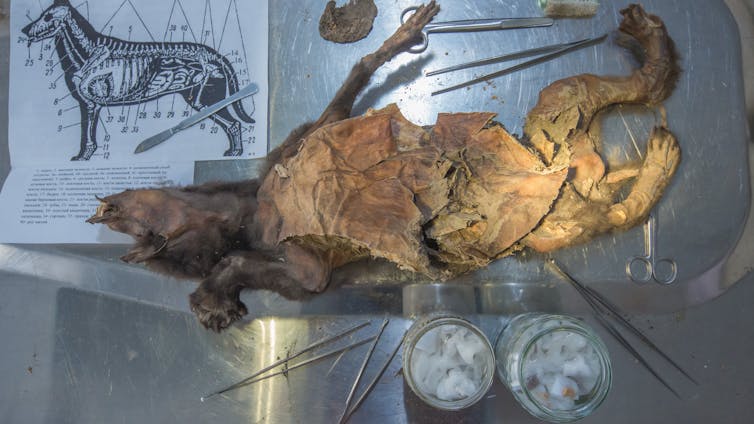
A new study has revealed significant insights into the extinction of the woolly rhino, scientifically known as Coelodonta antiquitatis, through DNA analysis of remnants found in a wolf pup’s stomach. This groundbreaking research challenges long-held beliefs about the genetic health of this extinct species, which roamed parts of Europe and Asia thousands of years ago.
The woolly rhino, which existed approximately half a million years ago, could weigh up to three tonnes and thrived in the cold conditions of the ice age. It was well adapted to its environment, featuring a thick layer of fat, a woolly coat, and a large horn that could reach 1.6 metres in length. These adaptations allowed it to feed on grass and shrubs, even under harsh weather conditions. At its peak, the woolly rhino’s range extended from the Iberian Peninsula in the west to northeastern Siberia in the east.
By about 14,000 years ago, woolly rhinos had disappeared from the Earth. Environmental changes brought about by a warming climate and human hunting practices contributed to their decline. Traditionally, scientists assumed that as the population dwindled, genetic diversity would diminish, leading to increased inbreeding among the remaining individuals.
However, a recent paper led by Solveig Guðjónsdóttir provides a different perspective. The research team analyzed a woolly rhino sample found in the stomach of a wolf pup, discovered in permafrost near Tumat in northeastern Siberia. The wolf and rhino lived around the same time, just before the woolly rhino’s extinction.
Researchers found that the woolly rhino did not exhibit signs of inbreeding. This suggests that, contrary to previous assumptions, the genetic diversity of the species remained intact even as its population began to decline. The study employed a statistical method known as Pairwise Sequentially Markovian Coalescent modelling (PSMC) to estimate the historical population size based on genetic differences in the DNA strands.
In comparing the newly sequenced genome with two previously published woolly rhino genomes, the analysis revealed that the population, although reduced, maintained sufficient genetic diversity to suggest a larger breeding population than previously believed.
Guðjónsdóttir’s findings underscore two key points. First, they highlight the potential of ancient DNA retrieved from unexpected sources to shed light on historical extinction events. Secondly, they indicate that existing models for understanding population declines may require reevaluation, as woolly rhinos may have retained their genomic diversity longer than anticipated.
The study emphasizes the importance of continued research, particularly in examining the remains of predators found in permafrost. As scientists delve deeper into the genetic history of extinct species, they may uncover new narratives about their survival and eventual disappearance.
Timothy Neal Coulson, who has no affiliations that could influence the research, reinforces the value of this study in advancing our understanding of ancient species and their ecosystems. As we continue to explore the past, the lessons learned from the woolly rhino may offer crucial insights into the impacts of climate change and human activity on biodiversity today.










Belfast Gears Up for Vibrant St Patrick’s Day Parade on March 17

Cuba Faces Nationwide Blackout Amid Deepening Energy Crisis

Wirral Council to Restructure Leadership, Cutting Two Top Roles

Rethinking Resistance Training: Key Insights from US Experts

EU Membership on the Horizon: What It Means for Citizens

Ukrainian Drone Swarms Strike Moscow Region for Second Day

Henley Launches Innovative Initiative to Boost Local Economy

Court Ruling Allows Pandemic Tax Refund Claims Until 2026

Sean Penn’s Absence at 2026 Oscars Sparks Discussion

Coronation Street’s Shocking Murder Twist Reveals Family Secrets

Andrew Pierce Confirms Departure from ITV’s Good Morning Britain

Katie Price Faces New Health Concerns After Cancer Symptoms Resurface

Sue Radford Reveals Weight Loss Journey, Shedding 12–13 kg

Kate Garraway Sells £2 Million Home Amid Financial Struggles

Jordan Brook Faces Health Crisis in Hospital as Sophie Kasaei Stays Away

EastEnders’ Nicola Mitchell Faces Unexpected Pregnancy Crisis

Bailey Announces Heartbreaking Split from Rebecca After Reunion

Ann Ming Reflects on ITV’s ‘I Fought the Law’ Drama
-
 World4 months ago
Coronation Street’s Shocking Murder Twist Reveals Family Secrets
-
 Entertainment4 months ago
Andrew Pierce Confirms Departure from ITV’s Good Morning Britain
-
 Health7 months ago
Katie Price Faces New Health Concerns After Cancer Symptoms Resurface
-
 Health2 months ago
Sue Radford Reveals Weight Loss Journey, Shedding 12–13 kg
-
 Entertainment8 months ago
Kate Garraway Sells £2 Million Home Amid Financial Struggles
-
 Entertainment3 weeks ago
Jordan Brook Faces Health Crisis in Hospital as Sophie Kasaei Stays Away
-
 World5 months ago
EastEnders’ Nicola Mitchell Faces Unexpected Pregnancy Crisis
-
 World5 months ago
Bailey Announces Heartbreaking Split from Rebecca After Reunion
-
 Entertainment7 months ago
Ann Ming Reflects on ITV’s ‘I Fought the Law’ Drama
-

 Entertainment2 months ago
Selena Gomez’s Name Linked to Epstein: Examining the Claims
-

 Health7 months ago
TOWIE Stars Sophie Kasaei and Jordan Brook Pursue Fertility Treatment
-

 Health7 months ago
Fiona Phillips’ Husband Shares Heartbreaking Update on Her Health