
Politics
Iran-Aligned Militias Threaten Retaliation Amid Rising Tensions

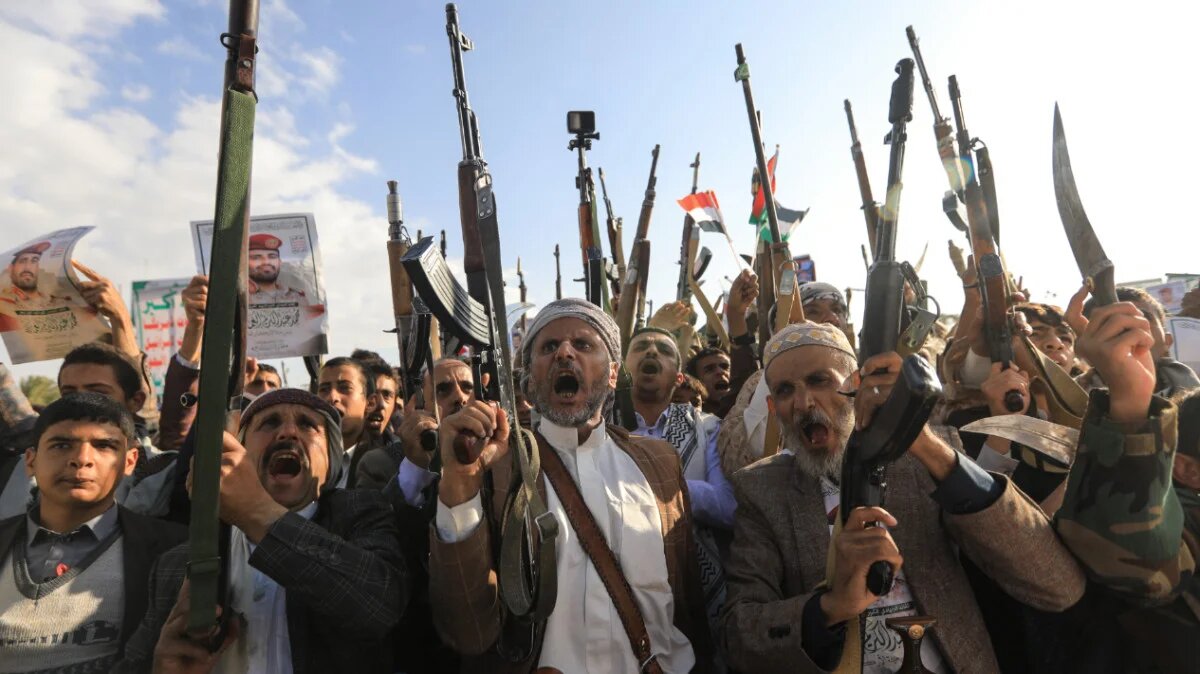
Militias aligned with Iran issued stern warnings of retaliation against any potential American attacks on the Islamic Republic. This escalated rhetoric arrives as the Trump administration mobilizes to mitigate the fallout from possible military actions. The situation echoes heightened tensions from 2025, when direct conflicts erupted involving the United States, Israel, and Iran, raising concerns about the potential for renewed hostilities.
Kataib Hezbollah, a prominent Iraqi militia group, has threatened “total war” if the US were to launch an attack on Iran. In a statement released on Sunday, the group’s leader, Abu Hussein al-Hamidawi, declared that the “enemies” of Iran would face “the bitterest forms of death.” He warned that adversaries would “taste every form of deadly suffering,” emphasizing a readiness to instill fear and chaos.
The Houthis from Yemen added to the threats by announcing a possible resumption of attacks on vessels in the Red Sea. A video released on Monday depicted a ship navigating the waters before nightfall, followed by another engulfed in flames, captioned simply with “Soon.” These aggressive postures underline the risks the US faces as it deliberates potential military responses.
According to reports, one option under consideration is targeted precision strikes on “high-value” Iranian officials deemed responsible for the deaths of protesters in Iran. Discussions within the Trump administration have been characterized as “chaotic,” with officials expressing concern over the implications of such actions. As of mid-2025, approximately 40,000 US troops are stationed across the Middle East, including about 5,000 in Iraq and Syria, where bases have been targeted by Iran-aligned militias in the past.
The possibility of a military strike on US bases in Kuwait, Qatar, the UAE, Bahrain, or Saudi Arabia poses significant risks, as these nations fear being drawn into a broader conflict. In response to speculation regarding its position, the UAE announced it would not allow its territory or airspace to be used for attacks on Iran.
The US has recently augmented its military presence in the region. The USS Abraham Lincoln aircraft carrier, equipped with F-35 warplanes, F/A-18 jet fighters, and EA-18G Growler electronic-warfare planes, has been repositioned from the South China Sea to the Middle East. Additionally, open-source flight trackers indicate a buildup of F-15 warplanes at Muwaffaq Salti Air Base in Jordan, enhancing US options while Gulf states remain wary of direct involvement in strikes.
The specter of conflict looms large, as the US has previously faced threats from Iranian-aligned militias during direct confrontations involving Israel and Iran in 2025. Notably, in January 2024, a drone strike attributed to Kataib Hezbollah killed three US soldiers and injured more than 40 at a desert outpost on Jordan’s border with Iraq. In retaliation, the US assassinated a senior Kataib Hezbollah commander, escalating tensions further.
In a recent statement, Joe Kent, the director of the US National Counterterrorism Center, warned Iraqi officials that if Iranian-backed militias were to attack US troops, Washington would respond decisively. Kataib Hezbollah is recognized as the most powerful faction among the pro-Iranian Shia paramilitary groups in Iraq, collectively known as the Popular Mobilisation Forces. Its significance has grown, particularly as its ally, Lebanese Hezbollah, has been weakened due to recent conflicts.
The assassination of Hezbollah chief Hassan Nasrallah by Israeli forces in October 2025 and the subsequent pressure on the group to disarm further complicate the regional landscape. Despite enduring Israeli strikes, Hezbollah has largely refrained from retaliating, particularly following a ceasefire agreement that restricted its operational capabilities.
The dynamics within the region are shifting as Iraqi militias like Kataib Hezbollah have largely refrained from engaging in the regional conflict that escalated after the Hamas-led attacks on Israel on October 7, 2023. Following Israel’s retaliatory strikes in Gaza, which resulted in over 71,500 casualties, a broader geopolitical realignment has emerged. Notably, Iranian ally Bashar al-Assad was ousted by Islamist rebels in December 2024, further destabilizing the situation.
With Iranian-backed groups such as the Popular Mobilisation Forces, Yemeni Houthis, and Lebanese Hezbollah forming an “axis of resistance,” their varying degrees of autonomy from Iran and local influences play a critical role in shaping regional conflicts. For instance, the Popular Mobilisation Forces operate as part of the Iraqi state and rely on Baghdad for funding.
In a recent political development, Shia political parties associated with these militias nominated former Prime Minister Nouri al-Maliki to return to leadership in Iraq, signaling potential shifts in governance that could affect militia dynamics.
The Houthis have emerged as a formidable force in the conflict, gaining recognition for their bold maritime attacks in solidarity with Palestinians in Gaza. Following a truce mediated by Oman in May 2025, the Houthis agreed to cease hostilities against the US, yet continued to target Israel, complicating the fragile peace.
If the Houthis resume their attacks on vessels in the Red Sea, it could signal the end of the truce with the US, further escalating tensions in an already volatile region. The situation remains fluid, with the potential for significant repercussions for all parties involved.








Belfast Gears Up for Vibrant St Patrick’s Day Parade on March 17

Cuba Faces Nationwide Blackout Amid Deepening Energy Crisis

Wirral Council to Restructure Leadership, Cutting Two Top Roles

Rethinking Resistance Training: Key Insights from US Experts

EU Membership on the Horizon: What It Means for Citizens

Ukrainian Drone Swarms Strike Moscow Region for Second Day

Henley Launches Innovative Initiative to Boost Local Economy

Court Ruling Allows Pandemic Tax Refund Claims Until 2026

Sean Penn’s Absence at 2026 Oscars Sparks Discussion

Coronation Street’s Shocking Murder Twist Reveals Family Secrets

Andrew Pierce Confirms Departure from ITV’s Good Morning Britain

Katie Price Faces New Health Concerns After Cancer Symptoms Resurface

Sue Radford Reveals Weight Loss Journey, Shedding 12–13 kg

Kate Garraway Sells £2 Million Home Amid Financial Struggles

Jordan Brook Faces Health Crisis in Hospital as Sophie Kasaei Stays Away

EastEnders’ Nicola Mitchell Faces Unexpected Pregnancy Crisis

Bailey Announces Heartbreaking Split from Rebecca After Reunion

Ann Ming Reflects on ITV’s ‘I Fought the Law’ Drama
-
 World4 months ago
Coronation Street’s Shocking Murder Twist Reveals Family Secrets
-
 Entertainment4 months ago
Andrew Pierce Confirms Departure from ITV’s Good Morning Britain
-
 Health7 months ago
Katie Price Faces New Health Concerns After Cancer Symptoms Resurface
-
 Health2 months ago
Sue Radford Reveals Weight Loss Journey, Shedding 12–13 kg
-
 Entertainment8 months ago
Kate Garraway Sells £2 Million Home Amid Financial Struggles
-
 Entertainment3 weeks ago
Jordan Brook Faces Health Crisis in Hospital as Sophie Kasaei Stays Away
-
 World5 months ago
EastEnders’ Nicola Mitchell Faces Unexpected Pregnancy Crisis
-
 World5 months ago
Bailey Announces Heartbreaking Split from Rebecca After Reunion
-
 Entertainment7 months ago
Ann Ming Reflects on ITV’s ‘I Fought the Law’ Drama
-

 Entertainment2 months ago
Selena Gomez’s Name Linked to Epstein: Examining the Claims
-

 Health7 months ago
TOWIE Stars Sophie Kasaei and Jordan Brook Pursue Fertility Treatment
-

 Health7 months ago
Fiona Phillips’ Husband Shares Heartbreaking Update on Her Health