
Business
Trump’s $2,000 Checks Face Confusion and Public Outrage

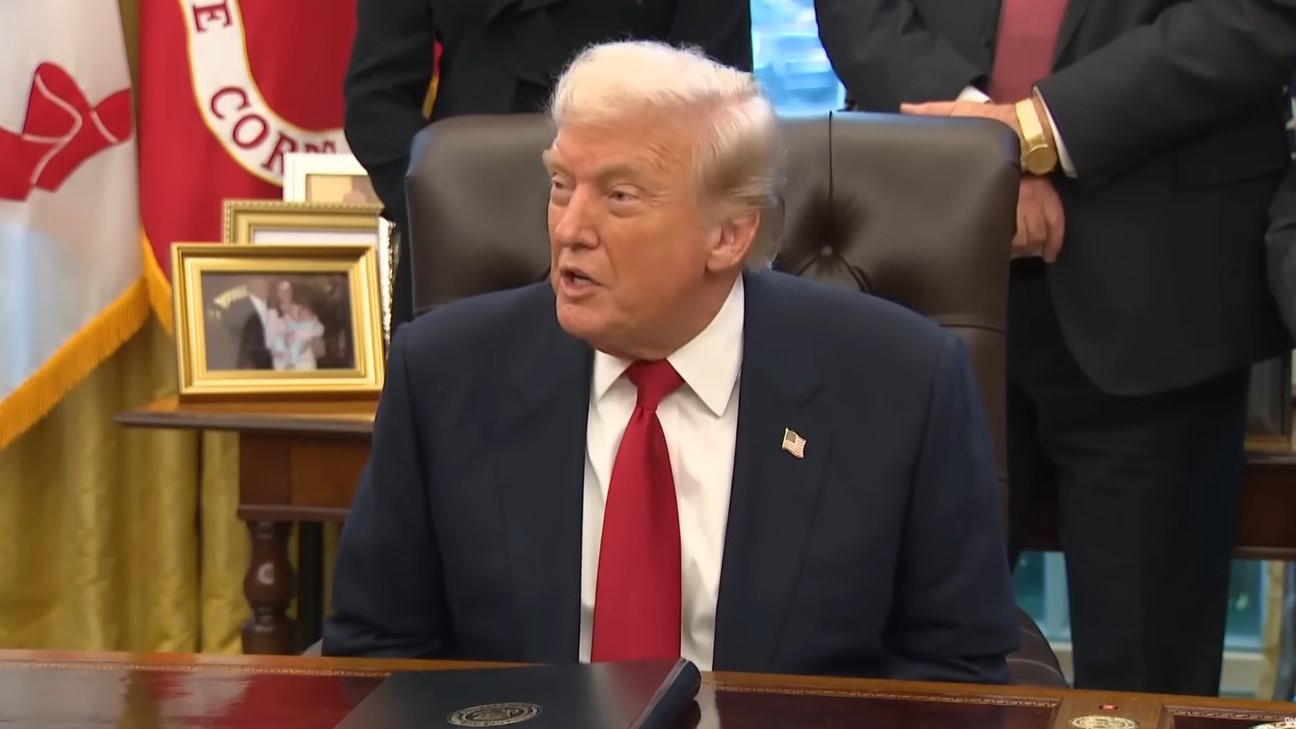
President Donald Trump’s promise of $2,000 (£1,500) checks for American households has sparked widespread confusion and frustration. As of now, there is no clear plan detailing how these payments will be funded or distributed, leaving many citizens questioning the feasibility of the proposal. Government officials, lawmakers, and analysts are grappling with the complexities of financing these checks amid legal and bureaucratic obstacles.
The proposed payments, characterized as a “tariff dividend” funded by revenue from import taxes, have become entangled in political rhetoric. Instead of clear timelines and concrete plans, citizens are confronted with conflicting statements and a lack of formal legislation. While the administration has repeatedly stated its commitment to issuing these checks, experts warn that without Congressional approval and a defined distribution strategy, the promised funds may remain elusive.
Trump has suggested that the checks would be financed through increased tariff revenue, which he claimed would allow the government to provide “a dividend of at least $2,000 a person,” although specific eligibility criteria remain unclear. In various interviews, the President hinted that the payments could be distributed “toward the end of the year” or even mid-2026, but these timelines have varied significantly and lack solid backing. Economic officials within the administration have acknowledged that without legislative action, the plan lacks the necessary authority to proceed.
At the core of the debate is the question of whether tariff revenue can adequately support the proposed checks. Independent analysts estimate that distributing $2,000 (£1,500) to eligible Americans could cost between $200 billion (£146 billion) and over $450 billion (£328 billion), significantly surpassing the approximate $195 billion (£142 billion) collected in tariffs in 2025. Economists caution that relying solely on tariffs could exacerbate the federal deficit, particularly as current tariff policies have already contributed to rising inflation.
The lack of a detailed funding mechanism also raises potential legal and constitutional challenges. The U.S. Supreme Court is currently reviewing cases that could impact the legality of Trump’s tariff policies, which may ultimately reduce or eliminate future revenue streams. Even if funding concerns are addressed, questions remain about who would qualify for the checks. Reports indicate that high-income earners might be excluded, with potential income thresholds around $100,000 (£73,000), but no official confirmation has been made.
Public reaction to the uncertainty surrounding the $2,000 checks has been sharp. Many Americans have taken to social media and news commentary platforms to express their skepticism and outrage, viewing the ongoing discussions as more political theatre than a sincere effort to provide financial relief. Critics argue that the promise of these checks has been used primarily for political positioning, leveraging the public’s desire for assistance while delaying the difficult task of drafting enforceable legislation.
The Internal Revenue Service has explicitly warned that no federal $2,000 (£1,500) stimulus check is scheduled for early 2026, emphasizing that any messages urging immediate action are likely scams. Past stimulus programs, such as those implemented during the pandemic, were executed through existing tax data systems, and without a new law authorizing similar payments for the proposed tariff dividend, the IRS cannot legally distribute the funds.
As the debate continues, the question of whether the promised checks will ever materialize remains open. This uncertainty is likely to shape economic discussions leading up to the next election cycle in 2026, particularly if Trump and his allies continue to advocate for the proposal without providing the necessary details. The situation highlights a growing disconnect between political promises and the practical realities of economic policymaking, leaving many Americans in a state of confusion and frustration.







Belfast Gears Up for Vibrant St Patrick’s Day Parade on March 17

Cuba Faces Nationwide Blackout Amid Deepening Energy Crisis

Wirral Council to Restructure Leadership, Cutting Two Top Roles

Rethinking Resistance Training: Key Insights from US Experts

EU Membership on the Horizon: What It Means for Citizens

Ukrainian Drone Swarms Strike Moscow Region for Second Day

Henley Launches Innovative Initiative to Boost Local Economy

Court Ruling Allows Pandemic Tax Refund Claims Until 2026

Sean Penn’s Absence at 2026 Oscars Sparks Discussion

Coronation Street’s Shocking Murder Twist Reveals Family Secrets

Andrew Pierce Confirms Departure from ITV’s Good Morning Britain

Katie Price Faces New Health Concerns After Cancer Symptoms Resurface

Gyles Brandreth Shares Grandson’s Cancer Battle and Recovery

Sue Radford Reveals Weight Loss Journey, Shedding 12–13 kg

Kate Garraway Sells £2 Million Home Amid Financial Struggles

Jordan Brook Faces Health Crisis in Hospital as Sophie Kasaei Stays Away

EastEnders’ Nicola Mitchell Faces Unexpected Pregnancy Crisis

Reddit Study Reveals Distinctions Between Lurkers and Power Users
-
 World9 months ago
Coronation Street’s Shocking Murder Twist Reveals Family Secrets
-
 Entertainment8 months ago
Andrew Pierce Confirms Departure from ITV’s Good Morning Britain
-
 Health12 months ago
Katie Price Faces New Health Concerns After Cancer Symptoms Resurface
-
 Health7 months ago
Gyles Brandreth Shares Grandson’s Cancer Battle and Recovery
-
 Health7 months ago
Sue Radford Reveals Weight Loss Journey, Shedding 12–13 kg
-
 Entertainment1 year ago
Kate Garraway Sells £2 Million Home Amid Financial Struggles
-
 Entertainment5 months ago
Jordan Brook Faces Health Crisis in Hospital as Sophie Kasaei Stays Away
-
 World10 months ago
EastEnders’ Nicola Mitchell Faces Unexpected Pregnancy Crisis
-
 Science8 months ago
Reddit Study Reveals Distinctions Between Lurkers and Power Users
-

 World9 months ago
Mother Charged After Son, 9, Killed in Tragic Incident in Italy
-

 Entertainment12 months ago
Ann Ming Reflects on ITV’s ‘I Fought the Law’ Drama
-

 World9 months ago
Bailey Announces Heartbreaking Split from Rebecca After Reunion