
Business
Trump Promotes Tariffs as Key to Wealth Ahead of 2026 Midterms

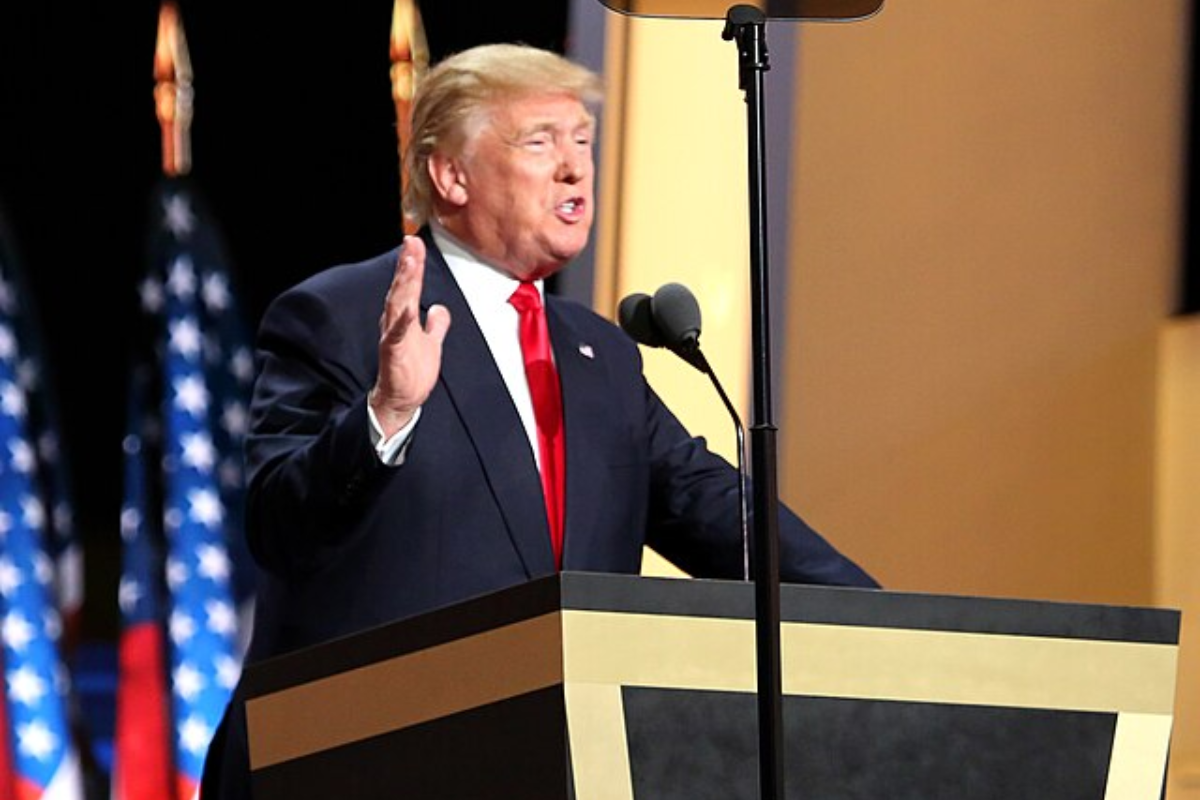
President Donald Trump has positioned his tariff policies as a cornerstone of economic growth, claiming they are instrumental in generating what he describes as “great wealth.” This assertion comes as he prepares for the highly consequential 2026 midterm elections, where he suggests that “pricing” will be a crucial theme. Despite these claims, consumer confidence has significantly declined, reaching near-historic lows.
On Saturday, Trump took to Truth Social to highlight the economy’s performance, stating: “Tariffs are creating GREAT WEALTH… 4.3% GDP, and going way up. No inflation!!!” His comments follow a report from the University of Michigan, which revealed a 28.5% drop in its Consumer Sentiment Index compared to the same period last year. In the survey, 47% of consumers identified high prices as a major financial burden.
Trump’s remarks indicate a notable shift in Republican messaging as the party prepares for the midterm elections. Control of Congress is at stake, with Republicans maintaining a narrow 220-213 majority in the House and a 53-47 advantage in the Senate. In an interview with Politico, Trump stated, “I think it’s going to be about the success of our country. It’ll be about pricing… Because, you know, they gave us high pricing, and we’re bringing it down.”
The President’s focus on pricing diverges from his earlier dismissal of Democratic concerns over affordability, which he previously labeled as a “hoax” and “scam.” Trump has pointed to declining petrol prices, which recently fell below $3 per gallon for the first time since 2021, as evidence of his administration’s success.
Despite Trump’s optimistic portrayal, the University of Michigan’s Consumer Sentiment Index recorded a score of 52.9 in December, reflecting a 28.5% decrease and approaching historic lows. This index is now below its value at the onset of all six recessions since its inception in 1978. The survey also indicated that 47% of consumers mentioned high prices as a significant factor affecting their personal finances, an increase from 35% a year prior.
Economists characterize the current economic landscape as a “K-shaped economy,” where growth is driven by higher-income households while many others face increasing affordability challenges. Although Trump has claimed “no inflation,” the inflation report for November reflected a 2.6% annual increase in food prices. Furthermore, year-ahead inflation expectations in the Michigan survey stood at 4.2%, significantly above the Federal Reserve’s 2% target.
As the year draws to a close, an AP/NORC poll indicates that Americans are scaling back charitable contributions, further highlighting the financial strain many are experiencing despite positive economic indicators. While Trump celebrates over $200 billion in tariff collections, the future of these tariffs is uncertain. The U.S. Supreme Court is currently reviewing challenges related to the tariffs, examining the application of the International Emergency Economic Powers Act, which supports many of the administration’s trade measures.
“CBP’s enforcement delivers results,” stated CBP Commissioner Rodney Scott. “By combining intelligence-led targeting, rigorous oversight, and swift action, we are safeguarding the U.S. economy, protecting American industries, and holding accountable those who seek to break our trade laws.” Should the Supreme Court rule against the administration, companies that have paid tariffs could be entitled to refunds, potentially undermining Trump’s claims of economic gains from these policies.
Trump’s renewed focus on pricing appears influenced by recent Democratic successes in off-year elections, particularly in gubernatorial races in New Jersey and Virginia. The Democrats’ ability to campaign effectively on affordability concerns prompted Republican strategists to advocate for a shift in messaging.
As Republicans head toward the 2026 midterms, they face significant challenges. The unemployment rate rose to 4.6% in November, the highest level since 2021, and hiring has slowed considerably. Additionally, the recent government shutdown could further dampen fourth-quarter growth, according to economists.
The stakes for Trump’s legislative agenda in the 2026 midterms are high. Historically, the party of a sitting president tends to lose seats during midterm elections, as evidenced by the significant losses Republicans experienced during Trump’s first midterm cycle in 2018. Should Democrats regain control of the House, it would impede the administration’s policy priorities and subject Trump to increased oversight.
The critical question remains whether Trump’s focus on pricing as a pivotal issue will resonate with voters who are increasingly expressing pessimism about their economic future. With consumer confidence at low levels and inflation expectations elevated, Republicans face an uphill battle to convince the electorate that the economy is working in their favor.








Belfast Gears Up for Vibrant St Patrick’s Day Parade on March 17

Cuba Faces Nationwide Blackout Amid Deepening Energy Crisis

Wirral Council to Restructure Leadership, Cutting Two Top Roles

Rethinking Resistance Training: Key Insights from US Experts

EU Membership on the Horizon: What It Means for Citizens

Ukrainian Drone Swarms Strike Moscow Region for Second Day

Henley Launches Innovative Initiative to Boost Local Economy

Court Ruling Allows Pandemic Tax Refund Claims Until 2026

Sean Penn’s Absence at 2026 Oscars Sparks Discussion

Coronation Street’s Shocking Murder Twist Reveals Family Secrets

Andrew Pierce Confirms Departure from ITV’s Good Morning Britain

Katie Price Faces New Health Concerns After Cancer Symptoms Resurface

Gyles Brandreth Shares Grandson’s Cancer Battle and Recovery

Sue Radford Reveals Weight Loss Journey, Shedding 12–13 kg

Kate Garraway Sells £2 Million Home Amid Financial Struggles

Jordan Brook Faces Health Crisis in Hospital as Sophie Kasaei Stays Away

EastEnders’ Nicola Mitchell Faces Unexpected Pregnancy Crisis

Reddit Study Reveals Distinctions Between Lurkers and Power Users
-
 World9 months ago
Coronation Street’s Shocking Murder Twist Reveals Family Secrets
-
 Entertainment9 months ago
Andrew Pierce Confirms Departure from ITV’s Good Morning Britain
-
 Health12 months ago
Katie Price Faces New Health Concerns After Cancer Symptoms Resurface
-
 Health7 months ago
Gyles Brandreth Shares Grandson’s Cancer Battle and Recovery
-
 Health7 months ago
Sue Radford Reveals Weight Loss Journey, Shedding 12–13 kg
-
 Entertainment1 year ago
Kate Garraway Sells £2 Million Home Amid Financial Struggles
-
 Entertainment5 months ago
Jordan Brook Faces Health Crisis in Hospital as Sophie Kasaei Stays Away
-
 World10 months ago
EastEnders’ Nicola Mitchell Faces Unexpected Pregnancy Crisis
-
 Science9 months ago
Reddit Study Reveals Distinctions Between Lurkers and Power Users
-

 World9 months ago
Mother Charged After Son, 9, Killed in Tragic Incident in Italy
-

 Entertainment12 months ago
Ann Ming Reflects on ITV’s ‘I Fought the Law’ Drama
-

 World9 months ago
Bailey Announces Heartbreaking Split from Rebecca After Reunion