
Business
Singapore Airlines and Cathay Pacific: A Clash of Widebody Giants

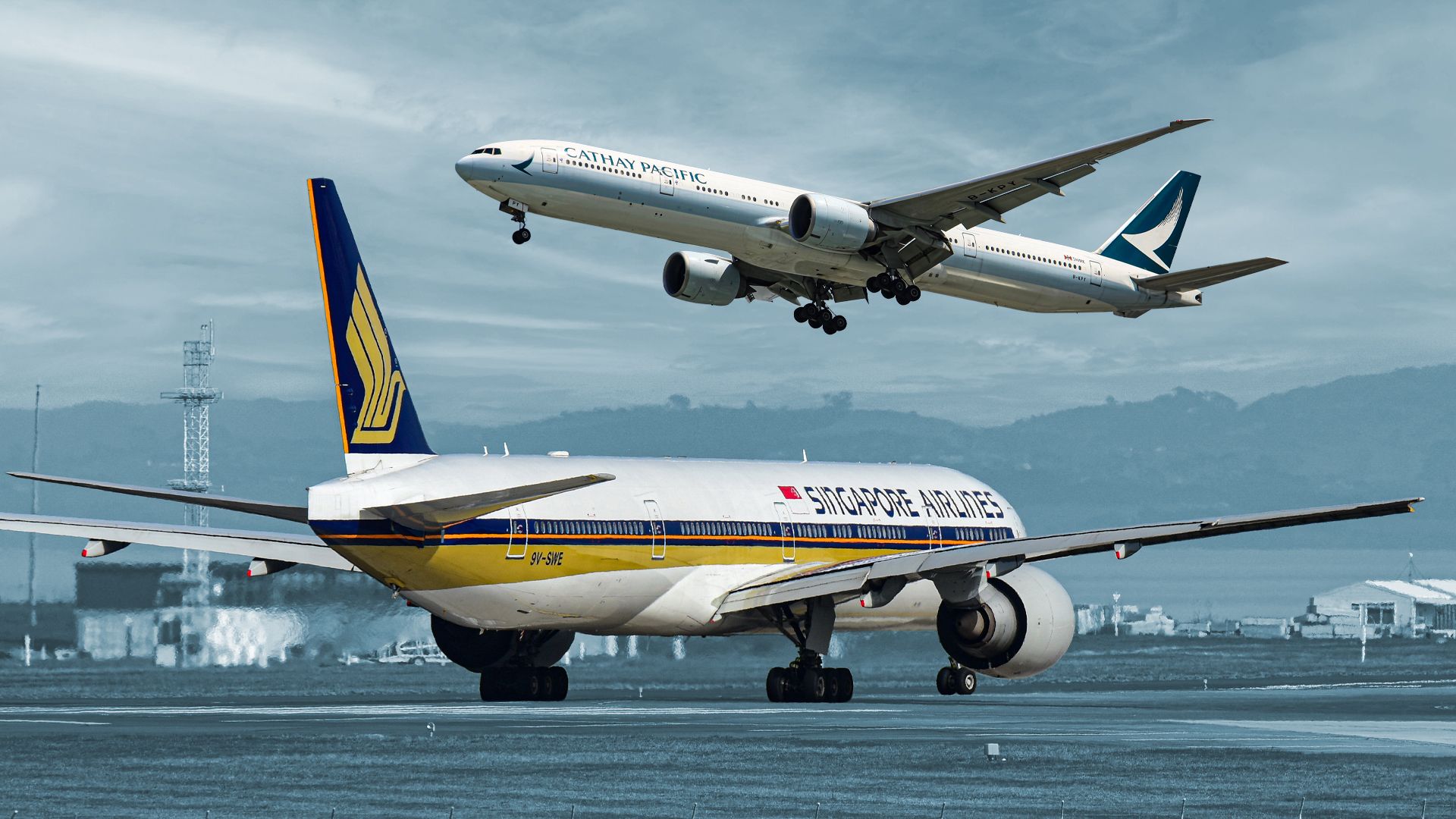
The competition between Singapore Airlines and Cathay Pacific highlights the evolving landscape of air travel in Asia, particularly in the realm of widebody aircraft. Both airlines, revered for their extensive long-haul networks and premium services, play crucial roles in connecting Asia with major markets across Europe, North America, and Australia. Despite Singapore Airlines carrying more passengers with 26.5 million in fiscal year 2024, Cathay Pacific boasts a larger widebody fleet, a distinction that underscores the differing strategies of these two industry titans.
Comparative Overview of the Airlines
Singapore Airlines, the flag carrier of Singapore, is renowned for its exceptional service and focus on long-haul travel. Operating primarily from Singapore Changi Airport (SIN), the airline connects major cities across Asia, Europe, Australia, and North America. Meanwhile, Cathay Pacific, based in Hong Kong, serves a similar mix of long-haul and regional routes, leveraging the strategic location of Hong Kong International Airport (HKG) as a major transit hub.
Both airlines significantly depend on connecting traffic, utilizing their hubs to facilitate passenger transfers. Singapore Airlines is a member of the Star Alliance, while Cathay Pacific belongs to the oneworld alliance. This alliance membership enhances their networks, allowing a steady influx of passengers onto their flights.
Widebody Aircraft Comparisons
The reliance on widebody aircraft is a defining feature of both airlines’ long-haul strategies. Cathay Pacific operates a diverse fleet that includes Airbus A330s, A350s, and Boeing 777s. In contrast, Singapore Airlines focuses on the A350 family, supplemented by a smaller but notable fleet of Airbus A380s and Boeing 787s. The historical context is significant, as both airlines transitioned from operating large numbers of Boeing 747s to adopting more fuel-efficient twin-engine aircraft.
A detailed look at their fleets reveals the following numbers:
| Airline | Aircraft Type | Quantity in Service |
|——————|——————|———————|
| Singapore Airlines | A350-900 | 56 |
| | A350-900ULR | 7 |
| | A380-800 | 9 |
| | 777-300 | 16 |
| | 787-10 | 23 |
| **Total** | | **116** |
| Cathay Pacific | A330-300 | 41 |
| | A350-900 | 17 |
| | A350-1000 | 29 |
| | 777-300ER | 33 |
| **Total** | | **136** |
Cathay Pacific’s broader fleet composition allows it to serve a larger volume of passengers. The airline’s investment in future aircraft includes an order for 30 A330-900neos, while Singapore Airlines has 31 Boeing 777X aircraft on order.
In the narrowbody segment, both airlines have streamlined their operations. Cathay Pacific operates the Airbus A321neo, while Singapore Airlines employs the Boeing 737 MAX 8. Cathay’s fleet includes 16 A321neos with an additional 15 on order, while Singapore Airlines has 19 examples of the 737 MAX 8, with seven more to be delivered.
Both carriers maintain relatively modest narrowbody operations compared to larger Asian airlines, focusing predominantly on widebody aircraft for their long-haul endeavors.
The Cargo Business Landscape
The cargo operations of Singapore Airlines and Cathay Pacific also reflect their strategic priorities. Both airlines utilize a combination of dedicated freighter aircraft and the cargo space available in their passenger jets. Cathay Pacific leads in this arena, operating a more substantial cargo fleet, which benefits from Hong Kong’s status as one of the world’s busiest cargo hubs.
Cathay Pacific’s dedicated freighter fleet includes:
| Airline | Aircraft Type | Quantity in Service |
|——————|——————|———————|
| Singapore Airlines | 777-200F | 5 |
| Cathay Pacific | 747-400ERF | 6 |
| | 747-8F | 14 |
| **Total** | | **20** |
Both airlines are preparing for modern advancements in cargo capability, with Singapore Airlines ordering seven Airbus A350F freighters and Cathay Pacific having six on order. The A350F is designed for efficiency and features one of the largest main deck cargo doors in the industry.
High-Frequency Routes and Future Outlook
Both airlines operate extensive networks that include high-frequency short- and medium-haul routes supporting their long-haul services. Cathay Pacific’s busiest route is between Hong Kong and Taipei, featuring 4,292 round-trip flights in 2025. Other popular routes include Hong Kong to Singapore and Hong Kong to Bangkok. Singapore Airlines similarly focuses on regional connectivity, with Jakarta-Singapore recognized as its busiest route, offering 3,172 round-trip flights.
As both airlines look to the future, investments in next-generation aircraft and cargo capabilities are paramount. Their respective strategies not only reflect their geographic realities but also their aim to remain competitive in an increasingly dynamic aviation market. Each airline’s unique fleet choices and operational strategies position them as influential players in the Asian aviation landscape, ensuring they will continue to serve passengers effectively for years to come.











Belfast Gears Up for Vibrant St Patrick’s Day Parade on March 17

Cuba Faces Nationwide Blackout Amid Deepening Energy Crisis

Wirral Council to Restructure Leadership, Cutting Two Top Roles

Rethinking Resistance Training: Key Insights from US Experts

EU Membership on the Horizon: What It Means for Citizens

Ukrainian Drone Swarms Strike Moscow Region for Second Day

Henley Launches Innovative Initiative to Boost Local Economy

Court Ruling Allows Pandemic Tax Refund Claims Until 2026

Sean Penn’s Absence at 2026 Oscars Sparks Discussion

Coronation Street’s Shocking Murder Twist Reveals Family Secrets

Andrew Pierce Confirms Departure from ITV’s Good Morning Britain

Katie Price Faces New Health Concerns After Cancer Symptoms Resurface

Sue Radford Reveals Weight Loss Journey, Shedding 12–13 kg

Kate Garraway Sells £2 Million Home Amid Financial Struggles

Jordan Brook Faces Health Crisis in Hospital as Sophie Kasaei Stays Away

EastEnders’ Nicola Mitchell Faces Unexpected Pregnancy Crisis

Bailey Announces Heartbreaking Split from Rebecca After Reunion

Ann Ming Reflects on ITV’s ‘I Fought the Law’ Drama
-
 World4 months ago
Coronation Street’s Shocking Murder Twist Reveals Family Secrets
-
 Entertainment4 months ago
Andrew Pierce Confirms Departure from ITV’s Good Morning Britain
-
 Health7 months ago
Katie Price Faces New Health Concerns After Cancer Symptoms Resurface
-
 Health2 months ago
Sue Radford Reveals Weight Loss Journey, Shedding 12–13 kg
-
 Entertainment8 months ago
Kate Garraway Sells £2 Million Home Amid Financial Struggles
-
 Entertainment3 weeks ago
Jordan Brook Faces Health Crisis in Hospital as Sophie Kasaei Stays Away
-
 World5 months ago
EastEnders’ Nicola Mitchell Faces Unexpected Pregnancy Crisis
-
 World5 months ago
Bailey Announces Heartbreaking Split from Rebecca After Reunion
-
 Entertainment7 months ago
Ann Ming Reflects on ITV’s ‘I Fought the Law’ Drama
-

 Entertainment2 months ago
Selena Gomez’s Name Linked to Epstein: Examining the Claims
-

 Health7 months ago
TOWIE Stars Sophie Kasaei and Jordan Brook Pursue Fertility Treatment
-

 Health7 months ago
Fiona Phillips’ Husband Shares Heartbreaking Update on Her Health