
Politics
Hong Kong Journalism Faces Unprecedented Challenges After Lai Conviction

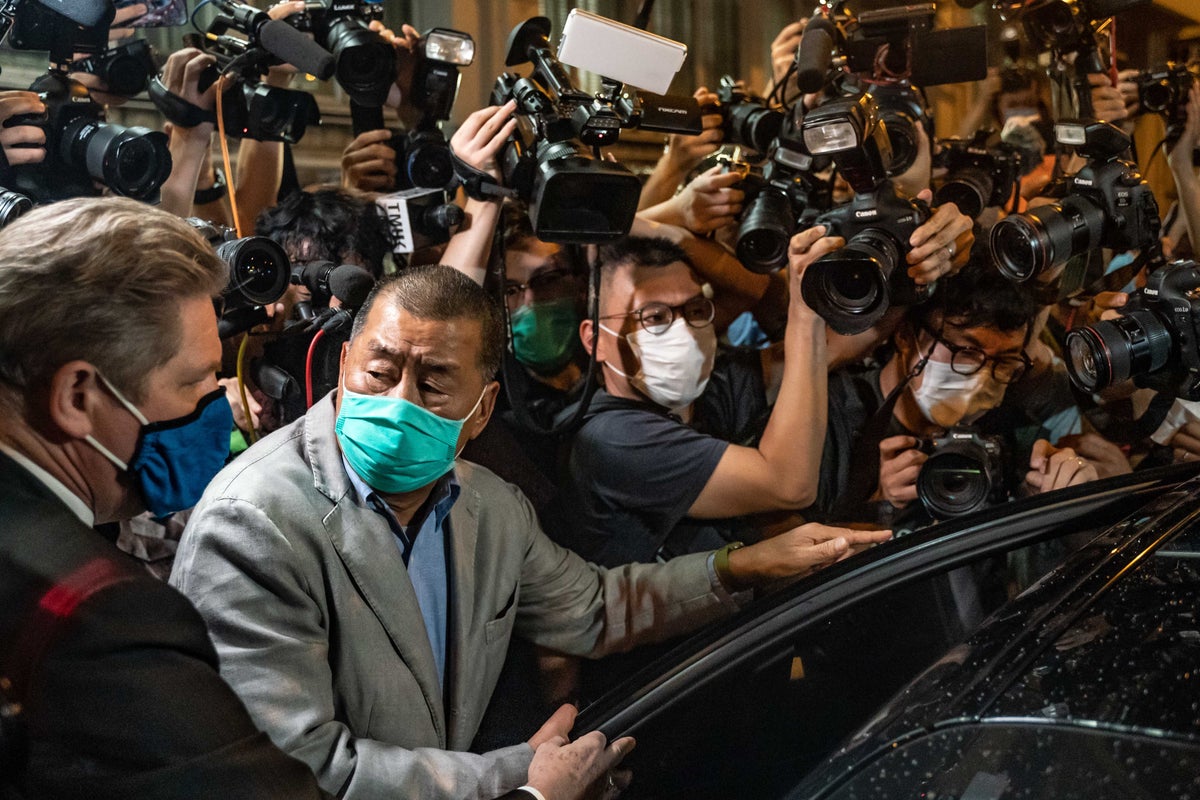
The conviction of Jimmy Lai, founder of the now-defunct Apple Daily, on sedition charges has intensified fears surrounding press freedom in Hong Kong. This verdict, reached after a lengthy trial, marks a significant moment in the ongoing erosion of journalistic independence in a city once celebrated for its vibrant media landscape.
In 2021, the police raid on the Apple Daily newsroom not only led to the newspaper’s closure but also served as a stark warning about the future of journalism in Hong Kong. Five years later, the implications of that raid are now entrenched in the daily practices of journalists, who navigate an increasingly hostile environment. The fear of reprisal has led many to self-censor their work, carefully considering what can be published and how to protect themselves and their sources.
Tom Grundy, founding editor of Hong Kong Free Press, succinctly captures the sentiment within the industry: “Nothing has changed because everything has already changed. The changes are baked in.” Many journalists, both local and international, have expressed their concerns anonymously, highlighting a rapid decline in press freedoms and the increasing dangers of questioning the government.
The conviction of Lai, a high-profile critic of the Chinese government, has been described by critics as a predetermined outcome. The trial, lasting 140 days, has been criticized for masquerading as justice. Lai is expected to face a lengthy prison sentence, potentially life imprisonment, exacerbating pressure on Sir Keir Starmer, the UK Prime Minister, who is visiting Beijing at the same time. He faces calls to address Lai’s situation directly with President Xi Jinping.
The chair of the Hong Kong Journalist Association, Selina Chang, noted that the local press has retreated from challenging political narratives. “The days are now gone where you would see any story that questioned political power or the city’s disciplinary forces,” she said. While overt acts of censorship have diminished, subtle forms of intimidation have increased. Journalists now face anonymous threats, tax audits, and, in some cases, gag orders.
Chang pointed out that authorities have shifted strategies concerning dissent. Arrests are less frequent, as the government recognizes the potential backlash this could provoke. Instead, covert methods of coercion are employed to stifle free expression. The result is a chilling atmosphere that discourages open dialogue and reporting on sensitive issues.
The decline in press freedom is stark. Hong Kong’s global ranking has plummeted from 18th place in 2002 to 140th today, aligning it more closely with mainland China, which ranks 178th. This deterioration accelerated with the implementation of the National Security Law in 2020, which criminalizes acts deemed as secession, subversion, or collusion with foreign forces, often using vague language that invites broad interpretation.
The impact of this law was felt immediately after the raid on Apple Daily, which resulted in significant arrests and asset freezes. In the wake of this crackdown, many media outlets have shut down, and numerous journalists have faced legal repercussions. The pro-democracy outlet Stand News, for instance, experienced a similar fate, with its leadership also facing sedition charges.
An anonymous journalist from a foreign outlet remarked that the pressure is not limited to local media. “International outlets are now part of the same calculation,” they stated. Following a tragic fire in Tai Po on December 3, 2023, the national security office summoned representatives from all foreign media to caution against any perceived anti-China activities.
The atmosphere of fear has led news organizations in Hong Kong to routinely seek legal advice before publication. Journalists report that they often receive visits from national security police, who invite them for “tea,” a term that masks the intimidation underlying such interactions.
The repercussions of this environment extend beyond journalists. Sources linked to stories frequently withdraw, fearing repercussions from the authorities. Some media organizations allege that government representatives have pressured advertising departments to suppress certain coverage, thereby threatening financial stability.
Despite the official stance denying any erosion of press freedom, the coverage surrounding Lai’s trial reflects the increasing constraints placed on the media. Local newspapers have echoed the government’s narrative that the proceedings were legitimate and devoid of implications for journalistic practices.
Before its closure, Apple Daily was a significant player in the media landscape, selling up to one million copies daily. Its demise is viewed as a pivotal moment not just for the publication itself, but for the entire media industry in Hong Kong. The repercussions of Lai’s case extend beyond his individual circumstances; they symbolize a broader crackdown on freedom of expression.
As Lai faces sentencing, his case serves as a chilling reminder of the current state of journalism in Hong Kong. The remaining journalists navigate a landscape fraught with risks, where every story published carries the weight of potential repercussions. With the looming uncertainty, the future of press freedom in Hong Kong appears bleak.
Grundy reflects on the ongoing challenges: “For all the compromises we have to make, and for all the risks we have to face, we feel it’s better to be in than out – to keep our ears to the ground and capture, with nuance, what is really happening inside the city.”












Belfast Gears Up for Vibrant St Patrick’s Day Parade on March 17

Cuba Faces Nationwide Blackout Amid Deepening Energy Crisis

Wirral Council to Restructure Leadership, Cutting Two Top Roles

Rethinking Resistance Training: Key Insights from US Experts

EU Membership on the Horizon: What It Means for Citizens

Ukrainian Drone Swarms Strike Moscow Region for Second Day

Henley Launches Innovative Initiative to Boost Local Economy

Court Ruling Allows Pandemic Tax Refund Claims Until 2026

Sean Penn’s Absence at 2026 Oscars Sparks Discussion

Coronation Street’s Shocking Murder Twist Reveals Family Secrets

Andrew Pierce Confirms Departure from ITV’s Good Morning Britain

Katie Price Faces New Health Concerns After Cancer Symptoms Resurface

Gyles Brandreth Shares Grandson’s Cancer Battle and Recovery

Sue Radford Reveals Weight Loss Journey, Shedding 12–13 kg

Kate Garraway Sells £2 Million Home Amid Financial Struggles

Jordan Brook Faces Health Crisis in Hospital as Sophie Kasaei Stays Away

EastEnders’ Nicola Mitchell Faces Unexpected Pregnancy Crisis

Reddit Study Reveals Distinctions Between Lurkers and Power Users
-
 World8 months ago
Coronation Street’s Shocking Murder Twist Reveals Family Secrets
-
 Entertainment8 months ago
Andrew Pierce Confirms Departure from ITV’s Good Morning Britain
-
 Health12 months ago
Katie Price Faces New Health Concerns After Cancer Symptoms Resurface
-
 Health7 months ago
Gyles Brandreth Shares Grandson’s Cancer Battle and Recovery
-
 Health7 months ago
Sue Radford Reveals Weight Loss Journey, Shedding 12–13 kg
-
 Entertainment1 year ago
Kate Garraway Sells £2 Million Home Amid Financial Struggles
-
 Entertainment5 months ago
Jordan Brook Faces Health Crisis in Hospital as Sophie Kasaei Stays Away
-
 World10 months ago
EastEnders’ Nicola Mitchell Faces Unexpected Pregnancy Crisis
-
 Science8 months ago
Reddit Study Reveals Distinctions Between Lurkers and Power Users
-

 World9 months ago
Mother Charged After Son, 9, Killed in Tragic Incident in Italy
-

 Entertainment12 months ago
Ann Ming Reflects on ITV’s ‘I Fought the Law’ Drama
-

 World9 months ago
Bailey Announces Heartbreaking Split from Rebecca After Reunion