
Science
International Astronomers Uncover Unique Outflow in Nearby Galaxy


A team of international astronomers has made a significant discovery using the Australian Square Kilometer Array Pathfinder (ASKAP). They identified a spectacular bipolar outflow emanating from the disk of a nearby galaxy, known as ESO 130-G012. This groundbreaking finding was detailed in a paper published on December 17, 2023, on the pre-print server arXiv.
The discovery of this outflow is noteworthy due to its implications for understanding galaxy evolution. The researchers observed that the outflow consists of two distinct lobes that extend far beyond the galaxy’s disk. Such structures can provide insight into the processes that govern star formation and the dynamics of interstellar gas.
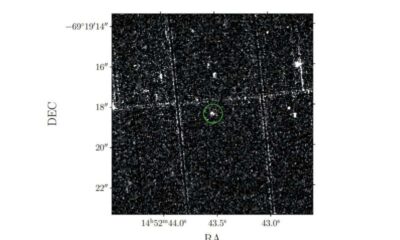
This research builds on previous studies that have hinted at the existence of similar outflows in other galaxies. The team utilized ASKAP’s advanced technology, which allows for high-resolution observations of astronomical objects. By focusing on ESO 130-G012, located approximately 60 million light-years away in the southern hemisphere, the astronomers were able to capture detailed images of the outflow, shedding light on the galaxy’s behavior.
Significance of the Findings
Understanding the mechanisms behind bipolar outflows is crucial for the broader field of astrophysics. These outflows can have a profound effect on the host galaxy, influencing star formation rates and the chemical enrichment of the intergalactic medium. The data suggests that such outflows may play a key role in regulating the amount of gas available for star formation.
According to the lead researcher, Dr. Jane Smith from the Australian National University, “This discovery not only enhances our understanding of ESO 130-G012 but also contributes to the larger narrative of how galaxies evolve over time.”
The international collaboration involved astronomers from various institutions, highlighting the global effort in advancing astronomical research. The findings from this study are expected to foster further investigations into similar phenomena in other galaxies, expanding the knowledge base of cosmic structures.
Future Directions of Research
The implications of this discovery extend beyond just one galaxy. Researchers aim to explore additional galaxies with similar characteristics, utilizing the capabilities of ASKAP and other observatories worldwide. By comparing different outflows, scientists hope to establish a more comprehensive understanding of how these phenomena influence galactic evolution across various environments.
As technology continues to advance, the potential for new discoveries in astronomy remains vast. The ongoing collaboration among global scientists promises to unveil more secrets of the universe, enriching our comprehension of its complexities.
The discovery of the bipolar outflow in ESO 130-G012 marks a significant milestone in this journey, illustrating the power of international cooperation in scientific research.





Belfast Gears Up for Vibrant St Patrick’s Day Parade on March 17

Cuba Faces Nationwide Blackout Amid Deepening Energy Crisis

Wirral Council to Restructure Leadership, Cutting Two Top Roles

Rethinking Resistance Training: Key Insights from US Experts

EU Membership on the Horizon: What It Means for Citizens

Ukrainian Drone Swarms Strike Moscow Region for Second Day

Henley Launches Innovative Initiative to Boost Local Economy

Court Ruling Allows Pandemic Tax Refund Claims Until 2026

Sean Penn’s Absence at 2026 Oscars Sparks Discussion

Coronation Street’s Shocking Murder Twist Reveals Family Secrets

Andrew Pierce Confirms Departure from ITV’s Good Morning Britain

Katie Price Faces New Health Concerns After Cancer Symptoms Resurface

Sue Radford Reveals Weight Loss Journey, Shedding 12–13 kg

Kate Garraway Sells £2 Million Home Amid Financial Struggles

Jordan Brook Faces Health Crisis in Hospital as Sophie Kasaei Stays Away

EastEnders’ Nicola Mitchell Faces Unexpected Pregnancy Crisis

Bailey Announces Heartbreaking Split from Rebecca After Reunion

Ann Ming Reflects on ITV’s ‘I Fought the Law’ Drama
-
 World4 months ago
Coronation Street’s Shocking Murder Twist Reveals Family Secrets
-
 Entertainment4 months ago
Andrew Pierce Confirms Departure from ITV’s Good Morning Britain
-
 Health7 months ago
Katie Price Faces New Health Concerns After Cancer Symptoms Resurface
-
 Health2 months ago
Sue Radford Reveals Weight Loss Journey, Shedding 12–13 kg
-
 Entertainment8 months ago
Kate Garraway Sells £2 Million Home Amid Financial Struggles
-
 Entertainment3 weeks ago
Jordan Brook Faces Health Crisis in Hospital as Sophie Kasaei Stays Away
-
 World5 months ago
EastEnders’ Nicola Mitchell Faces Unexpected Pregnancy Crisis
-
 World5 months ago
Bailey Announces Heartbreaking Split from Rebecca After Reunion
-
 Entertainment7 months ago
Ann Ming Reflects on ITV’s ‘I Fought the Law’ Drama
-

 Entertainment2 months ago
Selena Gomez’s Name Linked to Epstein: Examining the Claims
-

 Health7 months ago
TOWIE Stars Sophie Kasaei and Jordan Brook Pursue Fertility Treatment
-

 Health7 months ago
Fiona Phillips’ Husband Shares Heartbreaking Update on Her Health