
World
Southeast Asia Floods Claim 1,300 Lives as Rescue Efforts Intensify

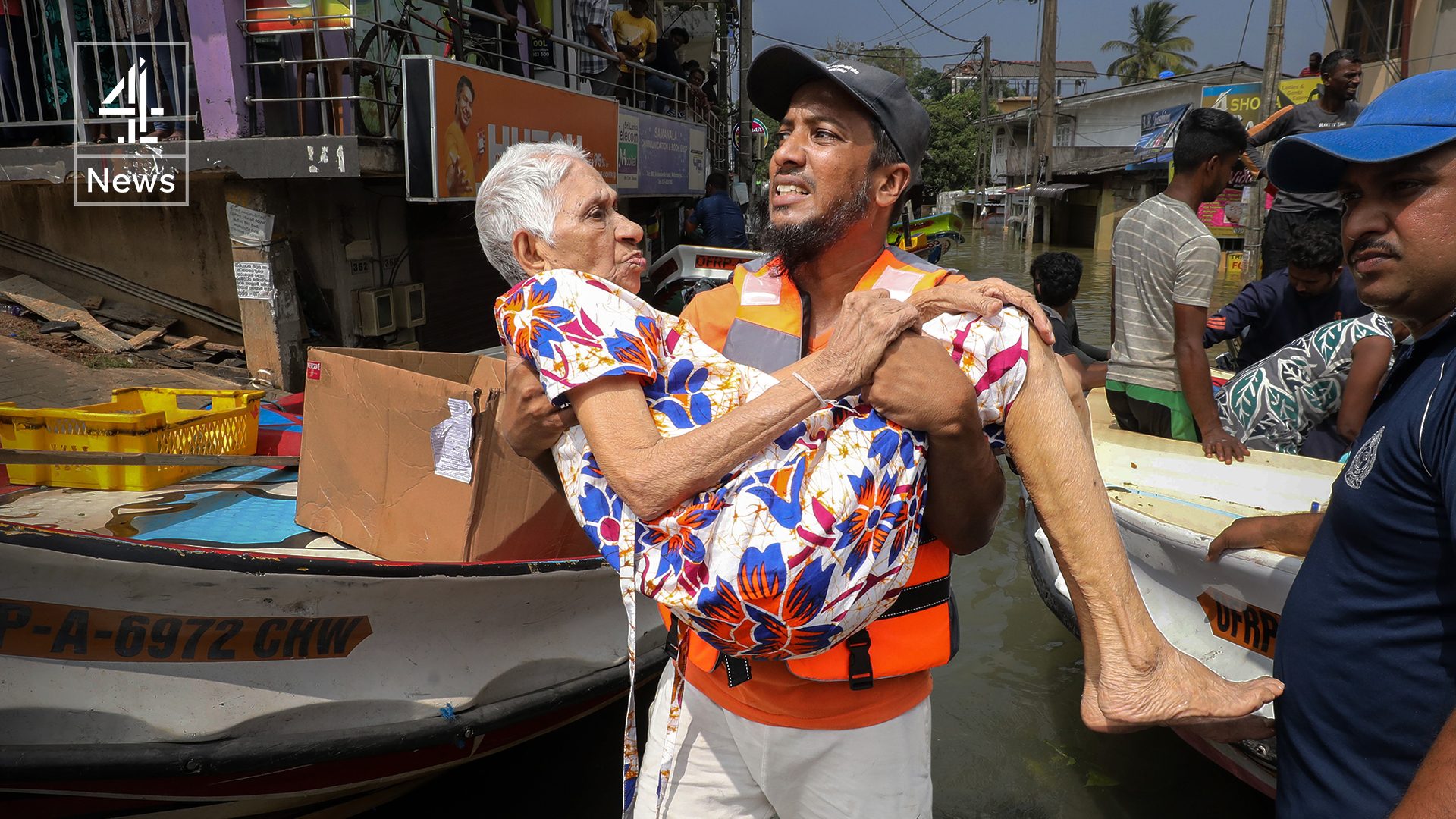
Emergency crews are urgently working to reach survivors and recover bodies after devastating floods and landslides have claimed at least 1,300 lives across Southeast Asia. The catastrophic weather event stems from a rare and simultaneous occurrence of three tropical storms, resulting in widespread flooding in Indonesia, Sri Lanka, and Thailand. Thousands remain stranded, with many seeking refuge on rooftops and trees as extensive monsoon rains inundate large areas.
In Sri Lanka, more than 400 deaths have been confirmed, prompting officials to declare a nationwide disaster. Anura Kumara Dissanayake, the country’s President, stated, “As a country, we are facing the largest and most challenging natural disaster in our history.” Rescue teams, including military personnel, have been deployed to search for over 300 individuals still reported missing, according to the Disaster Management Centre.
Access remains severely hampered due to blocked roads and collapsed infrastructure. Areas such as Colombo, the commercial capital, have experienced some of the worst flooding in a decade. Survivor Sunethra Priyadarshini described the rapid onset of the disaster: “In the night things were normal. By next morning everything was underwater, including our house.”
The Indian Air Force is assisting with rescue operations; however, authorities acknowledge that the scale of the disaster makes it difficult to reach everyone in time. Reports indicate that more than 15,000 homes have been destroyed across the region.
In Indonesia, the situation is dire, with rivers overflowing and tens of thousands of homes submerged or swept away. The death toll in Indonesia now exceeds 700 people. Abdul Ghani, a resident, expressed his anguish while searching for his missing wife. “I just want my wife to be found. Even if it’s just a piece of her hand, as long as I can recognise her, that’s enough.”
Heavy rainfall has also plagued Thailand, where authorities are reporting some of the most intense precipitation in centuries, compounded by additional days of relentless downpours. The impact of climate change is increasingly viewed as a critical factor in these extreme weather patterns across Southeast Asia.
Roxy Matthew Koll, a climate scientist at the Indian Institute of Tropical Meteorology, explained that while the occurrence of multiple storms is not unusual, the volume of rainfall associated with them is unprecedented. “And that relates to global warming, resulting in oceans releasing huge amounts of moisture into the atmosphere,” he noted.
Koll emphasized the need for improved climate resilience and early warning systems to mitigate future disasters. He stated, “More than 93% of the heat from global warming is absorbed by the oceans. We need to cut down our emissions because these kinds of storms source their heat and moisture from the oceans – and they result in fatalities like this.”
As the situation evolves, the urgency for humanitarian aid and climate action is underscored. The communities affected by the floods face an uphill battle in recovery as they navigate the immediate impacts of this disaster.











Belfast Gears Up for Vibrant St Patrick’s Day Parade on March 17

Cuba Faces Nationwide Blackout Amid Deepening Energy Crisis

Wirral Council to Restructure Leadership, Cutting Two Top Roles

Rethinking Resistance Training: Key Insights from US Experts

EU Membership on the Horizon: What It Means for Citizens

Ukrainian Drone Swarms Strike Moscow Region for Second Day

Henley Launches Innovative Initiative to Boost Local Economy

Court Ruling Allows Pandemic Tax Refund Claims Until 2026

Sean Penn’s Absence at 2026 Oscars Sparks Discussion

Coronation Street’s Shocking Murder Twist Reveals Family Secrets

Andrew Pierce Confirms Departure from ITV’s Good Morning Britain

Katie Price Faces New Health Concerns After Cancer Symptoms Resurface

Gyles Brandreth Shares Grandson’s Cancer Battle and Recovery

Sue Radford Reveals Weight Loss Journey, Shedding 12–13 kg

Kate Garraway Sells £2 Million Home Amid Financial Struggles

Jordan Brook Faces Health Crisis in Hospital as Sophie Kasaei Stays Away

EastEnders’ Nicola Mitchell Faces Unexpected Pregnancy Crisis

Reddit Study Reveals Distinctions Between Lurkers and Power Users
-
 World8 months ago
Coronation Street’s Shocking Murder Twist Reveals Family Secrets
-
 Entertainment8 months ago
Andrew Pierce Confirms Departure from ITV’s Good Morning Britain
-
 Health11 months ago
Katie Price Faces New Health Concerns After Cancer Symptoms Resurface
-
 Health6 months ago
Gyles Brandreth Shares Grandson’s Cancer Battle and Recovery
-
 Health6 months ago
Sue Radford Reveals Weight Loss Journey, Shedding 12–13 kg
-
 Entertainment12 months ago
Kate Garraway Sells £2 Million Home Amid Financial Struggles
-
 Entertainment4 months ago
Jordan Brook Faces Health Crisis in Hospital as Sophie Kasaei Stays Away
-
 World9 months ago
EastEnders’ Nicola Mitchell Faces Unexpected Pregnancy Crisis
-
 Science8 months ago
Reddit Study Reveals Distinctions Between Lurkers and Power Users
-

 World8 months ago
Mother Charged After Son, 9, Killed in Tragic Incident in Italy
-

 Entertainment11 months ago
Ann Ming Reflects on ITV’s ‘I Fought the Law’ Drama
-

 World8 months ago
Bailey Announces Heartbreaking Split from Rebecca After Reunion