
World
U.S. B-1 Bombers Target Iran’s Ballistic Missile Facilities

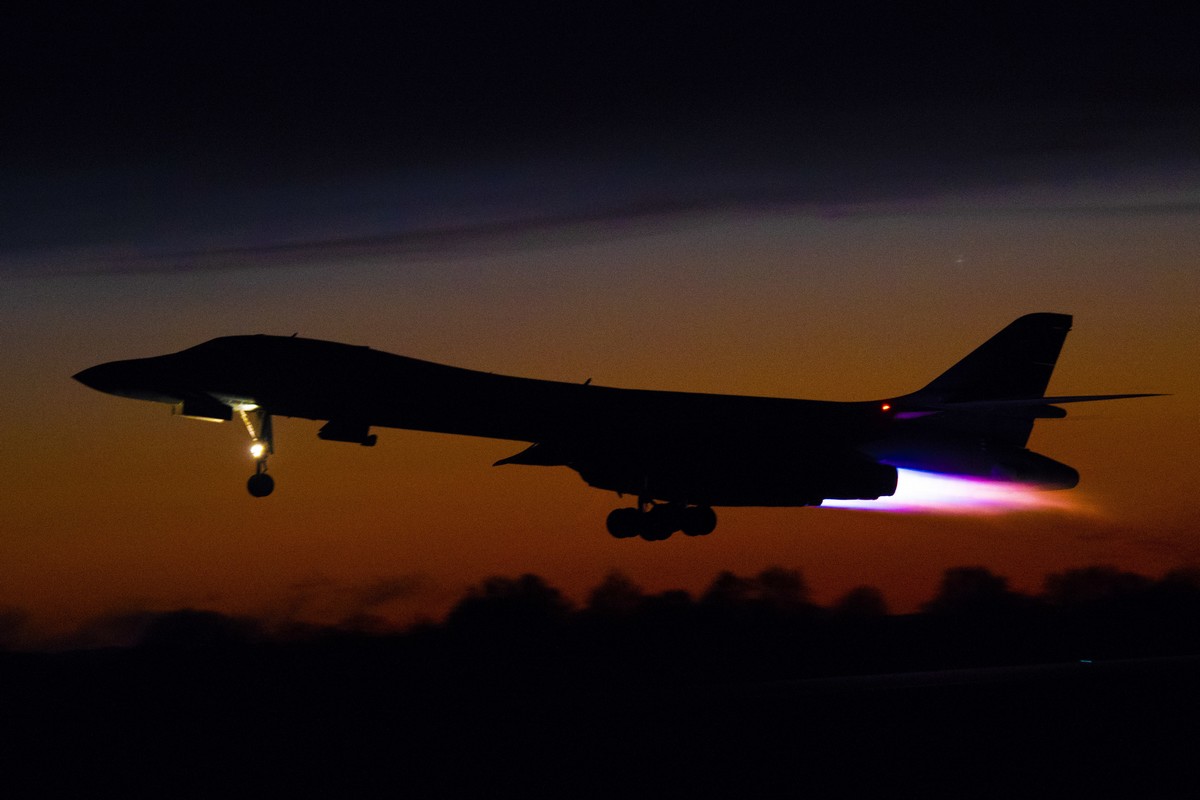
American B-1 bombers have conducted airstrikes against ballistic missile targets in Iran, as confirmed by the U.S. Central Command (CENTCOM). The operation, which took place on the night of March 1, 2024, aimed to degrade Iran’s missile capabilities and reduce its potential to launch further missile attacks. The specifics of the targets, the number of aircraft involved, and the extent of the damage remain undisclosed.
Details of the Operation
In an official statement released on March 2, CENTCOM indicated that the airstrikes were a direct response to Iran’s ongoing missile program. The statement quoted the President of the United States, who asserted, “we’re going to destroy their missiles and raze their missile industry to the ground.” This declaration underscores the U.S. commitment to countering perceived threats from Iranian missile advancements.
The operation signifies a notable escalation in military actions aimed at Iran, reflecting rising tensions in the region. While CENTCOM did not provide exhaustive details about the operation, the implications of such strikes could affect both regional stability and international relations.
Capabilities of the B-1 Bomber
The Rockwell B-1 Lancer, commonly known as the B-1, is a supersonic, variable-sweep wing heavy bomber used by the United States Air Force. It is one of the three main strategic bombers in service, alongside the B-2 Spirit and the B-52 Stratofortress. Designed for long-range missions, the B-1 can carry a maximum payload of 75,000 pounds of ordnance, making it a formidable asset in military operations.
Originally developed in the 1960s, the B-1 was envisioned to combine the speed of the B-58 Hustler with the range and payload capabilities of the B-52. The design was initially shelved in 1977 due to budgetary constraints and advancements in missile technology but was later revived as the B-1B, with production spanning from 1983 to 1988. The B-1B features a crew of four and is powered by four General Electric F101 afterburning turbofan engines, achieving speeds of up to Mach 1.25.
Equipped for a range of missions, the B-1B can carry various conventional munitions, including general-purpose bombs and precision-guided munitions such as JDAM and JASSM. Although it was initially designed to carry nuclear weapons, current configurations focus on conventional warfare. The aircraft’s advanced systems, which include terrain-following radar and GPS-aided navigation, enhance its ability to conduct precise strikes effectively.
Defensive measures on the B-1B include electronic countermeasures and radar warning systems, ensuring its operational effectiveness in contested environments. Furthermore, its data link capabilities allow for seamless integration into joint force operations, facilitating rapid responses to time-sensitive targets.
The recent airstrikes illustrate the U.S. military’s strategic use of advanced technology and capabilities to address security challenges posed by nations like Iran. As tensions continue to evolve, the impact of such military actions will be closely monitored by international observers and stakeholders.











Belfast Gears Up for Vibrant St Patrick’s Day Parade on March 17

Cuba Faces Nationwide Blackout Amid Deepening Energy Crisis

Wirral Council to Restructure Leadership, Cutting Two Top Roles

Rethinking Resistance Training: Key Insights from US Experts

EU Membership on the Horizon: What It Means for Citizens

Ukrainian Drone Swarms Strike Moscow Region for Second Day

Henley Launches Innovative Initiative to Boost Local Economy

Court Ruling Allows Pandemic Tax Refund Claims Until 2026

Sean Penn’s Absence at 2026 Oscars Sparks Discussion

Coronation Street’s Shocking Murder Twist Reveals Family Secrets

Andrew Pierce Confirms Departure from ITV’s Good Morning Britain

Katie Price Faces New Health Concerns After Cancer Symptoms Resurface

Gyles Brandreth Shares Grandson’s Cancer Battle and Recovery

Sue Radford Reveals Weight Loss Journey, Shedding 12–13 kg

Kate Garraway Sells £2 Million Home Amid Financial Struggles

Jordan Brook Faces Health Crisis in Hospital as Sophie Kasaei Stays Away

EastEnders’ Nicola Mitchell Faces Unexpected Pregnancy Crisis

Reddit Study Reveals Distinctions Between Lurkers and Power Users
-
 World8 months ago
Coronation Street’s Shocking Murder Twist Reveals Family Secrets
-
 Entertainment8 months ago
Andrew Pierce Confirms Departure from ITV’s Good Morning Britain
-
 Health12 months ago
Katie Price Faces New Health Concerns After Cancer Symptoms Resurface
-
 Health7 months ago
Gyles Brandreth Shares Grandson’s Cancer Battle and Recovery
-
 Health7 months ago
Sue Radford Reveals Weight Loss Journey, Shedding 12–13 kg
-
 Entertainment1 year ago
Kate Garraway Sells £2 Million Home Amid Financial Struggles
-
 Entertainment5 months ago
Jordan Brook Faces Health Crisis in Hospital as Sophie Kasaei Stays Away
-
 World9 months ago
EastEnders’ Nicola Mitchell Faces Unexpected Pregnancy Crisis
-
 Science8 months ago
Reddit Study Reveals Distinctions Between Lurkers and Power Users
-

 World9 months ago
Mother Charged After Son, 9, Killed in Tragic Incident in Italy
-

 Entertainment12 months ago
Ann Ming Reflects on ITV’s ‘I Fought the Law’ Drama
-

 World9 months ago
Bailey Announces Heartbreaking Split from Rebecca After Reunion