
World
Trump Threatens Trade Embargo on Cuba Amid Rising Tensions


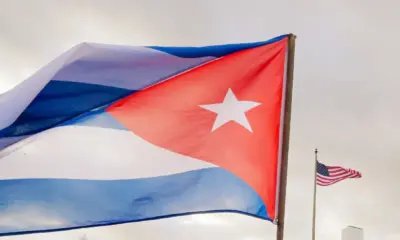
US President Donald Trump has intensified threats of a trade embargo against Cuba, following a recent crisis involving the future of Greenland. This latest development marks a significant shift in US foreign policy as the administration seeks to apply pressure on the Cuban government, which has faced severe economic challenges since the collapse of the Venezuelan regime led by Nicolás Maduro earlier this year.
After attending the World Economic Forum in Davos, Trump returned to Washington, D.C., where he announced the formation of his Board of Peace. This initiative has drawn criticism, particularly from the United Kingdom and several European nations, which declined invitations to join over concerns regarding the involvement of Russian President Vladimir Putin amidst the ongoing conflict in Ukraine.
The White House has indicated that if a deal with Cuba is not reached, the United States could implement a total trade embargo that would severely cripple the island nation’s economy. Reports suggest that the Trump administration is considering a complete blockade of oil supplies to Cuba, a move that could escalate tensions in the region. According to the Sun, senior officials are hoping that increasing economic pressure will lead to a change in government in Cuba.
Secretary of State Marco Rubio, who has Cuban heritage, has reportedly supported the proposed embargo. Although no formal decision has been made, the administration is weighing its options carefully. Trump has previously stated that Cuba must “make a deal before it’s too late,” using his platform on Truth Social to highlight the implications of Venezuela’s past support for Cuba.
Trump asserted that Cuba has relied heavily on oil and financial assistance from Venezuela, stating, “Cuba lived, for many years, on large amounts of oil and money from Venezuela.” He further claimed that the United States now holds significant military strength in the region, suggesting that an invasion may not be necessary as he believes the Cuban government is “ready to fall” on its own.
Cuba’s economy has deteriorated significantly, exacerbated by the instability in Venezuela. The leadership change in Caracas has left Cuba vulnerable, and some US diplomats argue that a targeted oil blockade could be effective in undermining the regime. An anonymous source within the administration remarked, “Energy is the chokehold to kill the regime,” emphasizing a commitment to bring the Cuban government to its knees.
The backdrop of US-Cuba relations has been fraught with tension since Fidel Castro’s rise to power in the 1950s, culminating in the Cuban Missile Crisis of 1962, which brought the world to the brink of nuclear conflict. The Trump administration’s latest threats against Cuba underscore ongoing geopolitical complexities and the potential for renewed conflict in the region.
In light of these developments, it remains to be seen how the Cuban government will respond and whether diplomatic avenues can be explored before the situation escalates further. The prospect of a total embargo raises significant questions about the humanitarian impact on the Cuban population, already suffering from economic deprivation.








Belfast Gears Up for Vibrant St Patrick’s Day Parade on March 17

Cuba Faces Nationwide Blackout Amid Deepening Energy Crisis

Wirral Council to Restructure Leadership, Cutting Two Top Roles

Rethinking Resistance Training: Key Insights from US Experts

EU Membership on the Horizon: What It Means for Citizens

Ukrainian Drone Swarms Strike Moscow Region for Second Day

Henley Launches Innovative Initiative to Boost Local Economy

Court Ruling Allows Pandemic Tax Refund Claims Until 2026

Sean Penn’s Absence at 2026 Oscars Sparks Discussion

Coronation Street’s Shocking Murder Twist Reveals Family Secrets

Andrew Pierce Confirms Departure from ITV’s Good Morning Britain

Katie Price Faces New Health Concerns After Cancer Symptoms Resurface

Sue Radford Reveals Weight Loss Journey, Shedding 12–13 kg

Kate Garraway Sells £2 Million Home Amid Financial Struggles

Jordan Brook Faces Health Crisis in Hospital as Sophie Kasaei Stays Away

EastEnders’ Nicola Mitchell Faces Unexpected Pregnancy Crisis

Bailey Announces Heartbreaking Split from Rebecca After Reunion

Ann Ming Reflects on ITV’s ‘I Fought the Law’ Drama
-
 World4 months ago
Coronation Street’s Shocking Murder Twist Reveals Family Secrets
-
 Entertainment4 months ago
Andrew Pierce Confirms Departure from ITV’s Good Morning Britain
-
 Health7 months ago
Katie Price Faces New Health Concerns After Cancer Symptoms Resurface
-
 Health3 months ago
Sue Radford Reveals Weight Loss Journey, Shedding 12–13 kg
-
 Entertainment8 months ago
Kate Garraway Sells £2 Million Home Amid Financial Struggles
-
 Entertainment4 weeks ago
Jordan Brook Faces Health Crisis in Hospital as Sophie Kasaei Stays Away
-
 World5 months ago
EastEnders’ Nicola Mitchell Faces Unexpected Pregnancy Crisis
-
 World5 months ago
Bailey Announces Heartbreaking Split from Rebecca After Reunion
-
 Entertainment7 months ago
Ann Ming Reflects on ITV’s ‘I Fought the Law’ Drama
-

 Entertainment2 months ago
Selena Gomez’s Name Linked to Epstein: Examining the Claims
-

 Health7 months ago
TOWIE Stars Sophie Kasaei and Jordan Brook Pursue Fertility Treatment
-

 Health8 months ago
Fiona Phillips’ Husband Shares Heartbreaking Update on Her Health