
World
Global Wealth Disparity: 0.001% Control Threefold of Poorest Half

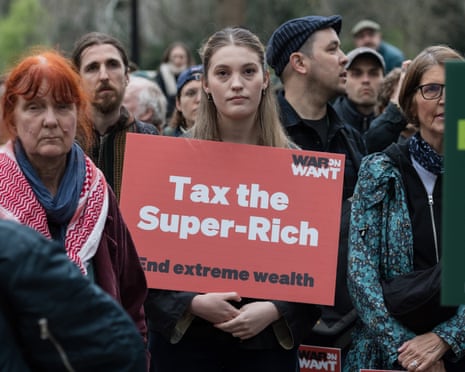
A recent report reveals that a mere 0.001% of the global population, or fewer than 60,000 individuals, controls three times the wealth of the entire bottom half of humanity. The findings from the World Inequality Report 2026 emphasize that extreme global inequality has reached a critical point, necessitating urgent intervention.
The report, compiled by a team of 200 researchers, indicates that the wealthiest 10% earn more than the remaining 90% combined. In stark contrast, the poorest half of the world’s population captures less than 10% of total global earnings. Wealth, defined as the value of assets owned by individuals, is even more disproportionately distributed than income. The richest 10% own a staggering 75% of global wealth, while the bottom half possesses merely 2%.
Growing Wealth Inequality and its Implications
The research highlights that in nearly every region, the top 1% is wealthier than the bottom 90% combined. This concentration of wealth is escalating rapidly worldwide. The primary authors, including Ricardo Gómez-Carrera from the Paris School of Economics, assert that the current financial power held by a small minority creates significant economic instability for billions of people who struggle to achieve basic economic security.
The report notes a troubling trend: the share of global wealth held by the top 0.001% increased from nearly 4% in 1995 to over 6% today. Additionally, the wealth of multimillionaires has grown by approximately 8% annually since the 1990s, nearly double the rate of growth for the bottom 50%.
According to the authors, inequality has long defined the global economy, but by 2025, it will demand immediate attention. Addressing this issue is described as vital not only for fairness but also for the resilience of economies and the stability of democracies.
The report, produced every four years in collaboration with the United Nations Development Programme, leverages the largest open-access database on global economic inequality. It aims to shape international discourse on this pressing issue.
Recommendations for Addressing Inequality
In the preface, Nobel laureate Joseph Stiglitz calls for the establishment of an international panel similar to the UN’s Intergovernmental Panel on Climate Change (IPCC) to monitor worldwide inequality and provide evidence-based recommendations.
Beyond economic disparities, the report emphasizes that inequality of opportunity exacerbates inequality of outcomes. For instance, educational spending per child in Europe and North America is over 40 times that of sub-Saharan Africa, creating a significant divide in opportunities. This disparity in educational investment entrenches a “geography of opportunity,” which hinders social mobility.
The report suggests that a 3% global tax on fewer than 100,000 centimillionaires and billionaires could generate $750 billion annually, enough to cover the education budgets of low- and middle-income countries.
Furthermore, the global financial system is identified as a contributor to inequality, heavily favoring wealthy nations that can borrow at low rates and invest abroad for higher returns. This creates a scenario where approximately 1% of global GDP flows annually from poorer to richer countries through net income transfers linked to favorable financial conditions, nearly three times the amount of global development aid.
On the issue of gender inequality, the report finds a persistent pay gap across all regions. Women earn only 61% of what men make per working hour, and when unpaid labor is included, that figure drops to just 32%.
Additionally, the report connects wealth ownership to climate change, stating that wealthy individuals contribute more to carbon emissions through their investments than through their consumption. Data shows that the poorest half of the global population accounts for only 3% of emissions linked to private capital, while the wealthiest 10% account for around 77%.
The report concludes that while reducing inequalities is challenging, especially given political fragmentation and the dominance of wealth in politics, the necessary tools exist. The real challenge lies in the political will to implement effective tax and redistribution programs.










Belfast Gears Up for Vibrant St Patrick’s Day Parade on March 17

Cuba Faces Nationwide Blackout Amid Deepening Energy Crisis

Wirral Council to Restructure Leadership, Cutting Two Top Roles

Rethinking Resistance Training: Key Insights from US Experts

EU Membership on the Horizon: What It Means for Citizens

Ukrainian Drone Swarms Strike Moscow Region for Second Day

Henley Launches Innovative Initiative to Boost Local Economy

Court Ruling Allows Pandemic Tax Refund Claims Until 2026

Sean Penn’s Absence at 2026 Oscars Sparks Discussion

Coronation Street’s Shocking Murder Twist Reveals Family Secrets

Andrew Pierce Confirms Departure from ITV’s Good Morning Britain

Katie Price Faces New Health Concerns After Cancer Symptoms Resurface

Sue Radford Reveals Weight Loss Journey, Shedding 12–13 kg

Kate Garraway Sells £2 Million Home Amid Financial Struggles

Jordan Brook Faces Health Crisis in Hospital as Sophie Kasaei Stays Away

EastEnders’ Nicola Mitchell Faces Unexpected Pregnancy Crisis

Bailey Announces Heartbreaking Split from Rebecca After Reunion

Ann Ming Reflects on ITV’s ‘I Fought the Law’ Drama
-
 World4 months ago
Coronation Street’s Shocking Murder Twist Reveals Family Secrets
-
 Entertainment4 months ago
Andrew Pierce Confirms Departure from ITV’s Good Morning Britain
-
 Health7 months ago
Katie Price Faces New Health Concerns After Cancer Symptoms Resurface
-
 Health3 months ago
Sue Radford Reveals Weight Loss Journey, Shedding 12–13 kg
-
 Entertainment8 months ago
Kate Garraway Sells £2 Million Home Amid Financial Struggles
-
 Entertainment4 weeks ago
Jordan Brook Faces Health Crisis in Hospital as Sophie Kasaei Stays Away
-
 World5 months ago
EastEnders’ Nicola Mitchell Faces Unexpected Pregnancy Crisis
-
 World5 months ago
Bailey Announces Heartbreaking Split from Rebecca After Reunion
-
 Entertainment7 months ago
Ann Ming Reflects on ITV’s ‘I Fought the Law’ Drama
-

 Entertainment2 months ago
Selena Gomez’s Name Linked to Epstein: Examining the Claims
-

 Health7 months ago
TOWIE Stars Sophie Kasaei and Jordan Brook Pursue Fertility Treatment
-

 Health8 months ago
Fiona Phillips’ Husband Shares Heartbreaking Update on Her Health