
Top Stories
Understanding Cavitation: How It Impacts Ship Performance

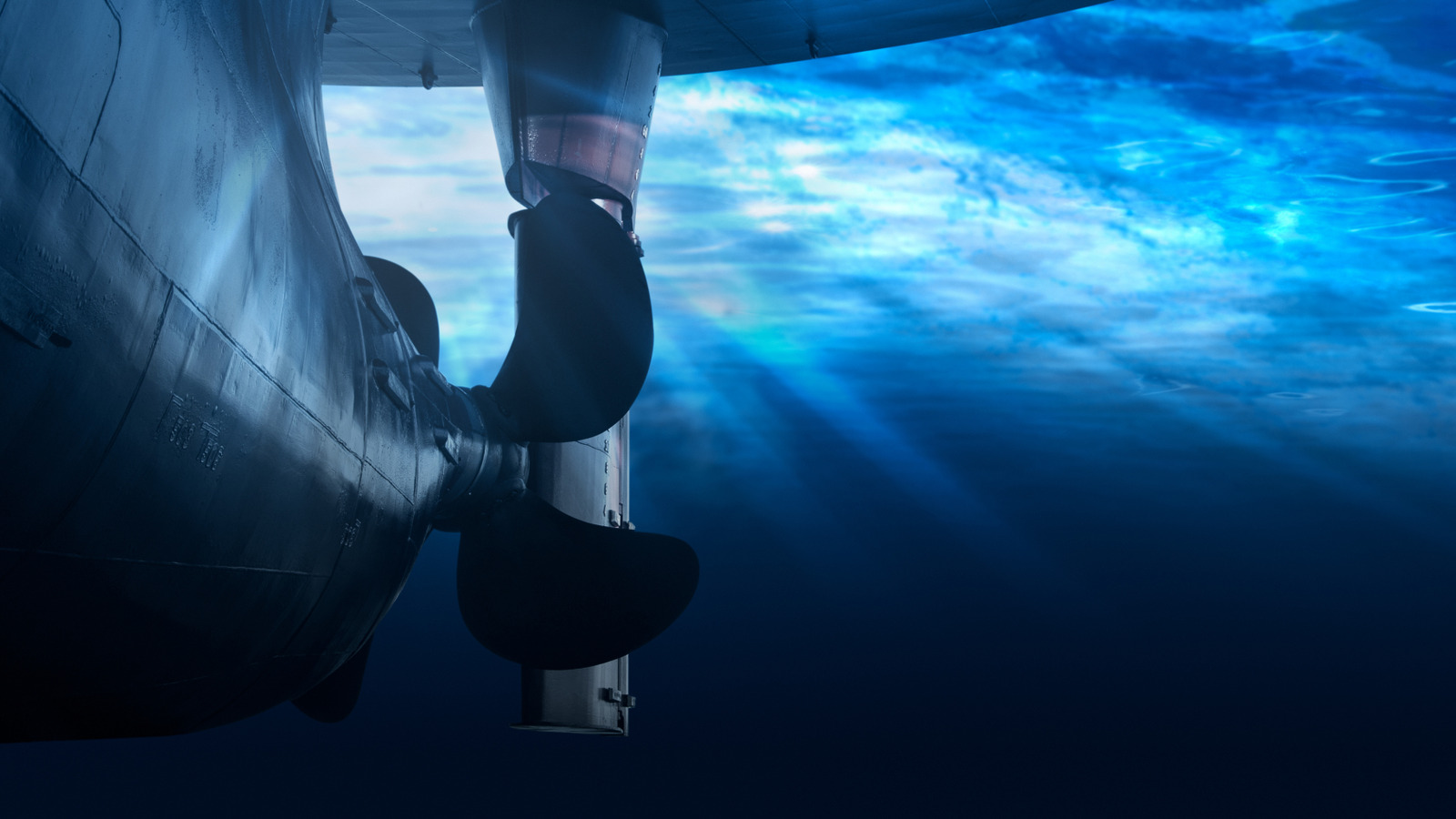
Cavitation, a phenomenon occurring around a ship’s propeller, poses significant challenges to maritime performance. This complex process not only reduces a vessel’s cruising speed but can also lead to severe physical damage. Understanding how cavitation works is essential for engineers and ship operators aiming to maintain efficiency and safety at sea.
What Is Cavitation?
Cavitation refers to the formation and collapse of vapor bubbles in a liquid, which occurs due to rapid changes in pressure. When a ship’s propeller rotates, it creates a pressure difference in the surrounding water. The rear-facing side generates high pressure, pushing water backward, while the front-facing side creates a low-pressure area. This pressure drop can become so extreme that it causes water to vaporize at temperatures as low as 20°C, rather than the typical 100°C.
These vapor bubbles, akin to the fizz in a soft drink when opened, do not simply dissipate. Instead, they are drawn towards the higher-pressure area at the edge of the propeller blade, where they collapse violently. This implosion generates pressure surges reaching several hundred megapascals and localized temperatures peaking at 400°C. Such conditions can significantly affect the integrity of the propeller itself.
The Effects of Cavitation on Ship Performance
Cavitation has a profound impact on a ship’s operational efficiency. The vapor bubbles that form on the propeller blades increase resistance, effectively making them “thicker.” As a result, the propeller struggles to generate the necessary thrust, leading to a loss of speed. For instance, as cavitation intensifies, engine revolutions per minute (RPM) can increase dramatically while power output remains constant, indicating a steep decline in efficiency.
The physical damage caused by cavitation is equally concerning. The relentless collapse of bubbles acts like a microscopic hammer, eroding the propeller surface over time. This erosion can create a distinctive “orange peel effect” initially, but in severe cases, can lead to holes piercing through solid metal blades.
Beyond performance and damage, cavitation generates excessive vibration and noise. The International Institute of Marine Surveying describes the sound produced as reminiscent of “gravel being forcibly thrown against the underside of the hull.” Such vibrations can harm sensitive components like bearings and seals, further complicating maintenance.
To combat these challenges, engineers implement various strategies. Increasing the blade area or using wider blades helps distribute thrust more evenly, reducing the likelihood of cavitation. For vessels operating below 35 knots, flat, low-loaded blade profiles are often employed to mitigate pressure differences. This approach is particularly relevant for container ships, which typically cruise at around 24 knots, and large oil tankers.
Material selection is also crucial in addressing cavitation. Durable alloys such as bronze and stainless steel are commonly used for propeller manufacturing. Additionally, shaping the ship’s stern can enhance water flow uniformity into the propeller, further aiding in performance.
Interestingly, some engineers have embraced cavitation, developing the concept of supercavitation. This technique intentionally creates a stable vapor bubble that envelops the entire object, reducing friction drag and enabling remarkable speeds. While this approach has proven effective, it remains largely experimental, as seen in vessels like the General Dynamics GHOST Small Unmanned Vessel.
By understanding the intricacies of cavitation, maritime engineers can better design ships to minimize its negative effects, ensuring safer and more efficient travel across the world’s oceans. The ongoing research and development in this area demonstrate a commitment to advancing maritime technology while tackling the challenges posed by this fascinating physical phenomenon.





Belfast Gears Up for Vibrant St Patrick’s Day Parade on March 17

Cuba Faces Nationwide Blackout Amid Deepening Energy Crisis

Wirral Council to Restructure Leadership, Cutting Two Top Roles

Rethinking Resistance Training: Key Insights from US Experts

EU Membership on the Horizon: What It Means for Citizens

Ukrainian Drone Swarms Strike Moscow Region for Second Day

Henley Launches Innovative Initiative to Boost Local Economy

Court Ruling Allows Pandemic Tax Refund Claims Until 2026

Sean Penn’s Absence at 2026 Oscars Sparks Discussion

Coronation Street’s Shocking Murder Twist Reveals Family Secrets

Andrew Pierce Confirms Departure from ITV’s Good Morning Britain

Katie Price Faces New Health Concerns After Cancer Symptoms Resurface

Gyles Brandreth Shares Grandson’s Cancer Battle and Recovery

Sue Radford Reveals Weight Loss Journey, Shedding 12–13 kg

Kate Garraway Sells £2 Million Home Amid Financial Struggles

Jordan Brook Faces Health Crisis in Hospital as Sophie Kasaei Stays Away

EastEnders’ Nicola Mitchell Faces Unexpected Pregnancy Crisis

Reddit Study Reveals Distinctions Between Lurkers and Power Users
-
 World8 months ago
Coronation Street’s Shocking Murder Twist Reveals Family Secrets
-
 Entertainment8 months ago
Andrew Pierce Confirms Departure from ITV’s Good Morning Britain
-
 Health11 months ago
Katie Price Faces New Health Concerns After Cancer Symptoms Resurface
-
 Health6 months ago
Gyles Brandreth Shares Grandson’s Cancer Battle and Recovery
-
 Health6 months ago
Sue Radford Reveals Weight Loss Journey, Shedding 12–13 kg
-
 Entertainment12 months ago
Kate Garraway Sells £2 Million Home Amid Financial Struggles
-
 Entertainment4 months ago
Jordan Brook Faces Health Crisis in Hospital as Sophie Kasaei Stays Away
-
 World9 months ago
EastEnders’ Nicola Mitchell Faces Unexpected Pregnancy Crisis
-
 Science8 months ago
Reddit Study Reveals Distinctions Between Lurkers and Power Users
-

 World8 months ago
Mother Charged After Son, 9, Killed in Tragic Incident in Italy
-

 Entertainment11 months ago
Ann Ming Reflects on ITV’s ‘I Fought the Law’ Drama
-

 World8 months ago
Bailey Announces Heartbreaking Split from Rebecca After Reunion