
Top Stories
Twelve Arrested During Competing Protests on al-Quds Day in London

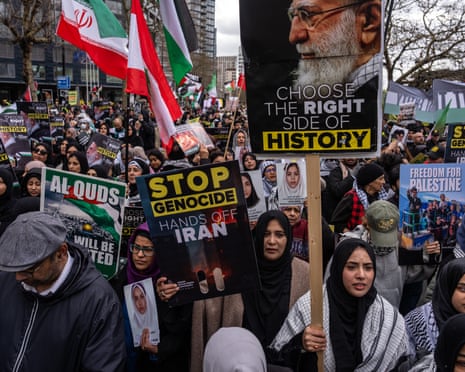
Twelve individuals were arrested during a series of protests held on March 10, 2024, in London, marking the annual al-Quds Day. The event saw hundreds of pro-Palestinian demonstrators gathered on one side of the Thames, while an equal number of counter-protesters assembled on the opposite bank to express support for Israeli and American actions regarding Iran.
The Metropolitan Police deployed at least 1,000 officers to manage the tensions between the two opposing groups. Lambeth Bridge was closed to traffic as a precautionary measure. Assistant Commissioner Ade Adelekan of the Metropolitan Police stated, “We made 12 arrests including for showing support for a proscribed organisation, affray and for threatening or abusive behaviour.” The police are also reviewing the content of speeches made during the al-Quds protest, specifically concerning potentially inflammatory chants.
In a notable shift, Home Secretary Shabana Mahmood granted police the authority to prohibit al-Quds Day marchers from proceeding with a parade, a decision not seen since 2012. She emphasized her expectation for law enforcement to act decisively against anyone attempting to spread hatred, stating, “I expect to see the full force of the law applied to anyone spreading hatred and division instead of exercising their right to peaceful protest.”
The police issued warnings to demonstrators at the al-Quds rally on the Albert Embankment, stating that anyone displaying placards or engaging in chants that could be deemed hate speech would face arrest. Despite this, some protesters displayed images of Iran’s current Supreme Leader, Mojtaba Khamenei, and his predecessor, Ali Khamenei, who died early in the ongoing conflict.
A significant police presence was also noted at the counter-protest co-organized by Stop the Hate and the Lion Guard of Iran group. Some participants waved flags representing both Israel and pre-revolution Iran, symbolizing support for Reza Pahlavi, the son of the former Iranian monarch.
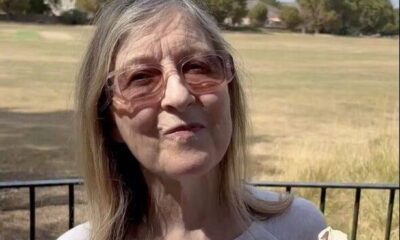
Among the attendees was Georgie Stagg, a 70-year-old retired arts administrator from Lewisham. Wearing a Palestinian keffiyeh, she was redirected by police away from the pro-Israeli demonstration. Stagg expressed her frustration, noting that she has participated in al-Quds Day marches for 40 years without incident. “You can’t criticise the Iranian government for being anti-democratic when we’ve got a government here that’s arresting people holding placards,” she remarked.
The contrasting demonstrations revealed deep divisions among the Iranian community in the UK. One pro-Israeli protester carried a banner that read, “Qud you take your terrorism and f*** off.” Raham Moshami, 52, who fled Iran in 2010 after suffering torture, displayed scars on her forehead as evidence of her past. “We are here to support our people, because the Iranian government is holding my people hostage,” she asserted, further criticizing the al-Quds demonstrators as being financially supported by the Iranian government without providing substantiating evidence.
On the opposing bank, Fereydun Bahrami, 71, had traveled from Glasgow with 50 other Iranians to join the al-Quds protest, which was organized by the Islamic Human Rights Commission. “We are here to celebrate al-Quds Day and also protest against the war,” he stated, holding a placard reading “Stop Using UK bases to bomb Iran.” Bahrami expressed his sadness over the ongoing conflict and defended the peaceful intent of the al-Quds demonstration, saying, “This is a love walk, how can it be a hate march?”
Salma, a 60-year-old freight company employee, voiced her support for Iranian retaliation against American targets in the Gulf, criticizing former U.S. President Donald Trump for his military actions. “If petrol prices are going up, who cares? Because at the end of the day, this was created by the US,” she stated.
Adelekan acknowledged that the turnout for the march was lower than anticipated, attributing this to the police restrictions. “Our policing plan worked, with both groups kept apart and we saw no attempts from either side to breach conditions by marching,” he explained. “Both sets dispersed as planned from 15:00 hours.”
The events of the day underscored the complexities surrounding al-Quds Day, revealing contrasting perspectives on international conflicts and the implications for communities within the UK.










Belfast Gears Up for Vibrant St Patrick’s Day Parade on March 17

Cuba Faces Nationwide Blackout Amid Deepening Energy Crisis

Wirral Council to Restructure Leadership, Cutting Two Top Roles

Rethinking Resistance Training: Key Insights from US Experts

EU Membership on the Horizon: What It Means for Citizens

Ukrainian Drone Swarms Strike Moscow Region for Second Day

Henley Launches Innovative Initiative to Boost Local Economy

Court Ruling Allows Pandemic Tax Refund Claims Until 2026

Sean Penn’s Absence at 2026 Oscars Sparks Discussion

Coronation Street’s Shocking Murder Twist Reveals Family Secrets

Andrew Pierce Confirms Departure from ITV’s Good Morning Britain

Katie Price Faces New Health Concerns After Cancer Symptoms Resurface

Sue Radford Reveals Weight Loss Journey, Shedding 12–13 kg

Kate Garraway Sells £2 Million Home Amid Financial Struggles

Jordan Brook Faces Health Crisis in Hospital as Sophie Kasaei Stays Away

EastEnders’ Nicola Mitchell Faces Unexpected Pregnancy Crisis

Bailey Announces Heartbreaking Split from Rebecca After Reunion

Ann Ming Reflects on ITV’s ‘I Fought the Law’ Drama
-
 World4 months ago
Coronation Street’s Shocking Murder Twist Reveals Family Secrets
-
 Entertainment4 months ago
Andrew Pierce Confirms Departure from ITV’s Good Morning Britain
-
 Health7 months ago
Katie Price Faces New Health Concerns After Cancer Symptoms Resurface
-
 Health2 months ago
Sue Radford Reveals Weight Loss Journey, Shedding 12–13 kg
-
 Entertainment8 months ago
Kate Garraway Sells £2 Million Home Amid Financial Struggles
-
 Entertainment2 weeks ago
Jordan Brook Faces Health Crisis in Hospital as Sophie Kasaei Stays Away
-
 World5 months ago
EastEnders’ Nicola Mitchell Faces Unexpected Pregnancy Crisis
-
 World4 months ago
Bailey Announces Heartbreaking Split from Rebecca After Reunion
-
 Entertainment7 months ago
Ann Ming Reflects on ITV’s ‘I Fought the Law’ Drama
-

 Entertainment2 months ago
Selena Gomez’s Name Linked to Epstein: Examining the Claims
-

 Health7 months ago
TOWIE Stars Sophie Kasaei and Jordan Brook Pursue Fertility Treatment
-
 Health7 months ago
Fiona Phillips’ Husband Shares Heartbreaking Update on Her Health