
Top Stories
Tensions Escalate Over Immigration Enforcement After Minneapolis Shooting

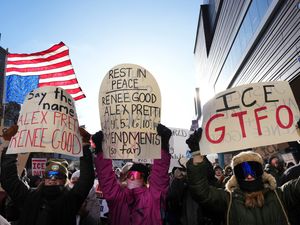
In a contentious aftermath to a recent shooting in Minneapolis, U.S. officials have provided conflicting narratives regarding immigration enforcement in the city. The shooting of Alex Pretti, a 37-year-old intensive care nurse, has ignited a fierce debate over the actions of immigration authorities, with state leaders calling for a reassessment of federal presence in Minnesota.
Governor Tim Walz confronted the public during a news conference, questioning the moral implications of federal actions. “Which side do you want to be on?” he asked, contrasting the federal government’s authority with the plight of citizens affected by its enforcement tactics. Pretti was shot on Saturday while intervening in an encounter between federal agents and a woman on the street.
In a starkly different message, Gregory Bovino, a border patrol commander, attributed blame for the incident to Pretti himself, emphasizing that he interfered with law enforcement. “When someone makes the choice to come into an active law enforcement scene and obstruct law enforcement officers, that is a choice that that individual made,” he stated, underscoring the complex dynamics at play.
The incident follows a history of tensions in the area, notably the January 7 shooting of Renee Good by an ICE officer, which had already heightened local unrest and led to widespread protests. Local leaders and Democratic representatives, including Representative Alexandria Ocasio-Cortez, have called for immigration enforcement personnel to withdraw from Minnesota, arguing that their presence exacerbates community fears.
Video evidence from bystanders appears to contradict claims made by the Trump administration that agents acted in self-defense. Footage reviewed by The Associated Press shows Pretti, at the time of the shooting, holding only a phone and attempting to protect the woman involved. Contrary to official narratives, there are no indications that he brandished a firearm.
In the wake of the shooting, Pretti’s family publicly expressed their grief and anger at the characterizations made by federal officials. “The sickening lies told about our son by the administration are reprehensible and disgusting,” they stated, demanding clarity regarding the circumstances of the incident.
A federal judge has intervened to prevent the destruction of evidence related to the shooting, responding to a lawsuit filed by state attorneys, including Minnesota Attorney General Keith Ellison. In a statement, Ellison emphasized the need for a thorough investigation, asserting that “a full, impartial, and transparent investigation is non-negotiable.” The court hearing to address these concerns is scheduled for March 15, 2024, in St. Paul.
Discontent among local law enforcement also surfaced. Drew Evans, superintendent of the state’s Bureau of Criminal Apprehension, revealed that federal officers obstructed his agency’s access to the shooting scene, even after obtaining a judicial warrant. Minneapolis Police Chief Brian O’Hara echoed these sentiments, stating that the immigration crackdown was overwhelming his department, which is already tasked with managing a major urban area.
In a broader context, former President Barack Obama described Pretti’s death as a “heartbreaking tragedy” and urged for cooperative efforts between federal and local officials to address the crisis. He warned that “many of our core values as a nation are increasingly under assault.”
As protests erupted across several cities, including New York and Washington, demonstrators in Minneapolis displayed their outrage. Despite frigid temperatures of around minus six degrees Celsius, crowds gathered to express their anger towards federal agents, calling them “cowards.” The atmosphere remained charged as protesters blocked streets and set items ablaze, highlighting the urgency of the situation.
Bystander videos illustrate a chaotic scene, showing Pretti stepping in to assist a woman being confronted by officers. As the confrontation escalated, federal agents pepper sprayed Pretti, and he was subsequently forced to the ground before being shot. Observers expressed concern over the use of force and the implications for community relations.
Gun rights advocates have defended Pretti’s legal right to carry a firearm during protests, stating that such rights do not vanish in these contexts. The Minnesota Gun Owners Caucus emphasized the importance of maintaining Second Amendment rights while participating in public demonstrations.
As the investigation continues, the community grapples with the implications of this tragedy, raising questions about law enforcement practices and the balance between public safety and civil liberties in an increasingly polarized environment.











Belfast Gears Up for Vibrant St Patrick’s Day Parade on March 17

Cuba Faces Nationwide Blackout Amid Deepening Energy Crisis

Wirral Council to Restructure Leadership, Cutting Two Top Roles

Rethinking Resistance Training: Key Insights from US Experts

EU Membership on the Horizon: What It Means for Citizens

Ukrainian Drone Swarms Strike Moscow Region for Second Day

Henley Launches Innovative Initiative to Boost Local Economy

Court Ruling Allows Pandemic Tax Refund Claims Until 2026

Sean Penn’s Absence at 2026 Oscars Sparks Discussion

Coronation Street’s Shocking Murder Twist Reveals Family Secrets

Andrew Pierce Confirms Departure from ITV’s Good Morning Britain

Katie Price Faces New Health Concerns After Cancer Symptoms Resurface

Sue Radford Reveals Weight Loss Journey, Shedding 12–13 kg

Kate Garraway Sells £2 Million Home Amid Financial Struggles

Jordan Brook Faces Health Crisis in Hospital as Sophie Kasaei Stays Away

EastEnders’ Nicola Mitchell Faces Unexpected Pregnancy Crisis

Bailey Announces Heartbreaking Split from Rebecca After Reunion

Ann Ming Reflects on ITV’s ‘I Fought the Law’ Drama
-
 World4 months ago
Coronation Street’s Shocking Murder Twist Reveals Family Secrets
-
 Entertainment4 months ago
Andrew Pierce Confirms Departure from ITV’s Good Morning Britain
-
 Health7 months ago
Katie Price Faces New Health Concerns After Cancer Symptoms Resurface
-
 Health2 months ago
Sue Radford Reveals Weight Loss Journey, Shedding 12–13 kg
-
 Entertainment8 months ago
Kate Garraway Sells £2 Million Home Amid Financial Struggles
-
 Entertainment3 weeks ago
Jordan Brook Faces Health Crisis in Hospital as Sophie Kasaei Stays Away
-
 World5 months ago
EastEnders’ Nicola Mitchell Faces Unexpected Pregnancy Crisis
-
 World5 months ago
Bailey Announces Heartbreaking Split from Rebecca After Reunion
-
 Entertainment7 months ago
Ann Ming Reflects on ITV’s ‘I Fought the Law’ Drama
-

 Entertainment2 months ago
Selena Gomez’s Name Linked to Epstein: Examining the Claims
-

 Health7 months ago
TOWIE Stars Sophie Kasaei and Jordan Brook Pursue Fertility Treatment
-

 Health7 months ago
Fiona Phillips’ Husband Shares Heartbreaking Update on Her Health