
Science
Scottish Scientists Identify Potential Atmosphere on Distant Planet

Scientists at the University of St Andrews have made significant strides in the search for extraterrestrial life by identifying a potential atmosphere on the Earth-sized planet TRAPPIST-1e. Located approximately 40 light years from Earth, this discovery could pave the way for understanding whether the planet might support life.
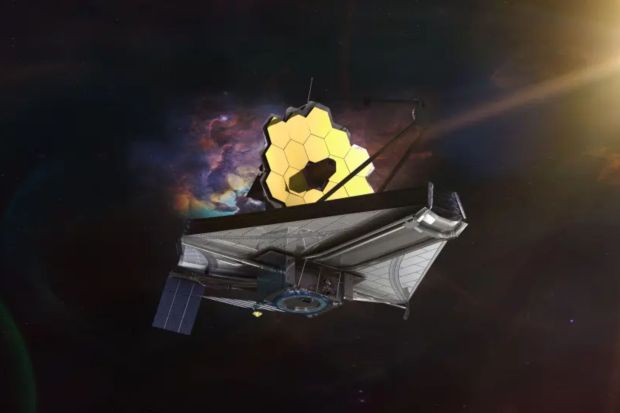
Part of an international research initiative, the team has utilized the James Webb Space Telescope (JWST), launched in December 2021, to investigate the characteristics of TRAPPIST-1e, which is the fourth planet in the TRAPPIST-1 system orbiting a red dwarf star. Initial findings suggest that the planet may possess an atmosphere conducive to sustaining liquid water, a key ingredient for life.
Dr. Ryan MacDonald, a lecturer in extrasolar planets at the University, expressed enthusiasm about the findings, stating, “TRAPPIST-1e has long been considered one of the best habitable zone planets to search for an atmosphere.” The research team faced challenges due to interference from the star’s activity, which complicated their data analysis.
To enhance their observations, the researchers employed the JWST’s advanced NIRSpec (Near-Infrared Spectrograph) instrument as TRAPPIST-1e transited in front of its parent star. This allowed them to analyze the light filtering through the planet’s atmosphere, if present, to determine its chemical composition.
While promising, the initial results indicate two possible scenarios. Dr. MacDonald noted that “the most exciting possibility is that TRAPPIST-1e could have a so-called secondary atmosphere containing heavy gases like nitrogen.” However, the data has not yet ruled out the possibility that the planet could be a barren rock with no atmosphere.
The research team dedicated over a year to correcting data affected by the red dwarf star’s magnetic fields, which created starspots that complicated their observations. With each subsequent JWST transit observation, scientists expect to clarify the atmospheric conditions around TRAPPIST-1e.
Dr. MacDonald added, “In the coming years, we will go from four JWST observations of TRAPPIST-1e to nearly 20. We finally have the telescope and tools to search for habitable conditions in other star systems, which makes today one of the most exciting times for astronomy.”
As the team pursues further observations, the implications of their findings could provide valuable insights into the potential for life beyond our planet, marking a pivotal moment in the ongoing quest to understand the universe’s mysteries.










Belfast Gears Up for Vibrant St Patrick’s Day Parade on March 17

Cuba Faces Nationwide Blackout Amid Deepening Energy Crisis

Wirral Council to Restructure Leadership, Cutting Two Top Roles

Rethinking Resistance Training: Key Insights from US Experts

EU Membership on the Horizon: What It Means for Citizens

Ukrainian Drone Swarms Strike Moscow Region for Second Day

Henley Launches Innovative Initiative to Boost Local Economy

Court Ruling Allows Pandemic Tax Refund Claims Until 2026

Sean Penn’s Absence at 2026 Oscars Sparks Discussion

Coronation Street’s Shocking Murder Twist Reveals Family Secrets

Andrew Pierce Confirms Departure from ITV’s Good Morning Britain

Katie Price Faces New Health Concerns After Cancer Symptoms Resurface

Gyles Brandreth Shares Grandson’s Cancer Battle and Recovery

Sue Radford Reveals Weight Loss Journey, Shedding 12–13 kg

Kate Garraway Sells £2 Million Home Amid Financial Struggles

Jordan Brook Faces Health Crisis in Hospital as Sophie Kasaei Stays Away

EastEnders’ Nicola Mitchell Faces Unexpected Pregnancy Crisis

Mother Charged After Son, 9, Killed in Tragic Incident in Italy
-
 World7 months ago
Coronation Street’s Shocking Murder Twist Reveals Family Secrets
-
 Entertainment7 months ago
Andrew Pierce Confirms Departure from ITV’s Good Morning Britain
-
 Health10 months ago
Katie Price Faces New Health Concerns After Cancer Symptoms Resurface
-
 Health5 months ago
Gyles Brandreth Shares Grandson’s Cancer Battle and Recovery
-
 Health5 months ago
Sue Radford Reveals Weight Loss Journey, Shedding 12–13 kg
-
 Entertainment11 months ago
Kate Garraway Sells £2 Million Home Amid Financial Struggles
-
 Entertainment4 months ago
Jordan Brook Faces Health Crisis in Hospital as Sophie Kasaei Stays Away
-
 World8 months ago
EastEnders’ Nicola Mitchell Faces Unexpected Pregnancy Crisis
-
 World8 months ago
Mother Charged After Son, 9, Killed in Tragic Incident in Italy
-

 Entertainment10 months ago
Ann Ming Reflects on ITV’s ‘I Fought the Law’ Drama
-

 World8 months ago
Bailey Announces Heartbreaking Split from Rebecca After Reunion
-

 Entertainment5 months ago
Selena Gomez’s Name Linked to Epstein: Examining the Claims