
Science
Scientists Uncover Potential Cause of Moon’s Unique Asymmetry


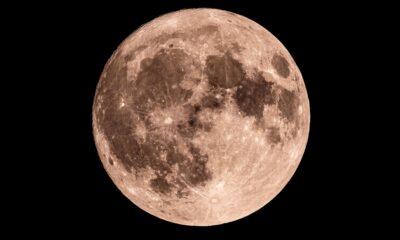
The peculiar shape of the Moon may finally have an explanation, as new research suggests that a massive impact could be responsible for its distinctive lopsided appearance. Scientists have long puzzled over why the Moon displays dark volcanic plains on its near side, which is visible from Earth, while the far side features rugged, cratered mountains and a thicker crust.
Recent findings from a team at the University of California, Los Angeles, indicate that a colossal impact event early in the Moon’s history likely contributed to this asymmetry. The research builds upon decades of lunar exploration and analysis of samples returned by NASA missions, which have provided crucial insights into the Moon’s geological history.
Understanding the Moon’s Composition
By examining data collected from various lunar missions and studying the composition of lunar rocks, scientists have identified significant differences between the two sides of the Moon. The near side contains extensive plains formed by ancient volcanic activity, while the far side is characterized by its mountainous terrain and a crust that is approximately 30 kilometers thicker.
The research team posits that a massive impact, potentially from a large asteroid or comet, altered the Moon’s structure by creating enough heat to melt and reshape its surface. This event is believed to have occurred around 4.5 billion years ago, shortly after the formation of the Moon itself.
The implications of this research extend beyond understanding the Moon’s composition. By studying the Moon’s geology, scientists can glean valuable information about the early solar system and the processes that shaped other celestial bodies.
Future Research Directions
Moving forward, researchers plan to investigate further the specific characteristics of the Moon’s crust and how impacts have influenced its evolution. Understanding the Moon’s asymmetrical features may also inform future lunar exploration missions and the potential for human habitation.
As lunar missions progress, scientists hope to uncover more about the Moon’s history and how it has been shaped by cosmic events over billions of years. The insights gained could also provide a clearer understanding of Earth’s own geological history and the factors that have influenced its development.
The ongoing research marks a significant step in unraveling the mysteries of our closest celestial neighbor, reaffirming the importance of continued exploration and study of the Moon.







Belfast Gears Up for Vibrant St Patrick’s Day Parade on March 17

Cuba Faces Nationwide Blackout Amid Deepening Energy Crisis

Wirral Council to Restructure Leadership, Cutting Two Top Roles

Rethinking Resistance Training: Key Insights from US Experts

EU Membership on the Horizon: What It Means for Citizens

Ukrainian Drone Swarms Strike Moscow Region for Second Day

Henley Launches Innovative Initiative to Boost Local Economy

Court Ruling Allows Pandemic Tax Refund Claims Until 2026

Sean Penn’s Absence at 2026 Oscars Sparks Discussion

Coronation Street’s Shocking Murder Twist Reveals Family Secrets

Andrew Pierce Confirms Departure from ITV’s Good Morning Britain

Katie Price Faces New Health Concerns After Cancer Symptoms Resurface

Sue Radford Reveals Weight Loss Journey, Shedding 12–13 kg

Kate Garraway Sells £2 Million Home Amid Financial Struggles

Jordan Brook Faces Health Crisis in Hospital as Sophie Kasaei Stays Away

EastEnders’ Nicola Mitchell Faces Unexpected Pregnancy Crisis

Bailey Announces Heartbreaking Split from Rebecca After Reunion

Ann Ming Reflects on ITV’s ‘I Fought the Law’ Drama
-
 World4 months ago
Coronation Street’s Shocking Murder Twist Reveals Family Secrets
-
 Entertainment4 months ago
Andrew Pierce Confirms Departure from ITV’s Good Morning Britain
-
 Health7 months ago
Katie Price Faces New Health Concerns After Cancer Symptoms Resurface
-
 Health2 months ago
Sue Radford Reveals Weight Loss Journey, Shedding 12–13 kg
-
 Entertainment8 months ago
Kate Garraway Sells £2 Million Home Amid Financial Struggles
-
 Entertainment3 weeks ago
Jordan Brook Faces Health Crisis in Hospital as Sophie Kasaei Stays Away
-
 World5 months ago
EastEnders’ Nicola Mitchell Faces Unexpected Pregnancy Crisis
-
 World5 months ago
Bailey Announces Heartbreaking Split from Rebecca After Reunion
-
 Entertainment7 months ago
Ann Ming Reflects on ITV’s ‘I Fought the Law’ Drama
-

 Entertainment2 months ago
Selena Gomez’s Name Linked to Epstein: Examining the Claims
-

 Health7 months ago
TOWIE Stars Sophie Kasaei and Jordan Brook Pursue Fertility Treatment
-

 Health7 months ago
Fiona Phillips’ Husband Shares Heartbreaking Update on Her Health