
Science
Researchers Unlock Quantum Cloning for Secure Data Storage

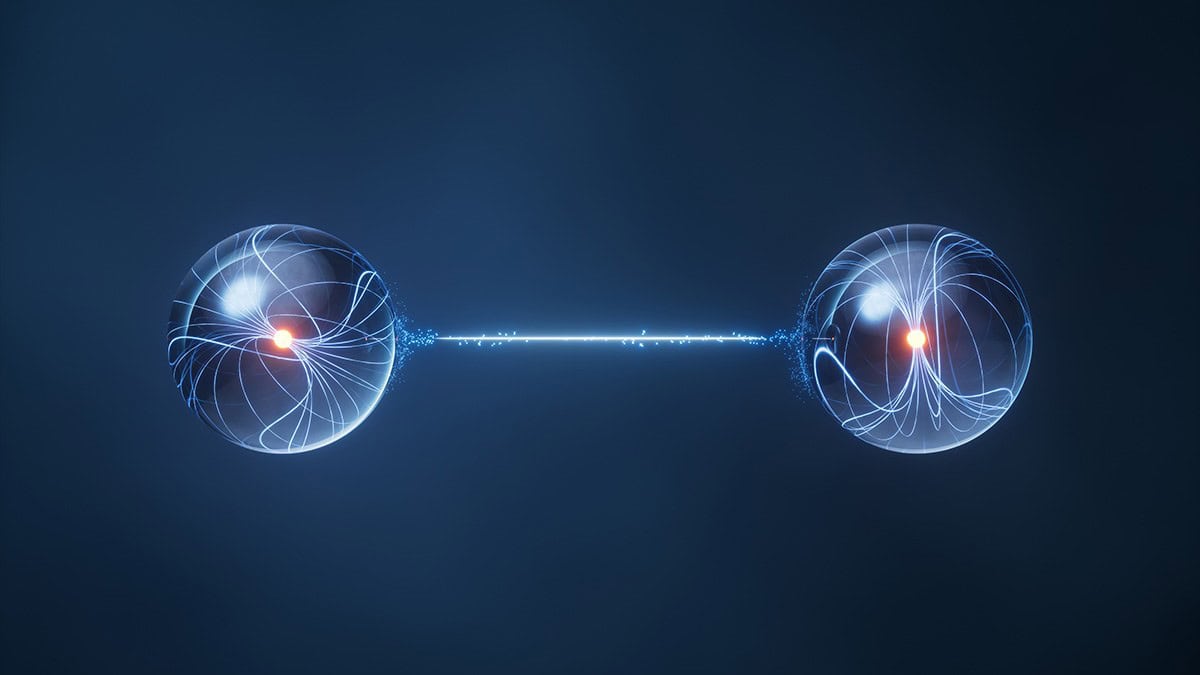
Researchers in Canada have demonstrated that encrypted qubits can be cloned and stored in multiple locations without violating the fundamental no-cloning theorem of quantum mechanics. This breakthrough could pave the way for quantum-secure cloud storage, enabling data to be stored on various servers while maintaining security and redundancy.
The study, conducted by Achim Kempf at the University of Waterloo and his colleague Koji Yamaguchi, now at Kyushu University in Japan, challenges traditional ideas in quantum mechanics. The no-cloning theorem posits that identical copies of unknown quantum states cannot be created, a principle that has posed significant challenges in developing a quantum internet.
Kempf explains that this research offers a solution to the limitations imposed by the no-cloning theorem. In conventional cloud storage, data is often duplicated across different locations to safeguard against loss. With quantum cloud storage, users would expect similar security measures, but the no-cloning theorem seemed to prevent this from being feasible.
The researchers’ encryption protocol begins with generating pairs of entangled qubits. During the encryption process, a qubit, termed A, interacts with a signal qubit from each pair. As these interactions occur, the signal qubits record information about the altered state of A. In this setup, the signal qubits become entangled with noise qubits, which also undergo changes during the interaction.
Kempf clarifies a significant aspect of quantum mechanics: entanglement does not allow for the exchange of information. “The noise qubits don’t know anything about the state of A either classically or quantum mechanically,” he states. The noise qubits serve as a record of the added noise, which is crucial for the encryption process. By drowning the information in noise, users can still retrieve the original unencrypted qubit, provided they possess a signal qubit.
Importantly, this process does not conflict with the uncertainty principle. The act of decrypting one copy of A requires measuring the noise qubits. “At the end of [the measurement], the noise qubits are no longer what they were before,” Kempf explains. This means they cannot be reused for decrypting another copy, preserving the integrity of the quantum states.
Kempf’s team has successfully executed hundreds of steps of iterative quantum cloning on IBM’s Heron 2 processor, demonstrating the ability to clone entangled qubits and recover the entanglement post-decryption. The research findings are set to be published in Physical Review Letters.
Barry Sanders from the University of Calgary commended the work for its elegance and broad implications. He notes that the research could even shed light on topics like information loss from black holes. “It’s not a flash in the pan,” he remarks, emphasizing the significant impact this study may have on future quantum research.
Seth Lloyd of the Massachusetts Institute of Technology (MIT) echoed this sentiment, highlighting that the theoretical landscape of quantum information still holds untapped potential. He describes the findings as unexpected and intriguing, suggesting that there may be valuable applications in the near future, even if quantum cloud storage remains hypothetical at this stage.
Kempf’s innovative approach not only advances the field of quantum mechanics but also opens the door to new possibilities in secure data storage, which could revolutionize how sensitive information is managed and protected in our increasingly digital world.











Alton Weather Update: Overcast Skies Transition to Partial Sunshine

Catherine’s Chocolates Transforms Into Farnsworth Fine Cannabis

Cain’s Cancer Confession Rocks Emmerdale as Secrets Unravel

Bills Release Taron Johnson and Curtis Samuel Ahead of New Season

EuroMillions Jackpot Hits £169 Million Ahead of Tonight’s Draw

Savannah Guthrie Returns to ‘Today’ Show Amid Mother’s Search

Care Home Secures Approval for 16 New Affordable Apartments

Savannah Guthrie Returns to ‘Today’ Amid Search for Missing Mother

Skipping Prostate Cancer Screenings Raises Risk by 45%

Coronation Street’s Shocking Murder Twist Reveals Family Secrets

Andrew Pierce Confirms Departure from ITV’s Good Morning Britain

Katie Price Faces New Health Concerns After Cancer Symptoms Resurface

Sue Radford Reveals Weight Loss Journey, Shedding 12–13 kg

Kate Garraway Sells £2 Million Home Amid Financial Struggles

EastEnders’ Nicola Mitchell Faces Unexpected Pregnancy Crisis

Bailey Announces Heartbreaking Split from Rebecca After Reunion

Ann Ming Reflects on ITV’s ‘I Fought the Law’ Drama

Selena Gomez’s Name Linked to Epstein: Examining the Claims
-
 World3 months ago
Coronation Street’s Shocking Murder Twist Reveals Family Secrets
-
 Entertainment3 months ago
Andrew Pierce Confirms Departure from ITV’s Good Morning Britain
-
 Health6 months ago
Katie Price Faces New Health Concerns After Cancer Symptoms Resurface
-
 Health1 month ago
Sue Radford Reveals Weight Loss Journey, Shedding 12–13 kg
-
 Entertainment7 months ago
Kate Garraway Sells £2 Million Home Amid Financial Struggles
-
 World4 months ago
EastEnders’ Nicola Mitchell Faces Unexpected Pregnancy Crisis
-
 World4 months ago
Bailey Announces Heartbreaking Split from Rebecca After Reunion
-
 Entertainment6 months ago
Ann Ming Reflects on ITV’s ‘I Fought the Law’ Drama
-
 Entertainment4 weeks ago
Selena Gomez’s Name Linked to Epstein: Examining the Claims
-

 Entertainment4 months ago
Coronation Street Fans React as Todd Faces Heartbreaking Choice
-

 Entertainment3 months ago
David Jason and Nicholas Lyndhurst Eye Reunion for Only Fools Anniversary
-

 Entertainment3 months ago
Bradley Walsh Sparks Strictly Come Dancing Hosting Speculation