
Science
Queen’s University Scientists Launch Ambitious Black Hole Research

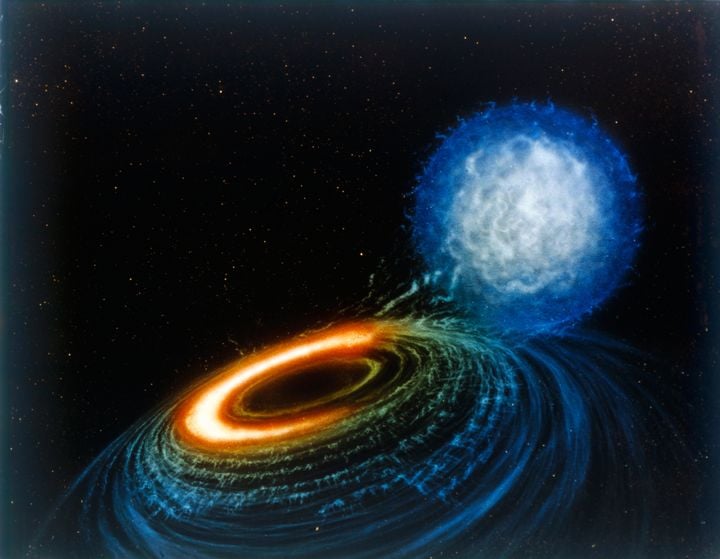
Researchers from Queen’s University Belfast are embarking on a groundbreaking project aimed at unraveling the mysteries of black holes. This initiative, known as the Time Domain Extragalactic Survey (TiDES), will involve a comprehensive analysis of the life cycles of stars and their interactions with black holes.
The project brings together a team of astronomers from across the UK and will utilize the new four-metre Multi-Object Spectroscopic Telescope (4MOST) facility, located at the VISTA telescope of the European Southern Observatory in Chile. Over the next five years, the team plans to conduct millions of detailed spectral observations, capturing light from cosmic objects across the entire spectrum of colors.
Dr. Matt Nicholl, one of the leading researchers, expressed enthusiasm for the project’s potential. He stated, “Having access to this kind of data for tens of thousands of exploding stars and hungry black holes gives us a real opportunity to unlock some of the mysteries around how stars evolve and die.” The primary focus will be on identifying stars that have been consumed by black holes, particularly those classified as “medium-size,” which have masses larger than typical stars but smaller than the supermassive black holes found in large galaxies.
October 21, 2023, marks a significant milestone as the project gears up to begin its observational work. The team aims to provide high-precision measurements of nearly 1,000 supermassive black holes, 10,000 supernovae, and 100,000 galaxies, which could lead to the discovery of new types of stellar explosions.
Professor Stephen Smartt highlighted the complexity of the initiative, noting that it could transform current understanding of how galaxies and black holes interact. He likened the search for unusual cosmic events to “finding a needle in a galactic haystack.” With the first light obtained from 4MOST, the team is set to delve into this vast collection of data every night.
Through TiDES, UK astronomers will also gain access to valuable data from the US National Science Foundation and the US Department of Energy’s Vera C. Rubin Observatory, thanks to their collaboration with the Legacy Survey of Space and Time (LSST). This partnership enhances the project’s potential for groundbreaking discoveries in astrophysics.
As the team embarks on this ambitious venture, the hope is to gain deeper insights not only into black holes but also into the broader workings of the universe. The findings from TiDES may not only illuminate the nature of black holes but could also reshape the understanding of cosmic evolution itself.












Belfast Gears Up for Vibrant St Patrick’s Day Parade on March 17

Cuba Faces Nationwide Blackout Amid Deepening Energy Crisis

Wirral Council to Restructure Leadership, Cutting Two Top Roles

Rethinking Resistance Training: Key Insights from US Experts

EU Membership on the Horizon: What It Means for Citizens

Ukrainian Drone Swarms Strike Moscow Region for Second Day

Henley Launches Innovative Initiative to Boost Local Economy

Court Ruling Allows Pandemic Tax Refund Claims Until 2026

Sean Penn’s Absence at 2026 Oscars Sparks Discussion

Coronation Street’s Shocking Murder Twist Reveals Family Secrets

Andrew Pierce Confirms Departure from ITV’s Good Morning Britain

Katie Price Faces New Health Concerns After Cancer Symptoms Resurface

Gyles Brandreth Shares Grandson’s Cancer Battle and Recovery

Sue Radford Reveals Weight Loss Journey, Shedding 12–13 kg

Kate Garraway Sells £2 Million Home Amid Financial Struggles

Jordan Brook Faces Health Crisis in Hospital as Sophie Kasaei Stays Away

EastEnders’ Nicola Mitchell Faces Unexpected Pregnancy Crisis

Reddit Study Reveals Distinctions Between Lurkers and Power Users
-
 World8 months ago
Coronation Street’s Shocking Murder Twist Reveals Family Secrets
-
 Entertainment8 months ago
Andrew Pierce Confirms Departure from ITV’s Good Morning Britain
-
 Health12 months ago
Katie Price Faces New Health Concerns After Cancer Symptoms Resurface
-
 Health7 months ago
Gyles Brandreth Shares Grandson’s Cancer Battle and Recovery
-
 Health7 months ago
Sue Radford Reveals Weight Loss Journey, Shedding 12–13 kg
-
 Entertainment1 year ago
Kate Garraway Sells £2 Million Home Amid Financial Struggles
-
 Entertainment5 months ago
Jordan Brook Faces Health Crisis in Hospital as Sophie Kasaei Stays Away
-
 World10 months ago
EastEnders’ Nicola Mitchell Faces Unexpected Pregnancy Crisis
-
 Science8 months ago
Reddit Study Reveals Distinctions Between Lurkers and Power Users
-

 World9 months ago
Mother Charged After Son, 9, Killed in Tragic Incident in Italy
-

 Entertainment12 months ago
Ann Ming Reflects on ITV’s ‘I Fought the Law’ Drama
-

 World9 months ago
Bailey Announces Heartbreaking Split from Rebecca After Reunion