
Science
New Study Confirms Humans Transported Stonehenge Bluestones

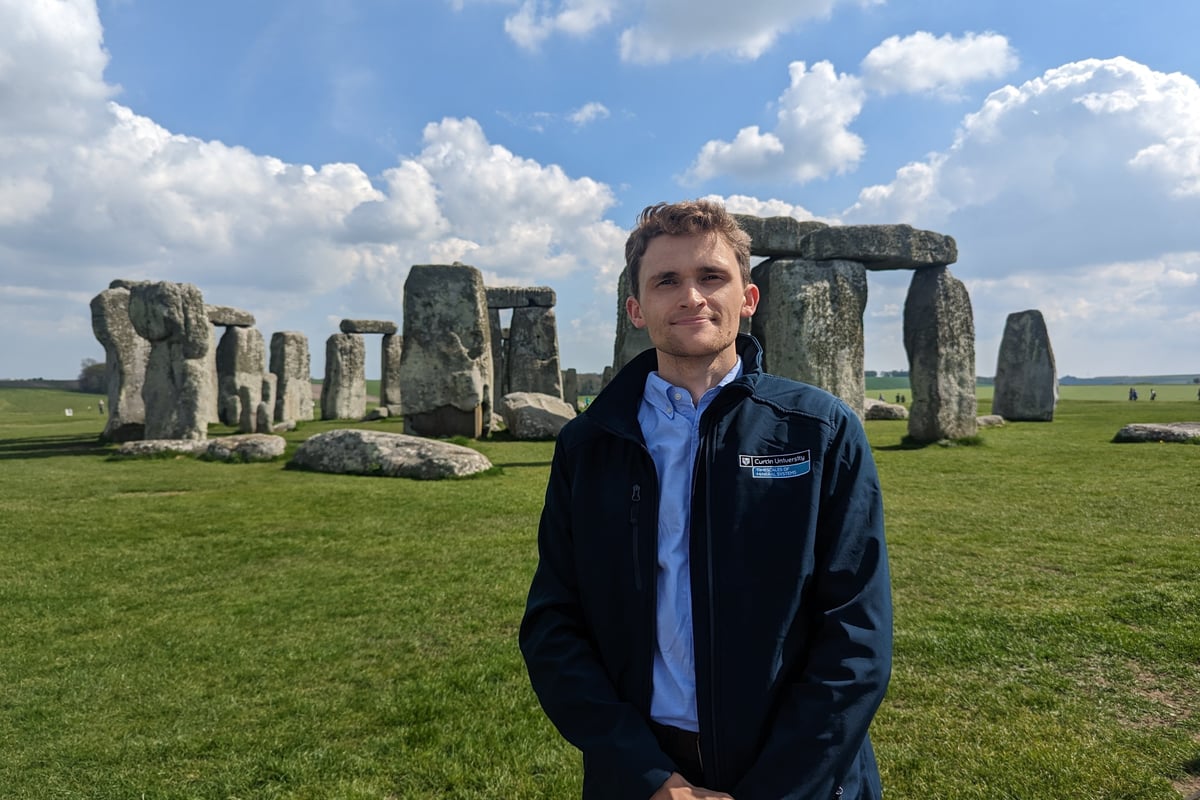
New research from Curtin University provides compelling evidence that humans, rather than glaciers, transported the iconic bluestones to Stonehenge. This study challenges a long-standing debate in archaeology regarding the origins of the Altar Stone and other rocks found at the prehistoric site. The findings underscore the likelihood of deliberate human effort in the stones’ movement over significant distances.
Utilizing advanced mineral “fingerprinting” techniques, the research team analyzed microscopic grains found in rivers near the historic site in Salisbury Plain, southern England. These mineral grains serve as geological time capsules, revealing how sediments have shifted across Britain over millions of years. The team employed state-of-the-art equipment at Curtin’s John de Laeter Centre to examine more than 500 zircon crystals, one of the Earth’s most durable minerals.
Findings Challenge Previous Theories
The study builds on a major discovery from 2024, which identified a Scottish origin for the central six-tonne Altar Stone at Stonehenge. This reinforces the notion that Neolithic builders intentionally sourced and transported the stones. Lead author Dr. Anthony Clarke, from the Timescales of Mineral Systems Group within Curtin’s School of Earth and Planetary Sciences, stated that the results revealed no signs of glacial activity at the site.
“If glaciers had carried rocks all the way from Scotland or Wales to Stonehenge, they would have left a clear mineral signature on the Salisbury Plain,” Dr. Clarke explained. He noted that if such transport had occurred, erosion would have released tiny grains that could be dated to determine their origins.
The research did not uncover any evidence of glacially transported grains in the river sands near Stonehenge. This absence makes the hypothesis that humans moved the stones far more plausible.
Unraveling the Mystery of Transport
Despite the evidence supporting human transport, the exact methods remain uncertain. Dr. Clarke speculated on various possibilities, including the stones being sailed from Scotland or Wales or moved over land using rolling logs. “We might never know the precise methods,” he remarked, “but what we do know is that ice almost certainly didn’t move the stones.”
Co-author Professor Chris Kirkland, also from Curtin, emphasized the significance of modern geochemical tools in addressing historical questions. “Stonehenge continues to surprise us,” he said. “By analyzing minerals smaller than a grain of sand, we have been able to test theories that have persisted for more than a century.”
The research raises further questions about the purpose of Stonehenge. Professor Kirkland suggested it may have served various functions, such as a calendar, an ancient temple, or a feasting site. “Asking and then answering these sorts of questions requires different types of data sets, and this study adds an important piece to that bigger picture,” he noted.
This paper, titled “Detrital zircon–apatite fingerprinting challenges glacial transport of Stonehenge’s megaliths,” was published in the journal Communications Earth and Environment. The findings mark a significant advancement in understanding the methods behind one of humanity’s most enigmatic constructions.










Belfast Gears Up for Vibrant St Patrick’s Day Parade on March 17

Cuba Faces Nationwide Blackout Amid Deepening Energy Crisis

Wirral Council to Restructure Leadership, Cutting Two Top Roles

Rethinking Resistance Training: Key Insights from US Experts

EU Membership on the Horizon: What It Means for Citizens

Ukrainian Drone Swarms Strike Moscow Region for Second Day

Henley Launches Innovative Initiative to Boost Local Economy

Court Ruling Allows Pandemic Tax Refund Claims Until 2026

Sean Penn’s Absence at 2026 Oscars Sparks Discussion

Coronation Street’s Shocking Murder Twist Reveals Family Secrets

Andrew Pierce Confirms Departure from ITV’s Good Morning Britain

Katie Price Faces New Health Concerns After Cancer Symptoms Resurface

Sue Radford Reveals Weight Loss Journey, Shedding 12–13 kg

Kate Garraway Sells £2 Million Home Amid Financial Struggles

Jordan Brook Faces Health Crisis in Hospital as Sophie Kasaei Stays Away

EastEnders’ Nicola Mitchell Faces Unexpected Pregnancy Crisis

Bailey Announces Heartbreaking Split from Rebecca After Reunion

Ann Ming Reflects on ITV’s ‘I Fought the Law’ Drama
-
 World4 months ago
Coronation Street’s Shocking Murder Twist Reveals Family Secrets
-
 Entertainment4 months ago
Andrew Pierce Confirms Departure from ITV’s Good Morning Britain
-
 Health7 months ago
Katie Price Faces New Health Concerns After Cancer Symptoms Resurface
-
 Health2 months ago
Sue Radford Reveals Weight Loss Journey, Shedding 12–13 kg
-
 Entertainment8 months ago
Kate Garraway Sells £2 Million Home Amid Financial Struggles
-
 Entertainment3 weeks ago
Jordan Brook Faces Health Crisis in Hospital as Sophie Kasaei Stays Away
-
 World5 months ago
EastEnders’ Nicola Mitchell Faces Unexpected Pregnancy Crisis
-
 World5 months ago
Bailey Announces Heartbreaking Split from Rebecca After Reunion
-
 Entertainment7 months ago
Ann Ming Reflects on ITV’s ‘I Fought the Law’ Drama
-

 Entertainment2 months ago
Selena Gomez’s Name Linked to Epstein: Examining the Claims
-

 Health7 months ago
TOWIE Stars Sophie Kasaei and Jordan Brook Pursue Fertility Treatment
-

 Health7 months ago
Fiona Phillips’ Husband Shares Heartbreaking Update on Her Health