
Science
New Millipede Compounds Discovered to Influence Ant Brain Activity

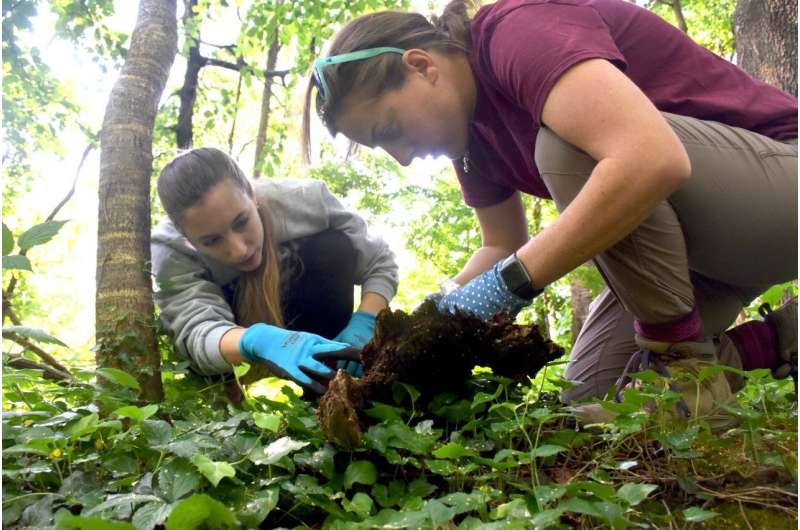
Chemist Emily Mevers and her research team at Virginia Tech have uncovered a new series of compounds from millipede secretions that can influence specific neuroreceptors in ant brains. Published on July 25, 2025, in the Journal of the American Chemical Society, this discovery highlights the potential of these compounds for future medical applications, particularly in pain management.
Discovery of Andrognathanols and Andrognathines
The newly identified compounds, named andrognathanols and andrognathines, were derived from the millipede species Andrognathus corticarius, which resides in the Stadium Woods area of the Virginia Tech campus. This research is part of Mevers’ broader effort to utilize the chemistry of underexplored ecological niches for drug discovery.
To isolate these compounds, Mevers and her team collected millipedes from leaf litter and fallen branches, employing advanced analytical techniques to analyze the chemical makeup of the millipedes’ defensive secretions. These secretions not only deter predators but also serve a communicative function among the millipedes themselves.
Significance and Future Drug Development
Despite their widespread presence, many aspects of millipedes remain poorly understood, including their habitats and behaviors. Mevers is collaborating with entomologist Paul Marek to address these knowledge gaps and explore the potential medical uses of their findings. Previously, the team had studied another millipede species, Ishcnocybe plicata, discovering that similar alkaloids interact selectively with the Sigma-1 neuroreceptor, suggesting a promising avenue for pharmacological research.
The newly discovered alkaloids are released from the Hokie millipede when disturbed, causing disorientation in ants, which are considered natural predators. Some compounds from this new class also exhibit similar interactions with the Sigma-1 neuroreceptor, indicating their potential for treating pain and neurological disorders.
With the identification of these complex compounds, the next phase involves synthesizing them in larger quantities for further evaluation. “These compounds are quite complex, so they’re going to take some time to synthesize in the lab,” Mevers stated. Once sufficient quantities are produced, the research team will investigate their properties and possible biomedical applications.
The ongoing research into millipede secretions not only contributes to our understanding of these creatures but also opens new pathways for innovative pain relief treatments and other medical interventions.

Belfast Gears Up for Vibrant St Patrick’s Day Parade on March 17

Cuba Faces Nationwide Blackout Amid Deepening Energy Crisis

Wirral Council to Restructure Leadership, Cutting Two Top Roles

Rethinking Resistance Training: Key Insights from US Experts

EU Membership on the Horizon: What It Means for Citizens

Ukrainian Drone Swarms Strike Moscow Region for Second Day

Henley Launches Innovative Initiative to Boost Local Economy

Court Ruling Allows Pandemic Tax Refund Claims Until 2026

Sean Penn’s Absence at 2026 Oscars Sparks Discussion

Coronation Street’s Shocking Murder Twist Reveals Family Secrets

Andrew Pierce Confirms Departure from ITV’s Good Morning Britain

Katie Price Faces New Health Concerns After Cancer Symptoms Resurface

Gyles Brandreth Shares Grandson’s Cancer Battle and Recovery

Sue Radford Reveals Weight Loss Journey, Shedding 12–13 kg

Kate Garraway Sells £2 Million Home Amid Financial Struggles

Jordan Brook Faces Health Crisis in Hospital as Sophie Kasaei Stays Away

EastEnders’ Nicola Mitchell Faces Unexpected Pregnancy Crisis

Reddit Study Reveals Distinctions Between Lurkers and Power Users
-
 World8 months ago
Coronation Street’s Shocking Murder Twist Reveals Family Secrets
-
 Entertainment8 months ago
Andrew Pierce Confirms Departure from ITV’s Good Morning Britain
-
 Health11 months ago
Katie Price Faces New Health Concerns After Cancer Symptoms Resurface
-
 Health6 months ago
Gyles Brandreth Shares Grandson’s Cancer Battle and Recovery
-
 Health6 months ago
Sue Radford Reveals Weight Loss Journey, Shedding 12–13 kg
-
 Entertainment1 year ago
Kate Garraway Sells £2 Million Home Amid Financial Struggles
-
 Entertainment5 months ago
Jordan Brook Faces Health Crisis in Hospital as Sophie Kasaei Stays Away
-
 World9 months ago
EastEnders’ Nicola Mitchell Faces Unexpected Pregnancy Crisis
-
 Science8 months ago
Reddit Study Reveals Distinctions Between Lurkers and Power Users
-

 World9 months ago
Mother Charged After Son, 9, Killed in Tragic Incident in Italy
-

 Entertainment11 months ago
Ann Ming Reflects on ITV’s ‘I Fought the Law’ Drama
-

 World9 months ago
Bailey Announces Heartbreaking Split from Rebecca After Reunion