
Science
Harvard Scientist Raises Alarm on Interstellar Comet 3I/ATLAS

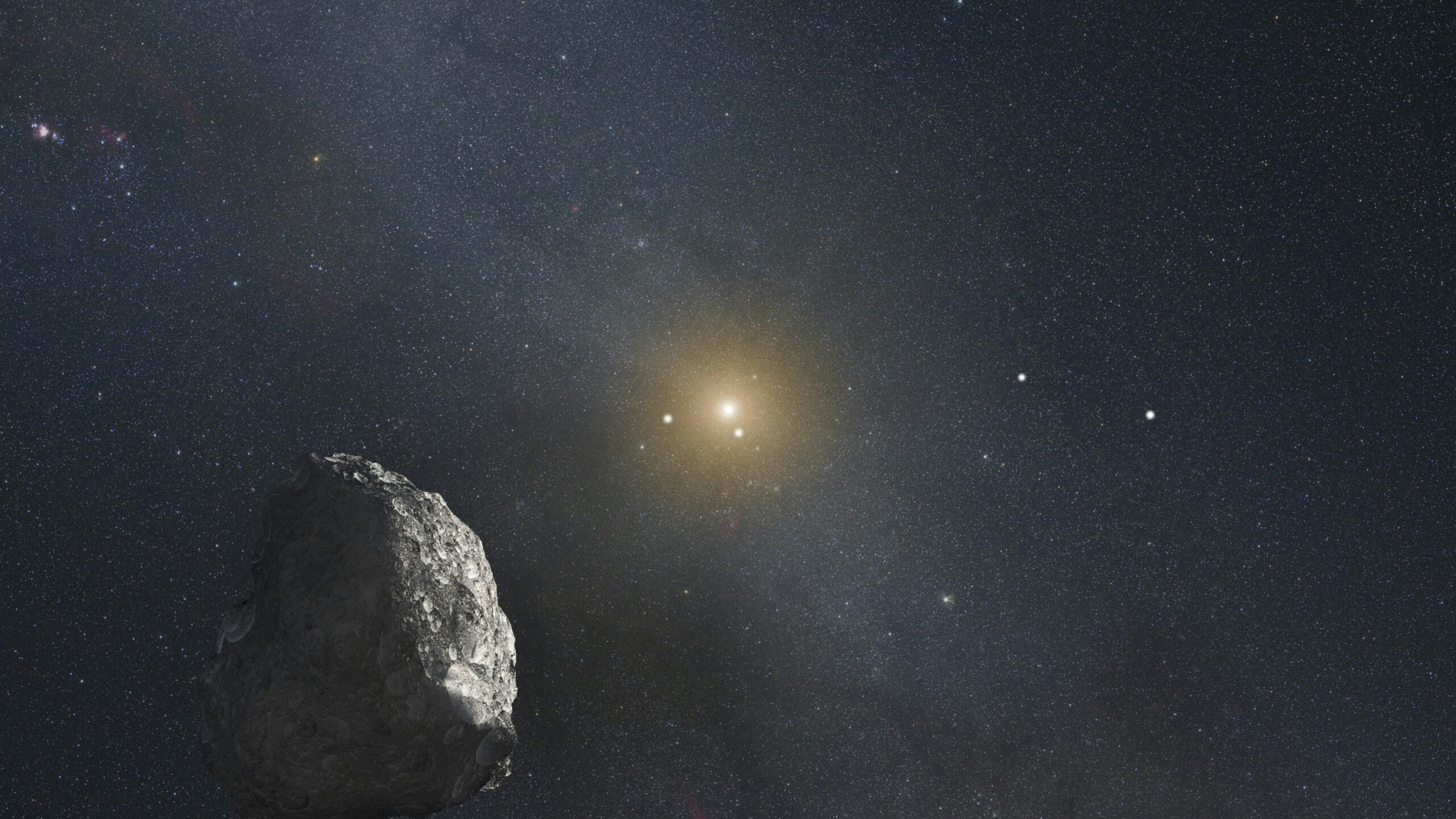
Recent observations of the interstellar comet 3I/ATLAS have ignited a fierce debate among astronomers regarding its origins. Harvard physicist Avi Loeb has suggested that the comet may bear signs of artificial origins, sparking fears of a potential “alien probe.” In contrast, NASA scientists assert that there is overwhelming evidence indicating that 3I/ATLAS is a natural celestial body.
On December 19, 2023, the comet made its closest approach to Earth at around 06:00 UK time, passing at a distance of approximately 270 million kilometers (or 168 million miles). Despite this considerable gap, the comet’s extraordinary speed of roughly 153,000 mph has raised eyebrows, leading to speculation about its interstellar trajectory.
Loeb, known for his provocative theories surrounding extraterrestrial objects, pointed to unusual chemical signatures in 3I/ATLAS that differ from typical solar system comets. He highlighted measurements of the comet’s coma, the outer envelope of gas and dust, and noted the presence of nickel and iron atoms. In a blog post, Loeb explained that temperatures at such distances should be insufficient to vaporize these heavy elements, raising questions about their origin.
In comments to Sky News, Loeb drew an analogy to the uncertainty surrounding interstellar visitors, stating, “When you go on a blind date of interstellar proportions, you never know whether you have a friendly visitor or a serial killer.” His remarks reflect a growing fascination—and concern—regarding the potential implications of unidentified objects from beyond our solar system.
Despite the provocative claims from Loeb, NASA maintains a more conventional perspective. Tom Statler, a lead scientist at the agency, emphasized that 3I/ATLAS exhibits behaviors consistent with those of known comets. “It looks like a comet. It does comet things,” he asserted, noting that while it may possess some atypical properties, these do not necessitate an artificial explanation. “The evidence is overwhelmingly pointing to this object being a natural body. It’s a comet,” Statler concluded.
As 3I/ATLAS continues its journey through the solar system, it is moving away from Earth and is set to pass Jupiter in early 2026. Current trajectory models suggest that the comet will clear the orbital distances of Saturn, Uranus, and Neptune by 2028. Following this passage, it will remain on a hyperbolic escape trajectory, eventually drifting beyond the reach of current observational instruments.
The discussion surrounding 3I/ATLAS highlights the ongoing tension between mainstream astronomy and those who advocate for the exploration of unconventional theories regarding extraterrestrial life. As humanity continues to gaze into the cosmos, the search for answers about these interstellar visitors remains a captivating endeavor.










Belfast Gears Up for Vibrant St Patrick’s Day Parade on March 17

Cuba Faces Nationwide Blackout Amid Deepening Energy Crisis

Wirral Council to Restructure Leadership, Cutting Two Top Roles

Rethinking Resistance Training: Key Insights from US Experts

EU Membership on the Horizon: What It Means for Citizens

Ukrainian Drone Swarms Strike Moscow Region for Second Day

Henley Launches Innovative Initiative to Boost Local Economy

Court Ruling Allows Pandemic Tax Refund Claims Until 2026

Sean Penn’s Absence at 2026 Oscars Sparks Discussion

Coronation Street’s Shocking Murder Twist Reveals Family Secrets

Andrew Pierce Confirms Departure from ITV’s Good Morning Britain

Katie Price Faces New Health Concerns After Cancer Symptoms Resurface

Sue Radford Reveals Weight Loss Journey, Shedding 12–13 kg

Kate Garraway Sells £2 Million Home Amid Financial Struggles

Jordan Brook Faces Health Crisis in Hospital as Sophie Kasaei Stays Away

EastEnders’ Nicola Mitchell Faces Unexpected Pregnancy Crisis

Bailey Announces Heartbreaking Split from Rebecca After Reunion

Ann Ming Reflects on ITV’s ‘I Fought the Law’ Drama
-
 World4 months ago
Coronation Street’s Shocking Murder Twist Reveals Family Secrets
-
 Entertainment4 months ago
Andrew Pierce Confirms Departure from ITV’s Good Morning Britain
-
 Health7 months ago
Katie Price Faces New Health Concerns After Cancer Symptoms Resurface
-
 Health3 months ago
Sue Radford Reveals Weight Loss Journey, Shedding 12–13 kg
-
 Entertainment8 months ago
Kate Garraway Sells £2 Million Home Amid Financial Struggles
-
 Entertainment4 weeks ago
Jordan Brook Faces Health Crisis in Hospital as Sophie Kasaei Stays Away
-
 World5 months ago
EastEnders’ Nicola Mitchell Faces Unexpected Pregnancy Crisis
-
 World5 months ago
Bailey Announces Heartbreaking Split from Rebecca After Reunion
-
 Entertainment7 months ago
Ann Ming Reflects on ITV’s ‘I Fought the Law’ Drama
-

 Entertainment2 months ago
Selena Gomez’s Name Linked to Epstein: Examining the Claims
-

 Health7 months ago
TOWIE Stars Sophie Kasaei and Jordan Brook Pursue Fertility Treatment
-

 Health8 months ago
Fiona Phillips’ Husband Shares Heartbreaking Update on Her Health