
Science
Harvard Scientist Investigates New Asteroid as Possible Alien Probe

A recently discovered asteroid, designated 2025 PN7, has sparked significant interest among scientists and the public alike. This “quasi-moon,” temporarily captured by Earth’s gravity, is being investigated by Avi Loeb, a prominent astrophysicist from Harvard University. Loeb proposes a provocative theory: the asteroid could be an artificial monitoring device placed by an advanced civilization.
In his analysis, Loeb underscores the brevity of human history, which spans a mere 8,000 years. This is minuscule compared to the 13.8 billion-year age of the Milky Way galaxy. He argues that in this extensive timeline, it is plausible that other intelligent species evolved long before humanity. As a result, Loeb suggests that these civilizations might consider us a “baby civilization,” observing our development from a distance rather than initiating direct contact.
Loeb’s hypothesis positions 2025 PN7 as a prime candidate for such a hypothetical probe. The asteroid was first identified by scientists at the Pan-STARRS Observatory in Hawaii on August 29, 2025. It is believed to have been orbiting Earth for approximately 60 years and is expected to remain within our vicinity for another 60 years. Measuring “roughly the size of a small office building,” it is considered too small to significantly affect Earth’s tides or other natural processes. While most scientists view it as a temporary asteroid, Loeb insists that only further data can clarify its true nature.
Additional Interstellar Discoveries
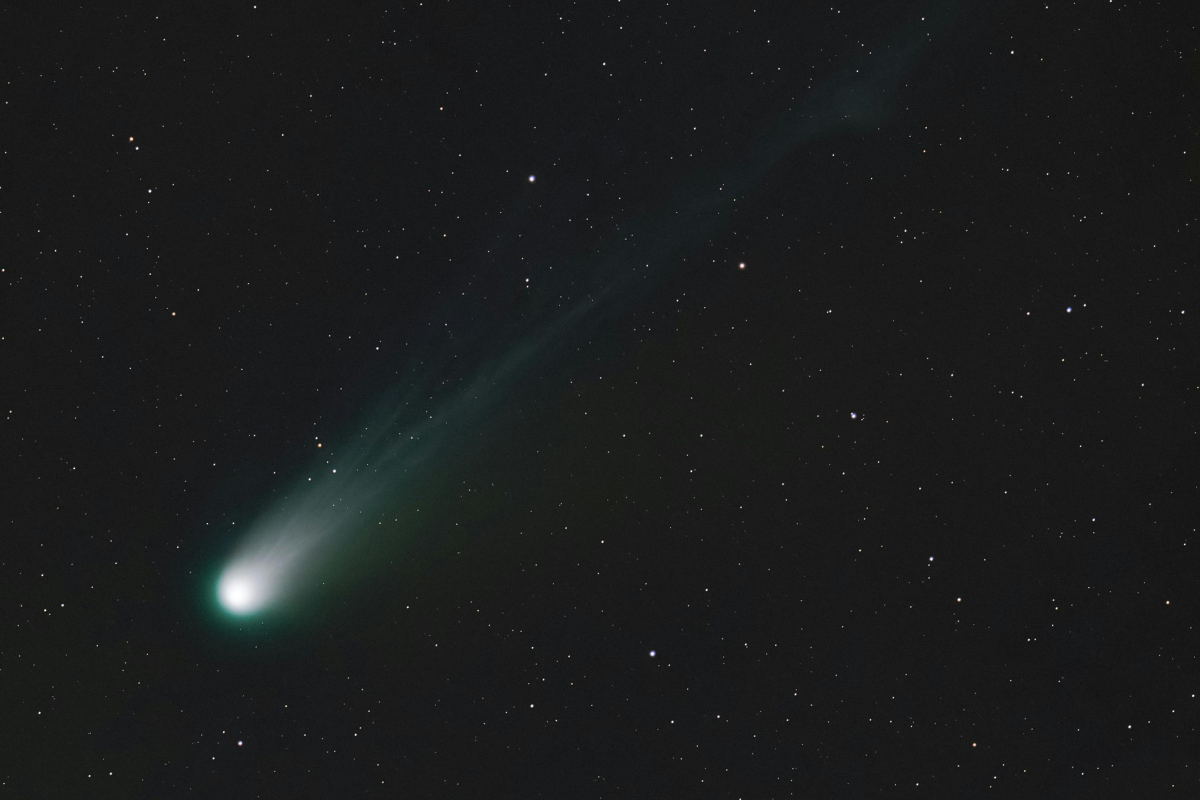
Loeb’s investigation coincides with another interesting event: the movement of Comet 3I/ATLAS, the third known object from interstellar space to enter our Solar System. Discovered on July 1, 2025, by the ATLAS survey in Chile, this comet is not expected to pose any threat to Earth. Its closest approach will occur at a distance of approximately 170 million miles around October 30, 2025, during which it will pass just inside the orbit of Mars.
The arrival of Comet 3I/ATLAS follows the discovery of ‘Oumuamua in 2017 and 2I/Borisov in 2019. Astronomers have estimated the comet’s nucleus to range between 1,444 feet and 3.5 miles in diameter, based on observations from NASA’s Hubble Space Telescope. The frequency of such interstellar visitors suggests that our galaxy is teeming with activity, supporting Loeb’s argument that numerous objects have traversed our Solar System long before humans were capable of recording their presence.
As NASA continues to monitor Comet 3I/ATLAS with an array of instruments—including the Perseverance and Curiosity rovers on Mars, as well as the Lucy and Psyche missions—Loeb remains focused on the asteroid closer to Earth. His ongoing research seeks to determine whether 2025 PN7 is merely a natural rock or potentially the first evidence that humanity is being observed from afar.










Belfast Gears Up for Vibrant St Patrick’s Day Parade on March 17

Cuba Faces Nationwide Blackout Amid Deepening Energy Crisis

Wirral Council to Restructure Leadership, Cutting Two Top Roles

Rethinking Resistance Training: Key Insights from US Experts

EU Membership on the Horizon: What It Means for Citizens

Ukrainian Drone Swarms Strike Moscow Region for Second Day

Henley Launches Innovative Initiative to Boost Local Economy

Court Ruling Allows Pandemic Tax Refund Claims Until 2026

Sean Penn’s Absence at 2026 Oscars Sparks Discussion

Coronation Street’s Shocking Murder Twist Reveals Family Secrets

Andrew Pierce Confirms Departure from ITV’s Good Morning Britain

Katie Price Faces New Health Concerns After Cancer Symptoms Resurface

Gyles Brandreth Shares Grandson’s Cancer Battle and Recovery

Sue Radford Reveals Weight Loss Journey, Shedding 12–13 kg

Kate Garraway Sells £2 Million Home Amid Financial Struggles

Jordan Brook Faces Health Crisis in Hospital as Sophie Kasaei Stays Away

EastEnders’ Nicola Mitchell Faces Unexpected Pregnancy Crisis

Reddit Study Reveals Distinctions Between Lurkers and Power Users
-
 World8 months ago
Coronation Street’s Shocking Murder Twist Reveals Family Secrets
-
 Entertainment8 months ago
Andrew Pierce Confirms Departure from ITV’s Good Morning Britain
-
 Health12 months ago
Katie Price Faces New Health Concerns After Cancer Symptoms Resurface
-
 Health7 months ago
Gyles Brandreth Shares Grandson’s Cancer Battle and Recovery
-
 Health7 months ago
Sue Radford Reveals Weight Loss Journey, Shedding 12–13 kg
-
 Entertainment1 year ago
Kate Garraway Sells £2 Million Home Amid Financial Struggles
-
 Entertainment5 months ago
Jordan Brook Faces Health Crisis in Hospital as Sophie Kasaei Stays Away
-
 World9 months ago
EastEnders’ Nicola Mitchell Faces Unexpected Pregnancy Crisis
-
 Science8 months ago
Reddit Study Reveals Distinctions Between Lurkers and Power Users
-

 World9 months ago
Mother Charged After Son, 9, Killed in Tragic Incident in Italy
-

 Entertainment12 months ago
Ann Ming Reflects on ITV’s ‘I Fought the Law’ Drama
-

 World9 months ago
Bailey Announces Heartbreaking Split from Rebecca After Reunion