
Science
Harvard Expert Warns: Interstellar Comet 3I/ATLAS Raises New Questions

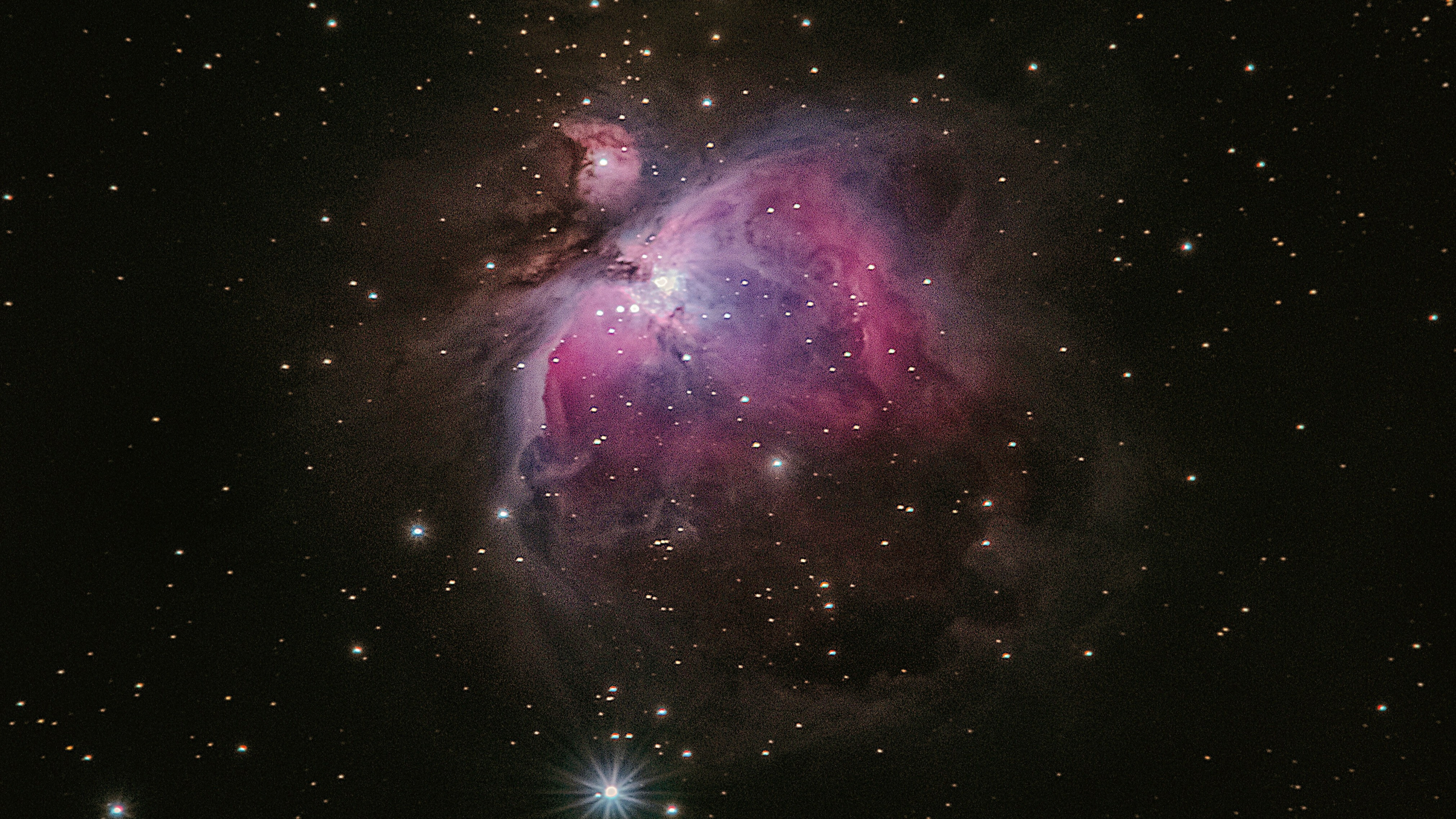
Astrophysicist Avi Loeb from Harvard University has issued a stark warning regarding the interstellar comet 3I/ATLAS, highlighting that its unexpected behaviors challenge existing theories about cosmic objects. These revelations emerge as asteroid 99942 Apophis is set to approach Earth in 2029, prompting renewed focus on planetary defense.
Discovered on July 1, 2025, by the NASA-funded ATLAS survey in Chile, 3I/ATLAS is only the third confirmed interstellar visitor to our solar system, following ‘Oumuamua’ and 2I/Borisov. Its trajectory and brightness fluctuations defy gravitational and solar influence alone, raising significant questions about our understanding of such objects.
On December 19, 2025, 3I/ATLAS made its closest approach to Earth, passing approximately 270 million kilometers away, which is nearly twice the distance from Earth to the Sun. The comet was traveling at an astonishing speed of 58 kilometers per second. This unusual behavior presents challenges for planetary defense initiatives as agencies prepare for Apophis’s upcoming flyby.
Unusual Characteristics of 3I/ATLAS
The study of 3I/ATLAS, which utilizes frame-by-frame image analysis across various platforms, has revealed small but significant changes in the object’s velocity and direction over time. Brightness variations have been linked to changes in direction rather than mere distance from the Sun. Furthermore, some images indicate the presence of material structures that appear to form and dissipate without symmetry.
These findings, corroborated by independent observations, suggest that even minor forces could alter an object’s path over extensive distances. Loeb emphasizes that interstellar objects represent a new category of phenomena that require further investigation. He has pointed out several anomalies, including the comet’s rare “anti-tail” extending towards the Sun and its unusual chemical composition, notably a plume of nickel with minimal iron content, potentially resembling industrial alloys.
Loeb’s analysis is grounded in observational data, moving beyond theoretical models and underscoring the importance of understanding these rare visitors from beyond our solar system. For both casual stargazers and policymakers, this highlights a crucial reality: effective defense measures depend on accurately predicting unpredictable behaviors.
Preparing for Apophis and Future Threats
NASA’s Planetary Defense Coordination Office has confirmed that Apophis poses no collision risk in 2029, based on current observations. Nonetheless, its upcoming flyby offers a valuable opportunity for gathering radar data, thermal readings, and structural information. As Earth’s gravity may influence Apophis’s spin, agencies such as NASA, the European Space Agency, and Japan’s Aerospace Exploration Agency are ramping up tracking efforts from late 2028 through April 2029.
The anomalies observed in 3I/ATLAS challenge long-held assumptions within planetary defense planning. Loeb has criticized bureaucratic delays in sharing high-resolution images from NASA’s Mars Reconnaissance Orbiter, arguing that prioritizing scientific inquiry is vital for distinguishing natural objects from those of potential technological origin.
The implications of these findings are profound. With Earth’s population growing and urban areas expanding, accurate tracking of celestial objects is essential to prevent disasters. For instance, an unseen impactor could cause tsunamis or other catastrophic events.
The report emphasizes the importance of preparation over speculation: validating models against real data, testing response systems, and refining simulations with new findings. Understanding the small forces at play, as demonstrated by 3I/ATLAS, is crucial, as they could evolve into significant influences on an object’s trajectory.
As Apophis approaches, close-up observations will likely unveil more secrets, much like 3I/ATLAS has prompted a reevaluation of our understanding of small celestial bodies. The stakes are high, as billions rely on these cosmic sentinels to protect against potentially catastrophic events. While 2029 may not signify an end, it serves as a reminder of the vast unknowns that continue to linger in the universe.
3I/ATLAS is now headed towards Jupiter and is expected to exit our solar system by March 2026. The pressing question remains whether humanity is adequately prepared for the next visitor from beyond our cosmic neighborhood.







Belfast Gears Up for Vibrant St Patrick’s Day Parade on March 17

Cuba Faces Nationwide Blackout Amid Deepening Energy Crisis

Wirral Council to Restructure Leadership, Cutting Two Top Roles

Rethinking Resistance Training: Key Insights from US Experts

EU Membership on the Horizon: What It Means for Citizens

Ukrainian Drone Swarms Strike Moscow Region for Second Day

Henley Launches Innovative Initiative to Boost Local Economy

Court Ruling Allows Pandemic Tax Refund Claims Until 2026

Sean Penn’s Absence at 2026 Oscars Sparks Discussion

Coronation Street’s Shocking Murder Twist Reveals Family Secrets

Andrew Pierce Confirms Departure from ITV’s Good Morning Britain

Katie Price Faces New Health Concerns After Cancer Symptoms Resurface

Gyles Brandreth Shares Grandson’s Cancer Battle and Recovery

Sue Radford Reveals Weight Loss Journey, Shedding 12–13 kg

Kate Garraway Sells £2 Million Home Amid Financial Struggles

Jordan Brook Faces Health Crisis in Hospital as Sophie Kasaei Stays Away

EastEnders’ Nicola Mitchell Faces Unexpected Pregnancy Crisis

Reddit Study Reveals Distinctions Between Lurkers and Power Users
-
 World9 months ago
Coronation Street’s Shocking Murder Twist Reveals Family Secrets
-
 Entertainment9 months ago
Andrew Pierce Confirms Departure from ITV’s Good Morning Britain
-
 Health12 months ago
Katie Price Faces New Health Concerns After Cancer Symptoms Resurface
-
 Health7 months ago
Gyles Brandreth Shares Grandson’s Cancer Battle and Recovery
-
 Health7 months ago
Sue Radford Reveals Weight Loss Journey, Shedding 12–13 kg
-
 Entertainment1 year ago
Kate Garraway Sells £2 Million Home Amid Financial Struggles
-
 Entertainment5 months ago
Jordan Brook Faces Health Crisis in Hospital as Sophie Kasaei Stays Away
-
 World10 months ago
EastEnders’ Nicola Mitchell Faces Unexpected Pregnancy Crisis
-
 Science9 months ago
Reddit Study Reveals Distinctions Between Lurkers and Power Users
-

 World9 months ago
Mother Charged After Son, 9, Killed in Tragic Incident in Italy
-

 Entertainment12 months ago
Ann Ming Reflects on ITV’s ‘I Fought the Law’ Drama
-

 World9 months ago
Bailey Announces Heartbreaking Split from Rebecca After Reunion