
Science
Experience the First Supermoon of 2026 Tonight: Viewing Tips Revealed

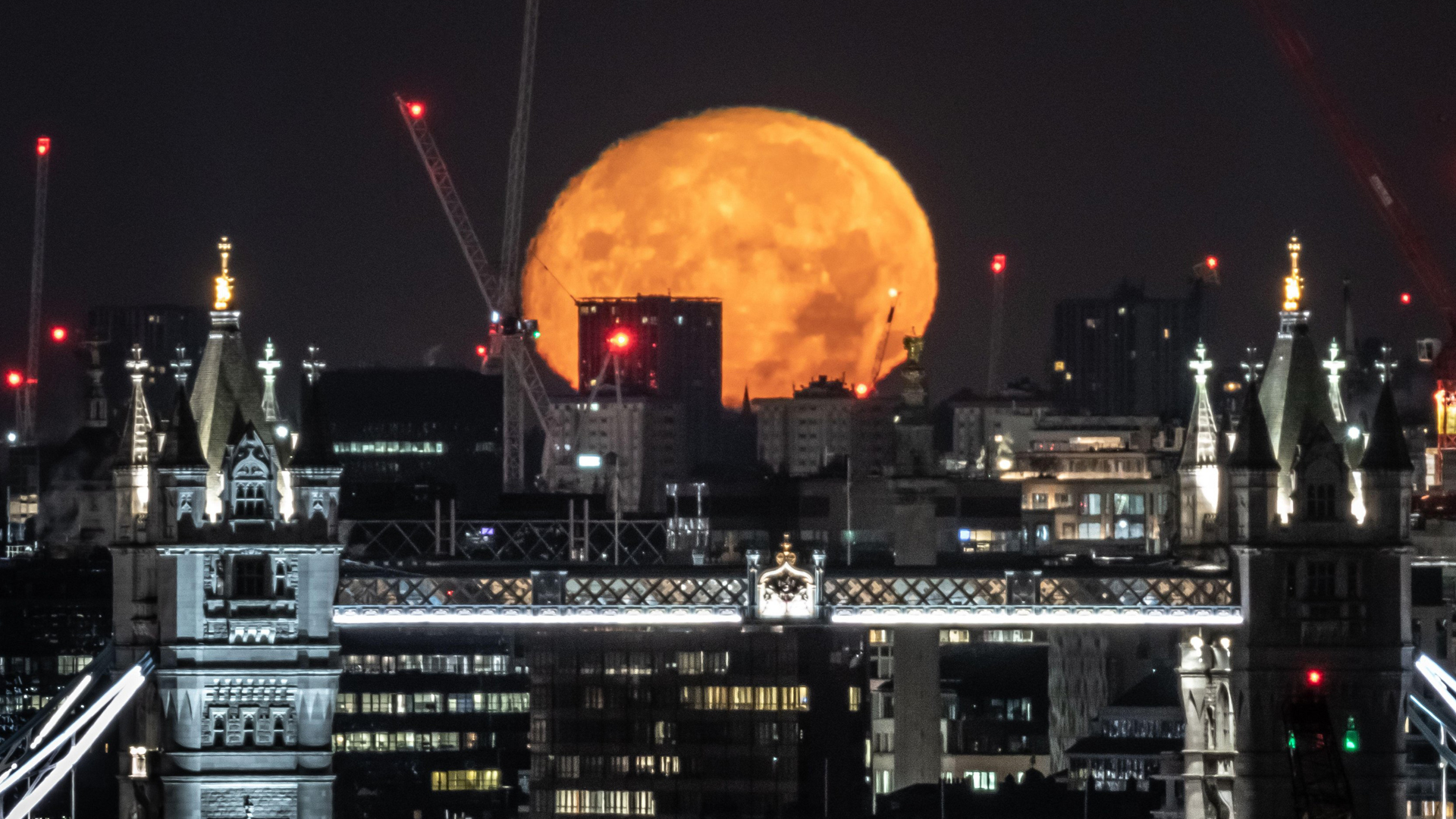
A spectacular supermoon will illuminate the night sky tonight, marking the first of three such events in 2026. This full moon is set to appear notably larger due to its proximity to Earth, an astronomical occurrence that captivates stargazers worldwide. The phenomenon occurs when the Moon reaches its closest point to Earth, known as lunar perigee.
The term “supermoon” refers to a full moon that coincides with this close approach. According to the Royal Greenwich Observatory, the distance between the Moon and Earth varies because the orbit of the Moon is elliptical. When the Moon is near its perigee during a full moon, it creates a visual spectacle that is more pronounced than usual. The opposite is a micromoon, which appears smaller and less impressive.
Upcoming Supermoons in 2026
In 2026, enthusiasts can look forward to two additional supermoons after tonight. They are scheduled for November 24 and December 24, with the latter being the closest at approximately 221,000 miles from Earth. For context, the average distance from the Moon to Earth is about 238,000 miles.
The January supermoon is often referred to as the “Wolf Moon.” This name does not have scientific origins but is derived from traditional lunar names popularized by The Old Farmer’s Almanac. The Wolf Moon signifies the time of year when wolves are known to howl in hunger during the long winter nights.
How to Effectively View and Photograph the Supermoon
To get the best view of the supermoon, individuals should find a location with minimal light pollution. Urban settings can significantly hinder visibility, so heading to open countryside or elevated areas is recommended. The Royal Greenwich Observatory advises checking local weather conditions to choose the best time for viewing.
Photographers looking to capture the beauty of the supermoon should consider using a tripod to stabilize their camera or smartphone. This can greatly enhance the clarity of images, particularly when zooming in on the lunar surface. For those using iPhones, placing the device on a tripod can activate a “night mode” feature, which allows for longer exposure times and better pictures.
Viewing the moon during moonrise or moonset can also create an impressive visual effect. The Moon appears larger near the horizon due to an optical illusion, tricking the brain into perceiving it as bigger than it is. This effect is particularly striking just after sunset or just before sunrise.
As tonight’s supermoon casts its glow, stargazers are encouraged to bundle up and enjoy the celestial display, taking advantage of this rare opportunity to witness our closest natural satellite at its most magnificent.










Belfast Gears Up for Vibrant St Patrick’s Day Parade on March 17

Cuba Faces Nationwide Blackout Amid Deepening Energy Crisis

Wirral Council to Restructure Leadership, Cutting Two Top Roles

Rethinking Resistance Training: Key Insights from US Experts

EU Membership on the Horizon: What It Means for Citizens

Ukrainian Drone Swarms Strike Moscow Region for Second Day

Henley Launches Innovative Initiative to Boost Local Economy

Court Ruling Allows Pandemic Tax Refund Claims Until 2026

Sean Penn’s Absence at 2026 Oscars Sparks Discussion

Coronation Street’s Shocking Murder Twist Reveals Family Secrets

Andrew Pierce Confirms Departure from ITV’s Good Morning Britain

Katie Price Faces New Health Concerns After Cancer Symptoms Resurface

Sue Radford Reveals Weight Loss Journey, Shedding 12–13 kg

Kate Garraway Sells £2 Million Home Amid Financial Struggles

Jordan Brook Faces Health Crisis in Hospital as Sophie Kasaei Stays Away

EastEnders’ Nicola Mitchell Faces Unexpected Pregnancy Crisis

Bailey Announces Heartbreaking Split from Rebecca After Reunion

Ann Ming Reflects on ITV’s ‘I Fought the Law’ Drama
-
 World4 months ago
Coronation Street’s Shocking Murder Twist Reveals Family Secrets
-
 Entertainment4 months ago
Andrew Pierce Confirms Departure from ITV’s Good Morning Britain
-
 Health7 months ago
Katie Price Faces New Health Concerns After Cancer Symptoms Resurface
-
 Health3 months ago
Sue Radford Reveals Weight Loss Journey, Shedding 12–13 kg
-
 Entertainment8 months ago
Kate Garraway Sells £2 Million Home Amid Financial Struggles
-
 Entertainment4 weeks ago
Jordan Brook Faces Health Crisis in Hospital as Sophie Kasaei Stays Away
-
 World5 months ago
EastEnders’ Nicola Mitchell Faces Unexpected Pregnancy Crisis
-
 World5 months ago
Bailey Announces Heartbreaking Split from Rebecca After Reunion
-
 Entertainment7 months ago
Ann Ming Reflects on ITV’s ‘I Fought the Law’ Drama
-

 Entertainment2 months ago
Selena Gomez’s Name Linked to Epstein: Examining the Claims
-

 Health7 months ago
TOWIE Stars Sophie Kasaei and Jordan Brook Pursue Fertility Treatment
-

 Health7 months ago
Fiona Phillips’ Husband Shares Heartbreaking Update on Her Health