
Science
European-Japanese Mission to Mercury Set for 2026 Launch

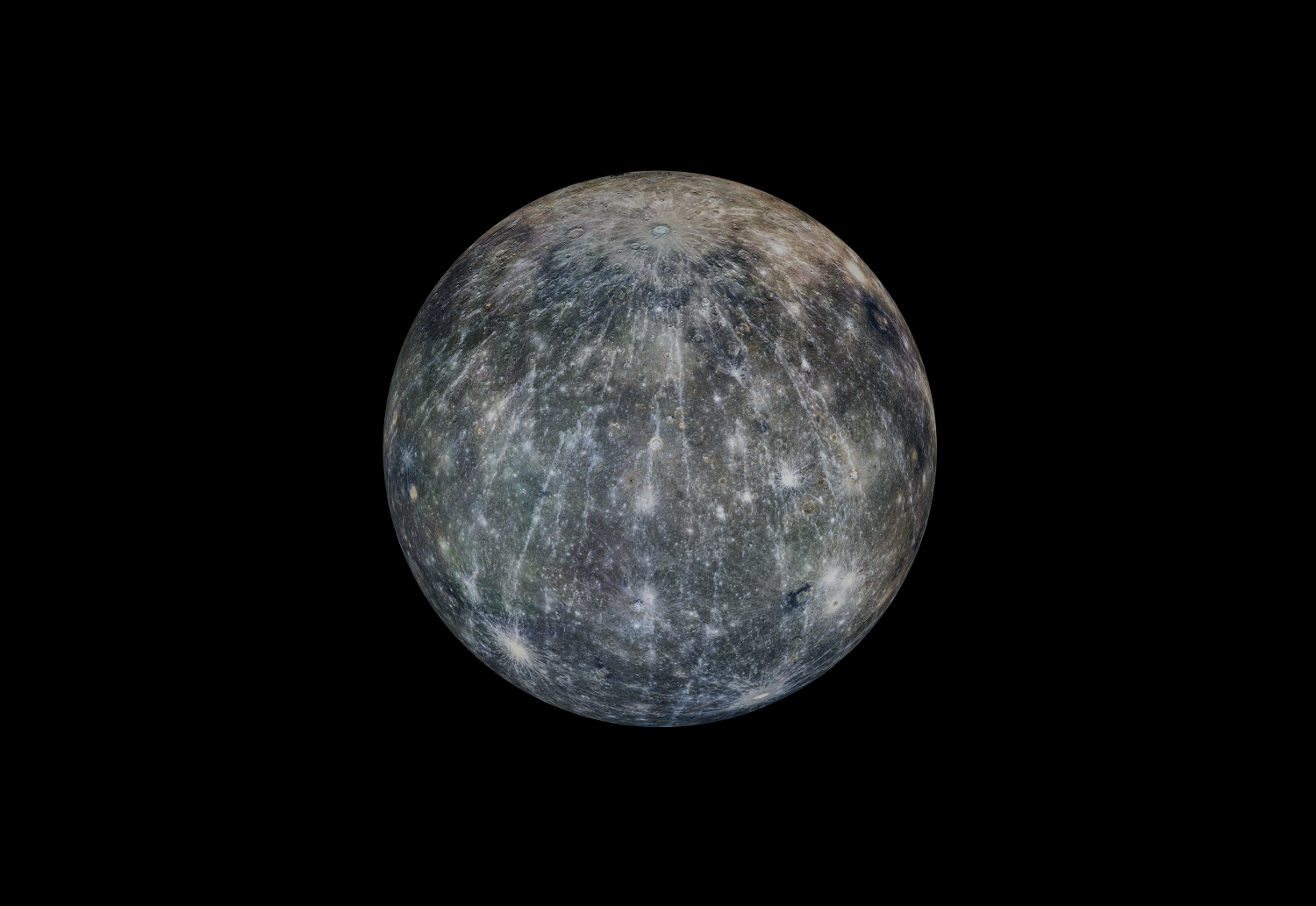
A groundbreaking European-Japanese space mission, known as BepiColombo, is set to reach Mercury in 2026. This mission aims to unravel the mysteries surrounding the existence of Mercury, a planet that has perplexed scientists for decades due to its unusual characteristics. BepiColombo will carry sophisticated instruments designed to provide unprecedented insights into the planet’s interior, surface, and magnetic field, potentially reshaping our understanding of planetary formation.
Mercury, the closest planet to the Sun, possesses a small, metallic-rich composition that challenges established models of how rocky planets develop. Its extreme temperatures, ranging from 430 °C during the day to -180 °C at night, contribute to its inhospitable appearance, characterized by a surface marked by craters and ancient lava flows. Despite its seemingly barren exterior, the planet’s internal structure raises significant questions about its formation and existence.
The planet’s high density sets it apart, as Mercury is the second-densest planet in the Solar System, primarily due to its large metallic core, which constitutes nearly 85% of its radius. This unusual core-to-mantle ratio stands in stark contrast to other rocky planets like Earth and Venus, which have more balanced internal structures. Understanding how Mercury developed such a core and why it remains so small compared to its counterparts is a key focus of the BepiColombo mission.
Theories regarding Mercury’s origin have struggled to fit its current state within established models of planetary formation. Traditional accretion theories suggest that planets form from a protoplanetary disk of dust and gas, gradually accumulating mass through collisions. However, Mercury’s composition and size do not align with this model, particularly given its proximity to the Sun. The conditions in the inner Solar System seem inadequate to explain the formation of such a small, metal-rich planet.
Past missions, including the NASA Mariner 10 in the 1970s and the Messenger mission from 2011 to 2015, have provided initial data about Mercury. Mariner 10 revealed a dense core and an unusual internal structure, while Messenger identified volatile elements like potassium and thorium on the planet’s surface. These findings contradicted expectations that such elements would have vaporized due to intense solar radiation, indicating a more complex history and surface composition.
The presence of water ice in the shadowed polar craters further complicates existing theories. This suggests that Mercury may have undergone processes that allowed it to retain surface-bound volatiles, despite its proximity to the Sun. Various hypotheses have been proposed to explain Mercury’s formation. One significant theory posits that Mercury was originally a larger planet, perhaps comparable to Mars, located farther from the Sun. A massive collision could have stripped away its outer layers, leaving behind what appears to be a heavy-metal core.
Yet, this giant-impact scenario faces challenges. A collision of such magnitude would have required a velocity of around 100 km/s, which is unlikely since early Solar System objects likely had similar orbital paths. Additionally, such an impact should have eliminated volatile components, yet Mercury’s surface still contains them, indicating they must have formed through different processes or that significant retention occurred post-impact.
Other models suggest that Mercury formed from material in a swirling inner region of the protoplanetary disk, where solar outbursts favored the accumulation of iron-rich, volatile-depleted material. This explanation accounts for Mercury’s core without necessitating a catastrophic collision but raises further questions about its limited growth.
Another theory speculates that Mercury may be the remnant core of a gas giant that lost its atmosphere due to solar winds. However, this idea remains speculative, as removing such large gaseous clouds presents considerable challenges. Some scientists propose that Mercury’s current location results from planetary migration, suggesting it initially condensed near the Sun in a dense area of iron material before being displaced by gravitational interactions with other planets.
The unique properties of Mercury make it an invaluable case study for understanding exoplanets, particularly those larger and denser than Mercury, referred to as Super Mercuries. While such planets appear to be common in our galaxy, the mechanisms behind their formation remain largely unknown.
As the BepiColombo mission approaches its launch in 2026, it will consist of two spacecraft: the Mercury Planetary Orbiter from the European Space Agency (ESA) and the Mercury Magnetospheric Orbiter from the Japan Aerospace Exploration Agency (JAXA). These spacecraft will undertake detailed mapping of Mercury’s surface composition, gravity field, and magnetic properties.
One of BepiColombo’s primary objectives is to investigate Mercury’s interior structure, specifically its core composition and state, which holds clues to its formation history. The mission will measure the distribution and density of the planet’s materials to refine existing models of its internal evolution. Instruments onboard will also analyze the volatile elements and mineralogy on the surface, aiming to resolve the paradox of how water and other moisture-retaining elements can survive in such an extreme environment.
Although initial flybys have revealed a surface shaped by geological activity, the most significant insights await when the orbiters begin their detailed analyses. While BepiColombo represents a substantial advancement in understanding Mercury, scientists ultimately aspire to conduct a sample-return or lander mission to obtain direct samples from the planet. Such missions, while technically and economically challenging, could yield definitive answers regarding Mercury’s composition.
Mercury’s existence has long posed challenges to the conventional understanding of planetary formation. As BepiColombo prepares to enter orbit in 2026, it may not definitively determine whether Mercury “should” exist, but it holds the promise of finally explaining how it does.










Belfast Gears Up for Vibrant St Patrick’s Day Parade on March 17

Cuba Faces Nationwide Blackout Amid Deepening Energy Crisis

Wirral Council to Restructure Leadership, Cutting Two Top Roles

Rethinking Resistance Training: Key Insights from US Experts

EU Membership on the Horizon: What It Means for Citizens

Ukrainian Drone Swarms Strike Moscow Region for Second Day

Henley Launches Innovative Initiative to Boost Local Economy

Court Ruling Allows Pandemic Tax Refund Claims Until 2026

Sean Penn’s Absence at 2026 Oscars Sparks Discussion

Coronation Street’s Shocking Murder Twist Reveals Family Secrets

Andrew Pierce Confirms Departure from ITV’s Good Morning Britain

Katie Price Faces New Health Concerns After Cancer Symptoms Resurface

Gyles Brandreth Shares Grandson’s Cancer Battle and Recovery

Sue Radford Reveals Weight Loss Journey, Shedding 12–13 kg

Kate Garraway Sells £2 Million Home Amid Financial Struggles

Jordan Brook Faces Health Crisis in Hospital as Sophie Kasaei Stays Away

EastEnders’ Nicola Mitchell Faces Unexpected Pregnancy Crisis

Reddit Study Reveals Distinctions Between Lurkers and Power Users
-
 World8 months ago
Coronation Street’s Shocking Murder Twist Reveals Family Secrets
-
 Entertainment8 months ago
Andrew Pierce Confirms Departure from ITV’s Good Morning Britain
-
 Health12 months ago
Katie Price Faces New Health Concerns After Cancer Symptoms Resurface
-
 Health7 months ago
Gyles Brandreth Shares Grandson’s Cancer Battle and Recovery
-
 Health7 months ago
Sue Radford Reveals Weight Loss Journey, Shedding 12–13 kg
-
 Entertainment1 year ago
Kate Garraway Sells £2 Million Home Amid Financial Struggles
-
 Entertainment5 months ago
Jordan Brook Faces Health Crisis in Hospital as Sophie Kasaei Stays Away
-
 World10 months ago
EastEnders’ Nicola Mitchell Faces Unexpected Pregnancy Crisis
-
 Science8 months ago
Reddit Study Reveals Distinctions Between Lurkers and Power Users
-

 World9 months ago
Mother Charged After Son, 9, Killed in Tragic Incident in Italy
-

 Entertainment12 months ago
Ann Ming Reflects on ITV’s ‘I Fought the Law’ Drama
-

 World9 months ago
Bailey Announces Heartbreaking Split from Rebecca After Reunion