
Politics
Zelensky Engages Global Leaders Amidst Winter Challenges in Ukraine

Ukraine’s President Volodymyr Zelensky engaged in urgent diplomatic discussions in Berlin on March 15, 2024, as the country braces for a harsh winter while facing unprecedented challenges on the battlefield. His meetings with senior officials from the United States and Europe were part of an intensified effort to devise a viable plan to conclude the ongoing war with Russia. This diplomatic push follows a lengthy session with envoys from former President Donald Trump, including Jared Kushner and Steve Witkoff, who reported notable progress in negotiations.
European leaders, including Finland’s president, the Prime Minister of the United Kingdom, France’s president, and NATO’s secretary general, participated in the talks. Notably absent from the discussions was Russia, highlighting the ongoing division between the Kremlin and Western allies. The primary contention among Western partners is what concessions, if any, Ukraine may be compelled to make as part of a peace agreement. Washington has suggested that Ukraine might need to cede some territory currently under its control, a proposition that has been met with strong opposition from both Ukrainian officials and many European leaders, who fear it would reward Russian aggression.
Zelensky has indicated a potential willingness to pause Ukraine’s NATO membership aspirations, contingent upon receiving robust security guarantees from the U.S. that could shield Ukraine from future Russian incursions. In general, European leaders support an agreement that preserves Ukraine’s territorial integrity while providing long-term protections from the U.S.
The atmosphere in Ukraine remains grim as the conflict intensifies. Recent insights from former CIA executives Ralph Goff and Glenn Corn, who visited the country for five days, illustrate a populace grappling with uncertainty and fear. In an interview in Krakow, Poland, they described the prevailing sentiment of concern and confusion among Ukrainians regarding U.S. pressure to reach a settlement.
“The mood in Ukraine is not great,” Corn stated. “Ukrainians are feeling a lot of pressure from the U.S. to make a deal, which many find confusing. They’re trying to understand what’s happening.”
The recent Operation Midas corruption scandal has further complicated internal politics, contributing to a sense of instability. Goff noted that despite the turmoil, the Ukrainians maintain a resolute attitude, recognizing the need to persevere through the ongoing conflict that has persisted since 2014, intensifying into a full-scale war in February 2022. “As one Ukrainian officer told me, we just have to get through the winter and survive these dark times,” he remarked.
The disappointment towards the United States was also evident. Goff pointed out that while the Ukrainians are aware of their needs, they have consistently requested air defense systems, particularly following a recent surge in Russian missile attacks. “There was a night when the Russians launched 84 missiles at Ukrainian territory, along with over 500 drones,” he noted, underscoring the ongoing threat to civilian safety.
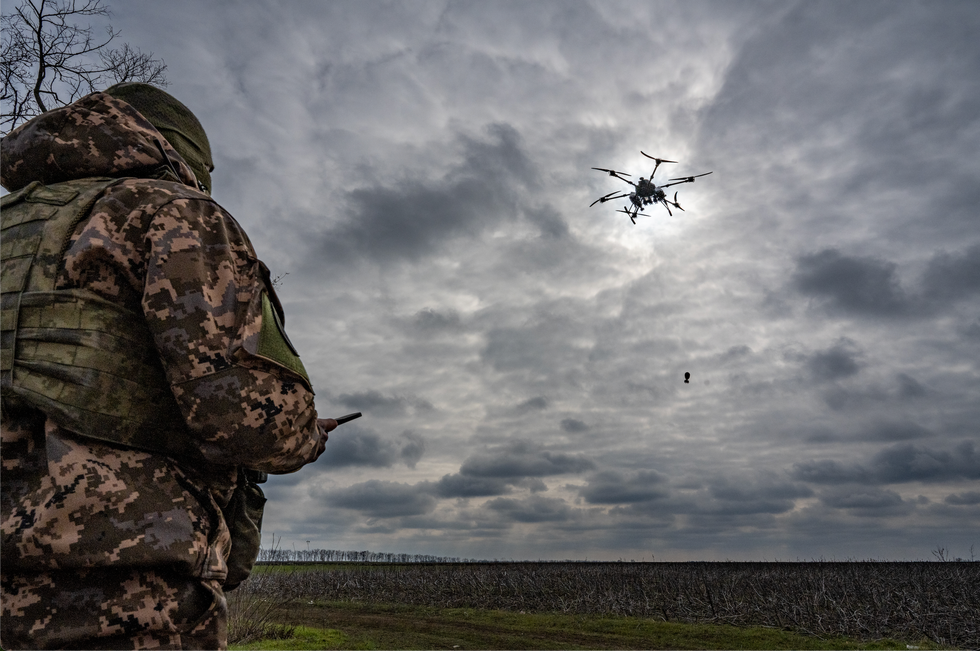
The nature of warfare in Ukraine has evolved significantly, with an increasing reliance on technology and drones. “Every Ukrainian we spoke with said that this war is being fought by drones and electronic warfare,” Corn explained. “The concept of infantry has changed completely.”
Both experts emphasized that the battlefield dynamics have transformed dramatically. The front lines now resemble a high-tech arena, where traditional infantry roles have diminished due to the prevalence of drones and electronic warfare tactics. “It is no longer an infantry man’s war,” Goff added, indicating that the lethal zones are now dominated by technology rather than human troops.
Zelensky’s diplomatic efforts in Europe come at a time when the Ukrainian response to the war is increasingly marked by civilian involvement in military operations. Many leaders in Ukraine’s defense sectors now come from backgrounds in private industry rather than traditional military roles, adapting rapidly to the demands of modern warfare.
“The integration of civilians into military operations is vital,” Corn remarked, pointing out that many Ukrainian leaders lack military experience but are effectively contributing to the war effort. “The Ukrainians are doing an incredible job of innovating,” he noted.
The ongoing war has also sparked concerns regarding the apparent rift between the United States and Europe, with some Ukrainians feeling abandoned. “They appreciate the support from Europe,” Corn noted, “but they fundamentally need the U.S. to provide long-term security guarantees.”
Despite the challenges, there remains a sense of resilience among the Ukrainian people. Goff observed that even amidst nightly air raid sirens, “the lights are still on,” and citizens are making efforts to maintain a semblance of normalcy, showcasing their determination to endure.
As the conflict continues into the winter months, both Goff and Corn expressed skepticism regarding the likelihood of a peace agreement that would satisfy both sides. “The Russians are not going to make a peace agreement unless they get everything they want,” Corn remarked. “The Ukrainians have proven they can hold the line and will only negotiate a fair deal.”
The struggle for Ukraine is far from over, but the country’s leadership remains committed to the fight for sovereignty and independence as the international community watches closely.








Belfast Gears Up for Vibrant St Patrick’s Day Parade on March 17

Cuba Faces Nationwide Blackout Amid Deepening Energy Crisis

Wirral Council to Restructure Leadership, Cutting Two Top Roles

Rethinking Resistance Training: Key Insights from US Experts

EU Membership on the Horizon: What It Means for Citizens

Ukrainian Drone Swarms Strike Moscow Region for Second Day

Henley Launches Innovative Initiative to Boost Local Economy

Court Ruling Allows Pandemic Tax Refund Claims Until 2026

Sean Penn’s Absence at 2026 Oscars Sparks Discussion

Coronation Street’s Shocking Murder Twist Reveals Family Secrets

Andrew Pierce Confirms Departure from ITV’s Good Morning Britain

Katie Price Faces New Health Concerns After Cancer Symptoms Resurface

Gyles Brandreth Shares Grandson’s Cancer Battle and Recovery

Sue Radford Reveals Weight Loss Journey, Shedding 12–13 kg

Kate Garraway Sells £2 Million Home Amid Financial Struggles

Jordan Brook Faces Health Crisis in Hospital as Sophie Kasaei Stays Away

EastEnders’ Nicola Mitchell Faces Unexpected Pregnancy Crisis

Reddit Study Reveals Distinctions Between Lurkers and Power Users
-
 World8 months ago
Coronation Street’s Shocking Murder Twist Reveals Family Secrets
-
 Entertainment8 months ago
Andrew Pierce Confirms Departure from ITV’s Good Morning Britain
-
 Health11 months ago
Katie Price Faces New Health Concerns After Cancer Symptoms Resurface
-
 Health6 months ago
Gyles Brandreth Shares Grandson’s Cancer Battle and Recovery
-
 Health6 months ago
Sue Radford Reveals Weight Loss Journey, Shedding 12–13 kg
-
 Entertainment12 months ago
Kate Garraway Sells £2 Million Home Amid Financial Struggles
-
 Entertainment5 months ago
Jordan Brook Faces Health Crisis in Hospital as Sophie Kasaei Stays Away
-
 World9 months ago
EastEnders’ Nicola Mitchell Faces Unexpected Pregnancy Crisis
-
 Science8 months ago
Reddit Study Reveals Distinctions Between Lurkers and Power Users
-

 World9 months ago
Mother Charged After Son, 9, Killed in Tragic Incident in Italy
-

 Entertainment11 months ago
Ann Ming Reflects on ITV’s ‘I Fought the Law’ Drama
-

 World9 months ago
Bailey Announces Heartbreaking Split from Rebecca After Reunion